The U.S. men’s team is out of the World Cup and a chunk of the tournament payout is being shared with the women’s program under a collective bargaining deal, and that split has stirred a sharp backlash. The men earned a sizable FIFA prize for reaching the round of 16, but U.S. Soccer’s payout rules and the equal-pay agreement mean money from the men’s run gets allocated to both player pools. Fans and commentators are arguing over whether that arrangement is fair, given differences in revenue, attendance, and viewership. The debate has become a flashpoint for broader complaints about fairness and policy.
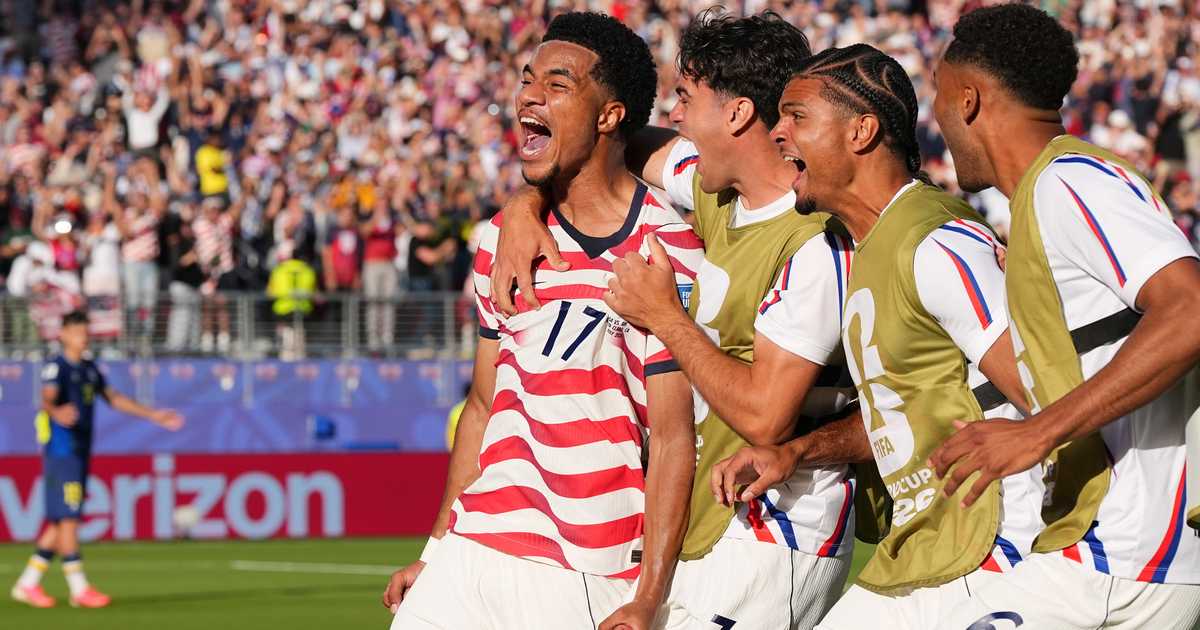
The U.S. Men’s National Soccer Team was eliminated after a 4-1 loss to Belgium, capping a run that still brought in a sizable FIFA payout. For the run to the round of 16 the men earned tournament prize money that will be distributed according to U.S. Soccer policy and the new collective bargaining agreement. That split has some people calling the arrangement unjust, since the women did not play in this tournament cycle.
The reporting shows the math in blunt terms: U.S. Soccer keeps 20 percent of prize money and splits the remaining 80 percent evenly between the men’s and women’s player pools. Under that approach each pool receives an equal share of the pot coming from the men’s performance, which translates into millions for both groups. Based on a 26-player roster, one calculation put the payout at roughly $246,153 per player from this particular share.
The U.S. women’s national team won’t play a World Cup match until 2027, but it is still set to receive a major payday from this year’s big tournament.
https://x.com/nypost/status/2074956780203847857
The U.S. men’s national team earned $16 million from FIFA for reaching the round of 16 before being eliminated by Belgium in a 4-1 loss in Seattle. Under U.S. Soccer’s landmark equal pay collective bargaining agreements, that money will be shared with the women’s national team.
U.S. Soccer keeps 20 percent of the prize money. The remaining 80 percent is split evenly between the men’s and women’s player pools, meaning each team is set to receive $6.4 million from the USMNT’s run. Based on 26-player rosters, that comes out to roughly $246,153 per player.
The women’s share will not be paid immediately.
The USWNT has not yet qualified for the 2027 Women’s World Cup in Brazil, and the final roster will not be selected until closer to the tournament. Until then, the money owed to the women will sit in an interest-bearing account, with that interest also split between both player pools.
That arrangement rubs many people the wrong way because it moves money based on a principle of enforced parity rather than direct revenue responsibility. Critics argue that the women’s team did not generate the specific ticket sales or viewership tied to this men’s tournament performance. They see it as taking proceeds from one program and using them to prop up another, regardless of which program produced the income.
Some commentators have used sharp language to push the point. “So is there a women’s sport not made up of welfare Queens? Is it only the men who can survive on their own merits?”
Others have doubled down on the critique, arguing the equal-share rule amounts to a policy choice with ideological baggage. “This is exactly correct.”
From that perspective the payout system looks like redistribution dressed up as fairness — a version of socialism applied inside a federation meant to reward performance. For many fans the simple standard is revenue follows revenue and rewards should match the value created by each team.
That view gets personal and blunt. They point out the obvious: the women did not play those matches, did not draw those crowds, and did not directly produce the ticket revenue on which this payout is based. “They did not earn it.”
One long-form critique lays out the same math and finishes with a stinging line about how parity can mask transfer payments between programs. “The women didn’t play a single minute of those matches, didn’t draw the crowds, didn’t sell the tickets, and didn’t create the revenue – yet they still get a cut of the men’s prize money while the reverse transfer remains a fraction,” Chen wrote. “Yes the women are more successful (having won the Women’s World Cup several times) but the prize is much smaller. Why? It reflects differences in global interest, sponsorship, viewership and actual performance. This is all under the guise of “parity” between ‘equivalent work.’ But in reality, it’s more like subsidizing one program with the output of the other, just like the ex-spouse cashing checks from earnings she didn’t generate.”
People who share that line of thinking are blunt: they do not want the narrative that America is shortchanging women used to justify mandatory transfers out of men’s earned prize money. They argue the system should reward the teams and players who created the results, not redistribute based on negotiated parity regardless of dollar-for-dollar contribution.
The debate will keep going because it sits at the intersection of sports, labor deals, and cultural politics. The U.S. Soccer CBA created an outcome the moment the men advanced, and now the conversation is about whether that outcome is fair, sensible, and sustainable for fans and players alike. Voices on both sides are loud, and this dispute will shape how future agreements are negotiated and perceived.