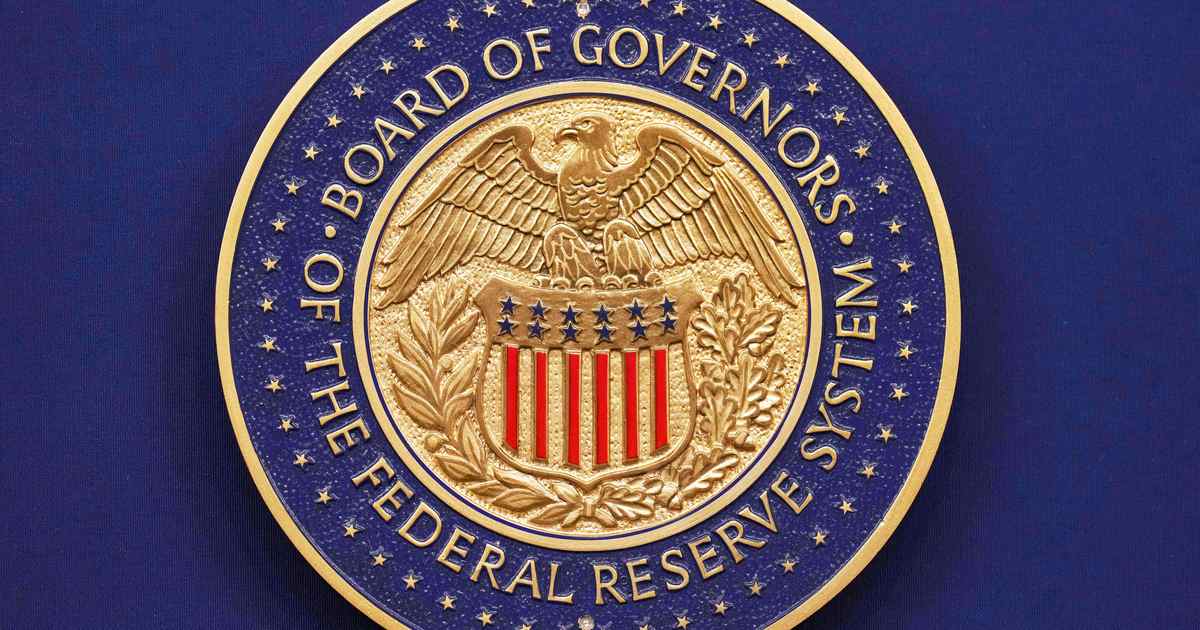
A former senior Federal Reserve adviser was sentenced to 38 months in prison after investigators found he lied about giving restricted Fed information to operatives tied to China.
John Harold Rogers, 64, a one-time senior adviser at the Federal Reserve Board of Governors, received a 38-month federal prison term for making false statements to investigators about sharing nonpublic Federal Reserve material with Chinese intelligence operatives. The sentence also includes 12 months of supervised release, after a jury found him guilty on February 3.
Federal prosecutors had sought a 60-month prison term, noting the sensitivity of the material Rogers handled. Rogers, a U.S. citizen from Vienna, Virginia, holds a Ph.D. in economics and worked for decades in roles that gave him access to restricted information about monetary policy and the Federal Open Market Committee.
“The United States entrusted Rogers with its most sensitive economic data,” said Assistant Attorney General for National Security John A. Eisenberg. “He violated that sacred trust and lied repeatedly to conceal his collaboration with individuals in China with ties to the Chinese Communist Party, exposing his own country, the United States, to counterintelligence risks.”
Prosecutors laid out a scheme that began in 2017, when Rogers met Hummin Lee at a conference in China and then developed a clandestine relationship. Over subsequent trips, Rogers allegedly met Lee and associates in hotel rooms under the pretense of teaching academic “classes,” using those meetings to pass along restricted Federal Reserve information Lee had tasked him to collect.
Investigators say Rogers printed restricted documents for travel to China, stripped classification markings before emailing materials to his personal account, and forwarded sensitive information to a professor at Fudan University days before meeting Lee. The government argued Rogers understood that China could gain trading advantage from advance knowledge of Federal Reserve interest rate decisions, potentially exploiting roughly $1.5 trillion in U.S. Treasury holdings.
“John Rogers spent years secretly funneling sensitive Federal Reserve information to Chinese spies, then looked investigators in the eye and lied about it. And when that wasn’t enough, he lied again under oath at trial,” said U.S. Attorney Jeanine Pirro for the District of Columbia. “Federal Reserve employees entrusted with America’s most sensitive economic information cannot sell out their country and their colleagues for personal gain and then expect to hide behind a single word.”
According to court records, Rogers repeatedly violated Federal Reserve information security rules by taking nonpublic material and sending it to himself and others while overseas. In return, prosecutors say he received help with his new wife, university posts, and substantial financial benefits from Lee and affiliated Chinese institutions, and told investigators he “owed everything” to Hummin Lee.
“When Rogers made the decision to share sensitive economic information from the Federal Reserve and give it to China’s intelligence service for personal gain, he betrayed both his country and his oath as a federal employee,” said Roman Rozhavsky of the FBI’s Counterintelligence and Espionage Division. “As this case makes clear, the Chinese Communist Party is employing increasingly aggressive tactics in its campaign to gain a strategic economic advantage over the U.S. by targeting our financial policies, trade secrets, and innovation. However, this sentencing underscores the FBI’s unwavering commitment to pursuing anyone who threatens our economic and national security and bringing them to justice.”
Rogers was interviewed on Feb. 4, 2020, by investigators from the Federal Reserve’s Office of Inspector General and denied sharing restricted information when asked directly, answering: “Never.” At trial and in other interviews, prosecutors say he repeatedly misled federal agents about his contacts and disclosures.
“John Rogers deliberately lied to our investigators to conceal the fact he shared restricted non-public Federal Reserve information with intelligence agents working for China,” said Michael E. Horowitz, Inspector General for the Board of Governors of the Federal Reserve System and Consumer Financial Protection Bureau. “Today’s sentencing sends a clear message that those who mislead and obstruct federal agents will be brought to justice. I commend the U.S. Attorney’s Office, our agents, and our federal law enforcement partners for their hard work and persistence, which led to this result.”
“While holding a position of trust, Rogers repeatedly violated Federal Reserve information security policies by taking sensitive, nonpublic information and sending it to himself, while he was in China, and to others affiliated with the Chinese Communist Party,” said FBI Special Agent in Charge Daniel Wierzbicki of the Washington Field Office’s Counterintelligence and Cyber Division. “Rogers then lied to federal agents about these disclosures. His sentencing underscores the shared commitment of the FBI and the Federal Reserve Board Office of Inspector General to pursue anyone who endangers U.S. economic and national security by passing confidential information to an adversarial government.”
The investigation was conducted by the FBI Washington Field Office and the Federal Reserve Board Office of Inspector General. The matter was prosecuted by Assistant U.S. Attorneys Adam Barry and Jocelyn Ballantine, Trial Attorneys Nicholas O. Hunter and Yifei Zheng of the National Security Division, and Paralegal Specialist Derra McQuaig of the National Security Division.