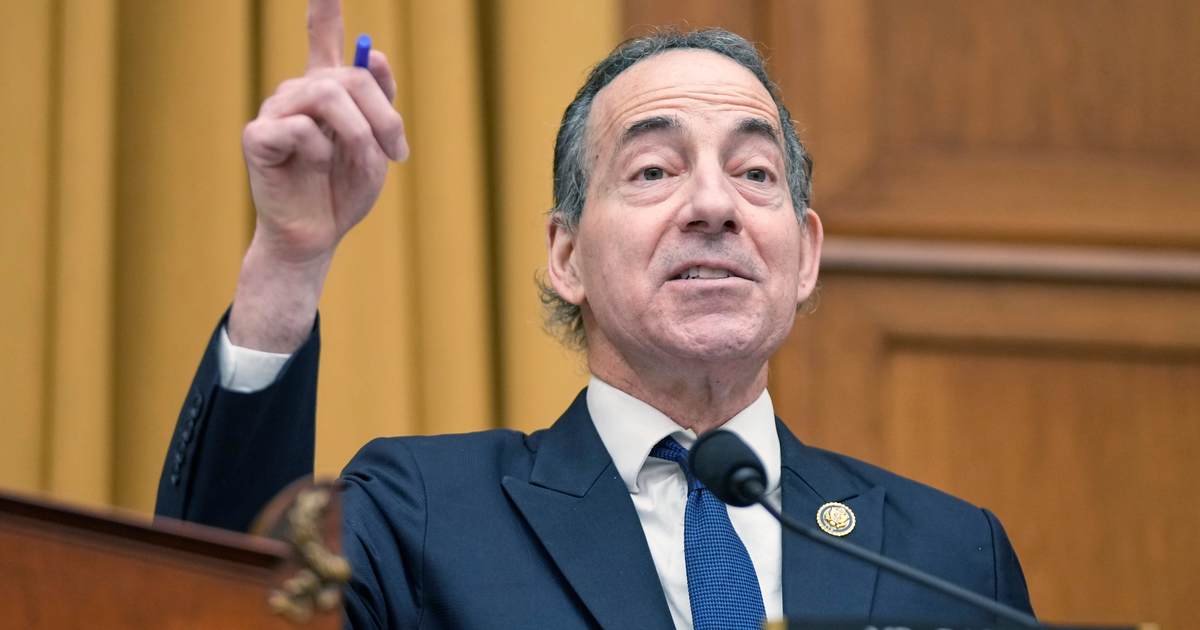
A heated House hearing about sanctuary cities exploded into a loud confrontation between Rep. Mike Lawler and Rep. Jamie Raskin after emotional testimony from the mother of a murder victim, exposing the deep divide over immigration policy and who gets priority in Democratic leadership’s view.
During a recent committee hearing on sanctuary policies, Rep. Mike Lawler confronted Democrats after testimony from Jessica Gorman, mother of Sheridan Gorman who was killed earlier this year by an undocumented immigrant. The exchange escalated quickly and became a shouting match with Jamie Raskin, highlighting a wider partisan clash over border policy and law enforcement. Republicans argued that sanctuary policies shield dangerous people while Democrats defend jurisdictions that limit cooperation with ICE.
Lawler pushed back hard, saying Democrats appear to care more about activists and anti-ICE protesters than about Americans killed by people who shouldn’t be in the country. He accused Democrats of enabling a system that prioritizes the rights of illegal entrants above victims and public safety. That sharp accusation sparked the heated back-and-forth that dominated the remainder of the hearing.
https://x.com/townhallcom/status/2072046040551768117
Raskin, as the committee’s ranking Democrat, responded angrily and tried to defend his position, but the tension kept rising. The confrontation became loud and personal, with both men trading barbs over rules, outrage, and responsibility. Each side accused the other of failing to grasp the constitutional and procedural limits at play, but the core disagreement remained the same.
Outside observers saw the moment as more than a single outburst; it was a flashpoint that exposes a long-term policy failure on the border. Republicans framed the incident as proof that sanctuary cities and soft enforcement produce victims and destroy public trust in law enforcement. Democrats insist their focus is on civil rights and community safety, but the optics of this hearing favored those demanding accountability for victims like Sheridan Gorman.
Lawler argued that outrage should be consistent, pointing to other victims whose names have been raised in public debate. He suggested Democrats show selective empathy depending on the political message, not the person who suffered. That charge is political and pointed, but it reflects a real frustration among voters who see rising crime tied to weak border control.
The congressman went on to scold Democrats for seemingly being more concerned about the deaths of anti-ICE protesters than the victims of migrant crime.
“The same outrage you feel about Renée Good and Alex Pretti you should feel about Sheridan Gorman and Laken Riley,” Lawler fumed.
Raskin shot back: “I do feel that outrage.”
“You do not!” Lawler raged.” Because if you did you would not support sanctuary jurisdictions
“You should be ashamed of yourself!”
Raskin, the ranking member of the House Judiciary Committee, noted that Lawler was not a member of the panel and asked him to “get the hell out” as they both shouted over each other.
“You don’t understand the rules of the committee. You don’t understand the Constitution. You’re full of it!” Raskin yelled.
“You’re an absolute disgrace for supporting sanctuary policies,” Lawler countered.
“Say one word about Alex Pretti and Renée Good,” Raskin demanded.
To which Lawker responded, “I did! I wrote a whole New York Times op-ed about it.”
“You should be absolutely ashamed of yourself for not opposing sanctuary policies that resulted in their daughter’s death!” he added, ending the argument.
Nelly Decker, a spokeswoman for Raskin, argued the Maryland Democrat’s outburst was justified.
“Of course Raskin yelled at [Lawler], he was a guest in the committee to introduce a witness and went on a tangent and sullied the names of Alex Pretti and Renee Good,” Decker wrote on X.
The raw language and personal attacks grabbed headlines, but the underlying issue is policy, not theater. Constituents watching that exchange saw a failure to protect communities when jurisdictions refuse to cooperate with federal immigration enforcement. That disconnect fuels voter anger and gives Republicans a clear talking point: borders matter and sanctuary policies have consequences.
Some Democrats defended Raskin’s tone, saying the confrontation was a reaction to Lawler’s guest status and the way others’ names were used. Republicans see that defense as deflection, noting that families like Jessica Gorman’s deserve consistent recognition and justice. The debate is now part of a larger conversation about accountability, enforcement, and who gets to shape safety policy in American towns and cities.
Regardless of the shouted lines, the hearing reinforced why immigration will remain a fierce political battleground. Lawmakers and voters disagree on the balance between civil liberties, local control, and national security, and that disagreement played out loudly. Expect this clash to be replayed in campaign ads and committee fights as both sides double down on their positions.