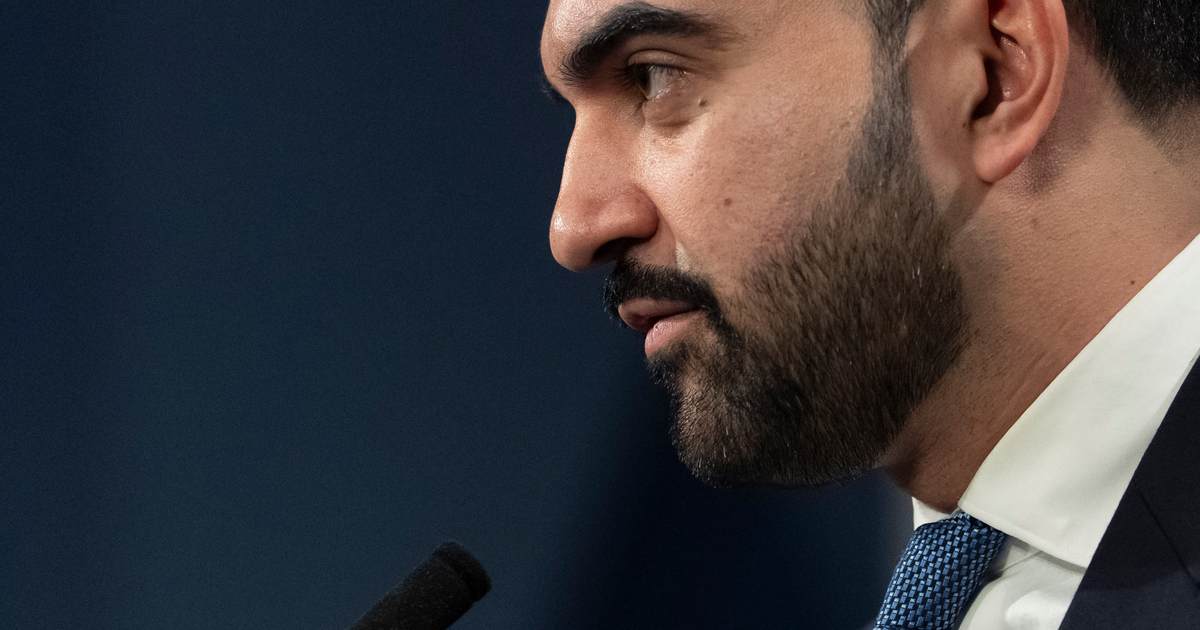
Zohran Mamdani is recasting what counts as violence, arguing for a socialist redefinition that treats many criminal labels and routine harms as political constructs rather than harms that deserve punishment.
When Mamdani ran for office he argued for emptying prisons and pushed a bold claim about crime that flips common sense. He said his experience in courts showed labels get stretched so far that thefts and some burglaries are called violent offenses. That line of thinking shifts attention away from acts that harm victims toward critiques of the criminal justice labels themselves.
He put it bluntly: “Oftentimes, we’ve even found as legislators, when we go into these courts, the term ‘violent crime’ is even used when people are stealing packages. ‘Violent crime’ is even used when people are accused of burglary, and there happens to be a housing unit in that same dwelling,” he said at the time. “So violence is an artificial construction, and we have to be very clear that what is happening here with these district attorneys, that is violence.”
That statement fits a broader Democratic Socialist habit of treating crime labels as political theater, where the focus is on systems and rhetoric rather than victims. I haven’t been the victim of every possible crime, but I have faced targeted threats and a break-in that cost me property and peace of mind. Those real-world invasions of safety do not vanish just because someone prefers to call them policy problems instead of criminal acts.
https://x.com/EndWokeness/status/1938368181287989550
The question is simple: if someone breaks into your home, steals your things, or tries to force their way in, is that not violence? When a stranger’s actions leave you unsafe on a transit platform or you lose the sense of privacy in your own home, the harm is concrete and immediate. Redefining those harms away in the name of ideology insults victims and muddles the distinction between political disagreement and criminal harm.
Progressive rhetoric has already stretched the term to cover non-physical slights—everything from misgendering to denied insurance claims gets labeled as violence by some activists. That rhetorical inflation dilutes the concept and erodes public trust in institutions meant to protect people from actual bodily harm. When language is weaponized like this, it changes the incentives in criminal justice and public policy.
At its logical extreme, this framework lets officials argue that criminal law itself must be overhauled so that prison populations are emptied or repurposed. Mamdani even made a public show of solidarity by visiting incarcerated people, including someone convicted of strangling his girlfriend to death. That visit sent a message that sympathies are being rearranged and priorities reconsidered.
Supporters insist reforms are about fairness and racial justice, but critics point out a concerning pattern: the abolitionist playbook often targets common-law protections while leaving room to punish political foes. Historical examples show some activists demand fewer consequences for violent actors they favor while tolerating harsher measures for dissidents they oppose. That selective approach undermines equal application of justice.
Angela Davis and other abolitionists proposed sweeping prison changes that, in practice, could become tools to protect allies and punish opponents. If you accept a definition of violence that treats political speech, certain economic acts, or administrative denials as equivalent to robbery or assault, you open the door to weaponizing the criminal system. That outcome would be chilling for free speech and private property rights.
Democratic Socialists claim they want to end mass incarceration, but the pattern of rhetoric suggests a different aim: to redefine who gets protected and who gets punished. Under a politicized definition of violence, ordinary citizens could find their businesses, homes, and savings threatened by regulatory fiat or prosecutorial discretion. The risk is not only theoretical; the incentives set today shape enforcement tomorrow.
This debate is not about abstract theory alone. It affects how communities respond to theft, assault, and murder, and how victims are treated by the justice system. If “violence” becomes whatever the political class says it is, then ordinary people lose the stable standards that keep neighborhoods safe and predictable. That uncertainty should concern everyone who values safety, property, and equal treatment under the law.