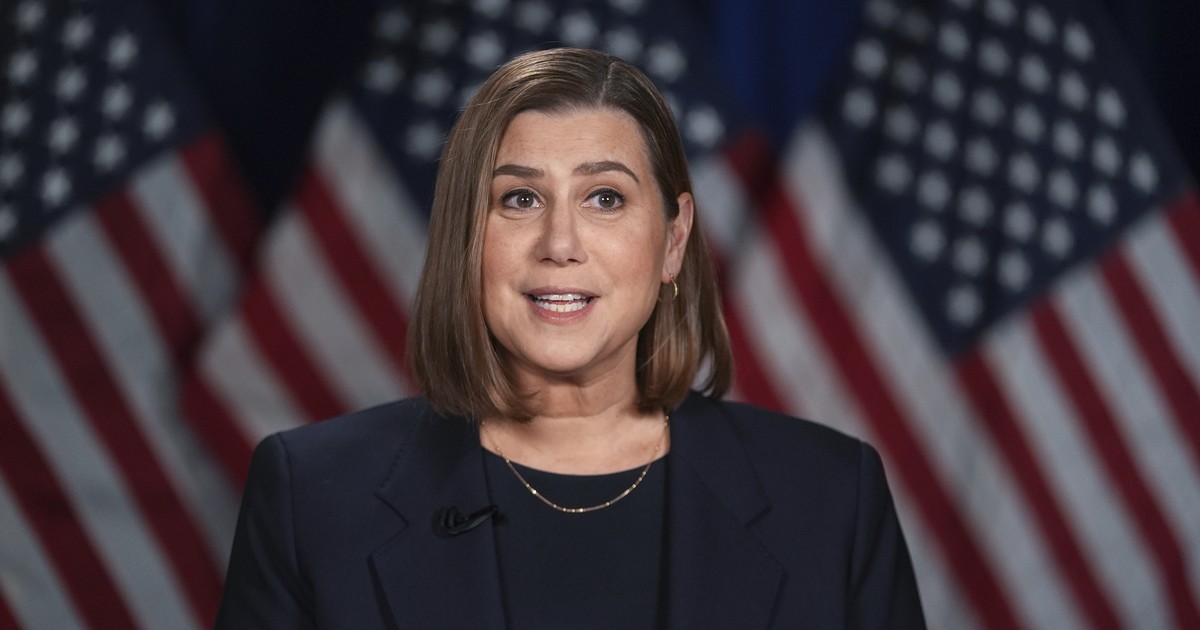
Elissa Slotkin’s comments about the SAVE America Act exposed a blunt political truth about how Democrats view election policy, sparking sharp reactions and a steady stream of pushed-back responses across conservatives.
Democrats oppose the SAVE America Act for a clear political reason: it would tighten rules that currently allow questionable ballots and make it harder for non-citizens to influence outcomes. That reality terrifies them because it would remove advantages some see as built into the current system. The reaction from lawmakers and pundits reveals how deeply electoral advantage shapes the debate.
Slotkin’s remarks landed like a confession. “The other thing that we blocked yesterday was the SAVE Act, right?” Slotkin said. “Which would literally allow this administration to rig our democracy so that it would be hard for any Democrat in any state to win any election.”
That line admits what many conservatives have been saying for years: tougher voter safeguards threaten entrenched Democratic power. It’s not a theory; it’s a strategy argument dropped in public. Republicans see it as proof that election integrity measures are about fairness, not partisanship.
https://x.com/theblaze/status/2076707980821573780
Democrats counter with emotional appeals about voters being disenfranchised, especially married women and minority communities. “And disenfranchise all married women,” she continued. “In the meantime, by the way, you’d have to show your birth certificate at the polls if you have a married name.” Those claims are easy to test against reality, and they don’t hold up for the average voter who already carries IDs and documents.
Critics point out that name changes, IDs, and passports have long been handled without sweeping problems. Anecdotes of administrative hiccups aren’t evidence of systemic disenfranchisement. Republicans argue that a sensible ID framework simply closes gaps that currently allow fraud and confusion, not legitimate voting barriers.
When Democrats frame ID and documentation as attacks on basic rights, the broader context gets lost: elections must be trustworthy. Accusations about racism or sexism are often tossed out as political shields rather than practical critiques. That tactic shifts the argument away from process and onto emotion.
Commentators have jumped on Slotkin’s phrasing as both an admission and an overreach, and responses have ranged from outright ridicule to pointed questions. It’s a moment that forces voters to decide whether they want looser rules that invite abuse or stronger rules that protect ballots. For many conservatives, the choice is obvious.
It’s so unfair, according to Democrats.
It’s an extraordinary admission, and finally some honesty from the Democrats.
Such an odd thing to say.
That’s an excellent question we’d love for Slotkin to answer, but Gill does it for her.
That’s it.
Occasional slip-ups reveal more than intended. “Sometimes, the truth slipped through that messed up brain of his.” That line reflects a partisan take but also underscores how off-the-cuff comments can become documentary evidence. Republicans will use moments like this to press for reforms that lock down the process.
Democratic allies, including those aligned with socialist caucuses, openly favor broad amnesty and easier paths to citizenship and registration. That policy path, critics argue, would expand the voter pool in ways that reshape elections for a generation. Conservatives see that as a power grab masquerading as compassion.
Editor’s Note: The 2026 Midterms will determine the fate of President Trump’s America First agenda. Republicans must maintain control of both chambers of Congress.