U.S. forces launched a broad set of precision strikes across Iran after what commanders described as a clear breach of a recent ceasefire, and Tehran answered with its own wave of missile and drone strikes against U.S. positions in the region. The confrontation has rapidly raised the stakes around the Strait of Hormuz and underscored how fragile any arrangement with Tehran remains.
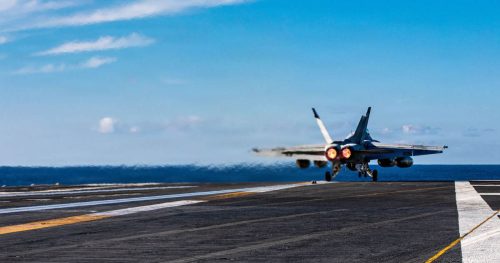
Central Command announced a night of strikes that hit more than 80 targets inside Iran, naming air defense systems, command-and-control nodes, coastal radar sites, anti-ship missile batteries, and scores of Islamic Revolutionary Guard Corps small boats. The operation used precision munitions and was framed as an immediate response to attacks on commercial shipping in the Strait of Hormuz. Officials portrayed the action as calibrated to degrade Iran’s ability to menace global trade lanes without touching off a wider conflict.
Iran immediately launched a new wave of attacks, with reports saying Tehran fired missiles at nearly 100 U.S. targets in Bahrain and Kuwait. Those reports added urgency to an already volatile scene in the Gulf and prompted U.S. forces to bolster defenses across the region. The back-and-forth has local commanders on edge and political leaders watching for any further escalation.
“U.S. Central Command (CENTCOM) forces completed a new round of offensive strikes against Iran, July 7, hitting over 80 targets with precision munitions as an immediate response to Iran’s latest attacks on commercial vessels transiting the Strait of Hormuz,” a post by CENTCOM read.
https://x.com/Osint613/status/2074671668035793275
U.S. forces struck Iranian air defense systems, command and control networks, coastal radar sites, anti-ship missile capabilities, and more than 60 Islamic Revolutionary Guard Corps small boats in and near the strait to degrade Iran’s ability to continue attacking international commerce flowing through the international trade corridor.
“CENTCOM forces remain postured and prepared to hold Iran accountable when the agreement is not adhered to or obeyed,” the post added.
Tehran claims to have struck more than 85 U.S. military targets in retaliation, though those figures have not been confirmed by American officials. Independent verification in fast-moving attacks is difficult, and both sides are shaping the narrative as much as the battlefield. This fog of war complicates policy choices and gives Washington little room for missteps.
It is not yet clear whether this cycle of strikes will continue or whether cooler heads can still create space to prevent a larger war. Military planners in the region are preparing for sustained risk, while diplomats pursue whatever channels remain for de-escalation. The situation shows how quickly limited clashes can balloon into regional crises.
The U.S. strikes followed a series of IRGC attacks on three commercial vessels attempting to transit the Strait of Hormuz via non-designated routes, actions that violated the recent agreement between Washington and Tehran. That pact had granted Tehran certain concessions, including the ability to sell oil and reopen revenue channels, in return for keeping the Strait open to international traffic. Iranian commanders, however, appear to have pushed a hard line on how passage is managed.
On the water, Iran has been trying to assert control by permitting passage only along Iranian-designated routes and demanding permission from its commanders, a move many see as a deliberate flex of muscle. Commercial shippers and naval escorts face an unnerving reality: the waterway remains strategically vital and operationally contested. For U.S. and allied forces, protecting free passage through that corridor is a central priority.
Before the military escalation, Washington first revoked the license that allowed Iran to sell certain oil, signaling economic pressure would follow any breach of the agreement. That step was followed by the offensive strikes, which American officials framed as necessary to protect international commerce and deter further attacks. The sequence underlines a policy choice: show consequences and back them up with force where necessary.