A tense CBS News interview over the CDC shooting and vaccine misinformation turned into a wider fight about trust in public health, media responsibility, and how officials handled pandemic messaging.
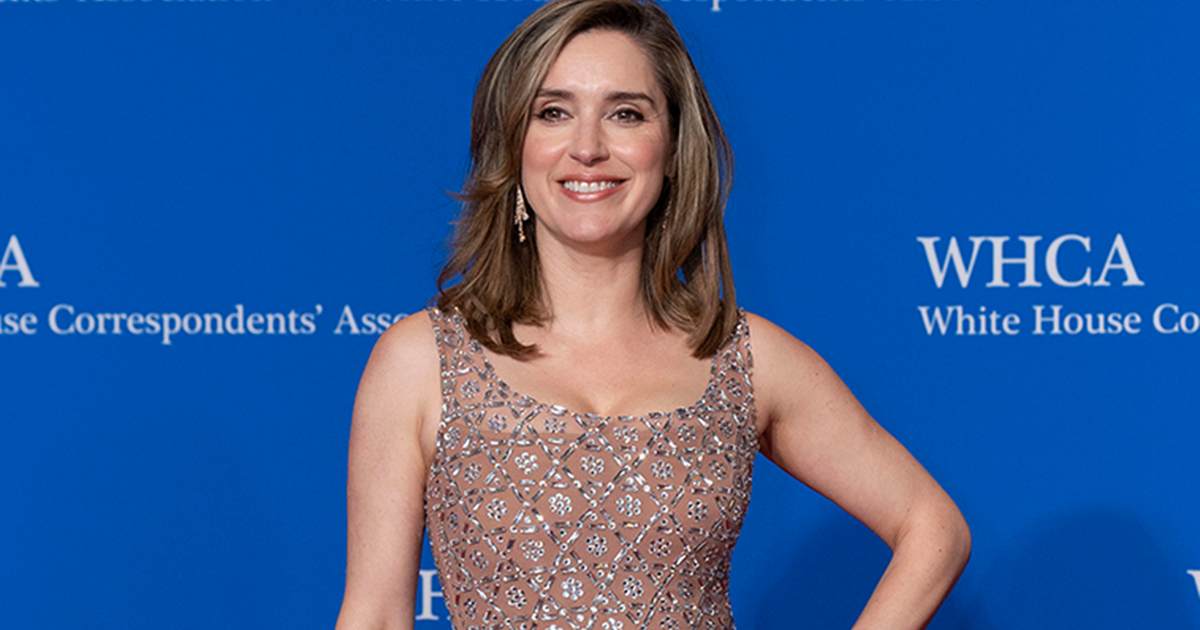
The exchange aired on Face the Nation when Jay Bhattacharya, the National Institutes of Health director, appeared and was pressed by host Margaret Brennan about vaccines and the violent 2025 attack at CDC headquarters. Brennan raised the shooter’s alleged motivation tied to Covid vaccine misinformation, trying to make that the linchpin of the segment. Bhattacharya steered the conversation toward what he sees as the deeper problem: a loss of trust in public health institutions.
Bhattacharya described honoring Officer David Rose and emphasized the human cost of the attack, while also warning against narrowing the debate to a single explanation. He argued that public distrust grew from a set of pandemic policies and the way those policies were communicated. That line of argument made the interview awkward for the host, who repeatedly pushed back on the broader critique.
The back-and-forth highlighted a larger media posture toward dissenting voices during Covid, with Bhattacharya blaming official messaging and censorship rather than individual critics alone. He named actions like school closures and vaccine mandates as policy choices that eroded confidence. From a Republican viewpoint, this framing calls for accountability from both public health leaders and the outlets that amplified one dominant perspective.
Brennan repeatedly returned the conversation to the tragic shooting and the question of whether enough is being done to counter misinformation. Bhattacharya kept drawing the audience’s attention to institutional failures that he says left people skeptical of health guidance. That tension between event-driven framing and systemic critique was the central friction of the interview.
https://x.com/BonillaJL/status/2086616892798603640
MARGARET BRENNAN: You were down in Atlanta this past week. This is one year since that horrific shooting at CDC headquarters.
JAY BHATTACHARYA: Yes.
BRENNAN: Officer David Rose was honored this past week. He was killed last year protecting CDC employees from a gunman. And we should note, he was a combat veteran, a United States Marine, who had just graduated five months prior from the police academy. Three kids left behind. The shooter was motivated by misinformation about the Covid vaccine. That is why he shot over 100 bullets into the windows of the CDC.
BHATTACHARYA: And, you know, I–
BRENNAN: Is enough being done to counter this kind of misinformation?
BHATTACHARYA: I mean, I should start with, I got to talk with Officer Rose’s wife a few months back. One of the first things I did is I– you know, to honor him and his sacrifice in protecting the people that work at the CDC, the amazing people that work at the CDC, was we– you know, we renamed the street that leads into the CDC after him. And it was a really nice event.
I’ll tell you, the thing is, I want to focus on attention on Officer Rose because I don’t– I think what the shooter did was horrific. And I think that, you know, if you talk about why shooters do things, the really fundamentally–
BRENNAN: Well, his father said he was brainwashed about the Covid vaccine and thought it was making him suicidal. That’s what he’s– the vengeance was when he said he was going to shoot up the CDC.
BHATTACHARYA: I mean, Margaret, I mean the thing is just like, to talk about the shooter puts the emphasis on somebody who’s– I mean I think we shouldn’t be putting our emphasis on the shooter.
BRENNAN: No, I am on misinformation about–
BHATTACHARYA: Yes. I mean I think the key– the key thing is, there’s a loss of public trust in public health that happened in part because of a lot of– frankly, even on this network, and on other networks, there was a particular single point of view put across during the Covid pandemic about how– you know, that led to things that really did cause harm to people. The school closure is probably the number one thing that left the–
BRENNAN: This is not a productive line of claims. We covered Covid in depth on this program, like no other Sunday show did.
BHATTACHARYA: I’m not blaming you specifically. What I’m saying is, you want to talk about misinformation, the kinds of decisions and sort of the public sort of face of public health during the pandemic led to many people losing trust in public health–
BRENNAN: The Trump administration officials?
BHATTACHARYA: No, I mean, I mean like Biden. So, Biden, for instance, censored me–
BRENNAN: The pandemic began under the Trump administration.
BHATTACHARYA: But during the– but during the– but during the–
BRENNAN: And we put those officials on our air.
BHATTACHARYA: Just so we’re clear, the Biden administration censored me, right? They censored– they sent out direct attacks on people who disagreed on the Covid– on sort of whether the Covid vaccine stopped it-
BRENNAN: RFK Jr. called the Covid vaccine “the deadliest vaccine ever made.”
BHATTACHARYA: I– no, I– you should talk to Bobby. But I can tell you what–
BRENNAN: That is misinformation. And we’re not being clear about that. And I think that is dangerous, wouldn’t you agree?
BHATTACHARYA: People lost their jobs, Margaret, because the Biden administration censored people and said, look, you can’t even talk about the Covid vaccine harms.
BRENNAN: We’re talking about a shooting.
BHATTACHARYA: Yes, and I’m talking about why you have the kind of distrust that’s led to the kind of– sort of problems that you’re talking– were talking about earlier in public health. That distrust was not caused by President Trump. And it wasn’t caused by Bobby. It was caused by a lot of sort of really fundamentally–
BRENNAN: Misinformation–
BHATTACHARYA: Yes, but often spread by the government itself regarding natural immunity, closing of schools, closures of mask mandates. People lost their jobs because of these vaccine mandates that didn’t make any public health sense.
So, if you want to talk about public trust, you have to embrace that fully, right? You can’t just talk about it in a narrow, political way.
BRENNAN: I’m talking about a shooting at the CDC and an officer you said you just went to honor.
BHATTACHARYA: Yes.
BRENNAN: That’s what I was talking about. You’re talking about something else entirely.
BHATTACHARYA: No, no, you’re trying– you’re talking about, Margaret –
BRENNAN: I also asked you about shoring up public health in vaccines.
BHATTACHARYA: Margaret, just to be blunt, you’re– what you’re talking about is– what you’re talking about is, you’re trying to blame the shooting on Bobby.
BRENNAN: No, I’m not. I’m reading you what his father (ph) said.
BHATTACHARYA: No, what you’re reading– what you’re– what you’re saying– what you’re implying is that somehow the lack of public trust, right? So–
BRENNAN: I’m not talking about him. I’m talking about your visit.
BHATTACHARYA: Yes, and my visit–
BRENNAN: And is enough being done?
BHATTACHARYA: And I– this was a year– I think it’s really unfortunate, Margaret.
[…]
MARGARET BRENNAN: Should parents trust that they can go vaccinate their kids when their doctor tells them to do so for them to go back to school?
JAY BHATTACHARYA: Yeah, I think– I think that the– that parents, for most kids, especially for the measles vaccines, the DTP, all the standard childhood vaccines, it’s very important that parents vaccinate their kids. As far as can- they feel confident sending them back to school? You know, I just– just to push back some. It was a tremendous mistake to cause parents to fear that– about sending their kids to school during the Covid pandemic. The kids were better off in school. We shouldn’t be scaring the public–
BRENNAN: I’m talking about what people do now. It’s August. About to be September. Kids are going back to school. I’m not talking about 2020. I’m talking about 2026.
BHATTACHARYA: Yes, but, Margaret, you’re talking about the– you’re talking about– we’re talking about the why people have–
BRENNAN: Clarity from the federal government and the top health official.
BHATTACHARYA: Yes, OK, just so we’re clear. If you want clarity, let me give you some clarity.
BRENNAN: Please.
BHATTACHARYA: The reason why you have this problem in public trust is because what happened in 2020 has not yet been addressed. To be–
BRENNAN: Can these parents trust you and the recommendation that they should go get their kids vaccinated to go back to school?
BHATTACHARYA: Yes. I mean, I think– I mean the parents, should they trust me? I mean I’m giving my recommendation. I vaccinated my kids. I don’t think that it is a– it’s– I think if you want to protect your kids from these sort of parental diseases, yes, you should vaccinate your kids. But it is even more important that these kids go to school. That they, in no way, shape, or form should this show or any other show like it perpetuate the idea that sending their kids to school is worse because there are going to be some health risks there when it’s just not true, right?
If you want to protect your kids from those preventable diseases, vaccinate your kids. I’ve been very, very clear about that. But it is a– it is a mistake, and it contributes to the lack of public trust if you sort of fearmonger around, oh, if you send your kids to school, well, you might be around unvaccinated kids. That’s a tremendous mistake, right? If you vaccinate your kids, you can protect your kids from those risks, whatever they are.
And in any case, it’s better to send the kids to school, because that’s how you keep kids healthy.
BRENNAN: Yes. We want to send our kids to school.
BHATTACHARYA: I’m not– but now addressing what happened in 2020 is part of that.
BRENNAN: OK.
BHATTACHARYA: If you want to say why there’s this loss of public trust, you have to really wrap your arms around that.
BRENNAN: But you trust the science and the health workers and the vaccines now is what I understand you were saying. And so that is the message that I think we can–
BHATTACHARYA: I mean, trust the science. I mean I’ve looked at the scientific evidence and there’s lots– I mean I personally have made decisions for my family around those lines too.
BRENNAN: OK.
BHATTACHARYA: So, yes.
BRENNAN: That’s good to know. Thank you. We’re going to leave it there, because I know we’re running out of time. We’ll be back in a moment.
After the clip ran, debate flared over who really bears responsibility for mistrust: officials who imposed broad policies and limited debate, or individuals and platforms that spread falsehoods. From this perspective, the media’s reflex to label skeptics as villains without examining policy mistakes only deepens the divide. That disconnect helps explain why audiences remain suspicious of top-down directives.
Critics on the right point out how prominent pandemic-era decisions—like extended school closures and sweeping mandates—left lasting damage beyond the intended health effects. Those critics say legitimate debate was too often framed as dangerous misinformation, rather than an essential part of scientific inquiry. That approach, they argue, guaranteed fewer people would trust future guidance.
The interview also raised practical questions for parents: can they trust current vaccine recommendations and return-to-school guidance? Bhattacharya made clear he supports routine childhood immunizations like measles and DTP, while insisting the harms of keeping kids out of school were real. That mixed message is exactly the sort of nuance many feel was missing from earlier coverage.
For Republicans and others who favor scrutiny of public institutions, this exchange is a reminder that narratives matter as much as facts. When media outlets prioritize a single storyline over open debate, it undermines the credibility of both journalism and public health. That loss of credibility is a political and practical problem going forward.
Journalists can choose to treat this as a one-off clash or as evidence of a much larger breakdown in public communication. The clearer path is to accept tough questions and let institutions earn back trust through openness and accountability. That would be better for public health and for the country’s civic life.