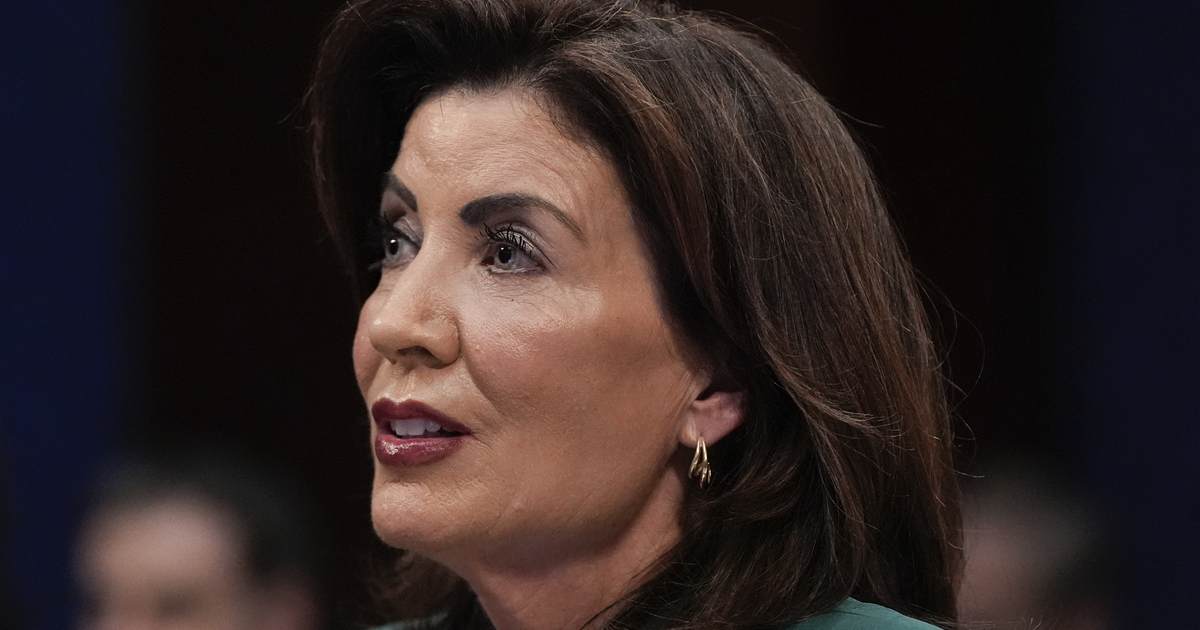
New York Governor Kathy Hochul publicly defended banning local cooperation with federal immigration enforcement, arguing it focuses resources on “real crime” while critics say the move strips local police of tools to remove dangerous aliens and risks public safety.
On national television, Governor Kathy Hochul explained that she has forbidden state and local agencies from entering into 287(g) immigration partnerships with the federal government, pitching the policy as a shift toward addressing “real crime.” Her comments came during an interview that highlighted her administration’s stance on local-federal cooperation and the limits she set on immigration enforcement roles for local law enforcement.
The 287(g) framework lets local agencies work with federal immigration authorities through formal agreements, and ICE has described training and information it would provide to participating jurisdictions. That support includes instruction on immigration law, multicultural communications, and training intended to avoid racial profiling, and federal resources are meant to offset local costs tied to the partnerships.
One specific option under ICE’s program, the Jail Enforcement Model, is designed to let local jails identify and process noncitizens who have pending or active criminal charges while they remain in custody. That model was explained as a way to “identify and process removable aliens currently in your jail or detention facility who have pending or active criminal charges while they’re in your custody.” Local chiefs and sheriffs who favored such tools argue they made it easier to remove violent offenders and repeat criminals without adding expense to county budgets.
https://x.com/RNCResearch/status/2093355288329875798
ICE itself has marketed the program as a tool to “work together to deport removable aliens involved in gang activity, violent crimes, human smuggling, organized crime, sex offenses, drug smuggling, money laundering and many other crimes,” a description that underlines the agency’s emphasis on high-risk offenders. Hochul’s view, framed on air, suggests those entries don’t match her definition of “real crime,” and that distinction has become a flashpoint in the broader debate over public safety and immigration enforcement.
Nationally, ICE reports it has used these agreements with 2,411 agencies across 39 states and two territories, creating a wide network of local-federal partnerships. The sheer number of existing arrangements has been central to the argument from critics who warn that a statewide ban removes a long-used tool for identifying removable noncitizens who have committed serious crimes.
County sheriffs and some municipal police leaders have responded by pursuing legal action and public statements challenging the statewide prohibition. Those local officials claim the ban forces them to choose between cooperating with federal authorities to remove dangerous people and facing political or legal risks at the state level for doing so.
From a conservative perspective, the policy looks less like targeted reform and more like a blanket retreat from enforcement that hands a ready federal resource back to criminal actors and leaves communities to deal with the fallout. The debate is not just about paperwork and intergovernmental protocols; it’s about whether leaders will use every tool available to remove individuals who pose threats to public safety.
Supporters of the governor argue that limiting local involvement in immigration enforcement prevents racial profiling and ensures local police focus on local crimes without immigration detours. Opponents say the federal program was specifically structured to target violent offenders and that pulling out of those partnerships reduces the state’s capacity to remove repeat criminals and foreign-born offenders who are eligible for deportation.
As this standoff continues, the legal fights and public messaging will determine how far the state’s ban reaches and whether local agencies will find workarounds that satisfy state restrictions while trying to protect neighborhoods. Lawmakers, law enforcement leaders, and citizens are watching how courts, county executives, and the governor’s office handle the tension between jurisdictional control and cooperation with federal enforcement.
Whatever the outcome of lawsuits or policy adjustments, the controversy highlights a basic choice: preserve access to federal resources designed to remove dangerous noncitizens, or prioritize a distinct separation between local policing priorities and federal immigration enforcement. The arguments on both sides remain loud and consequential for communities across New York and beyond.