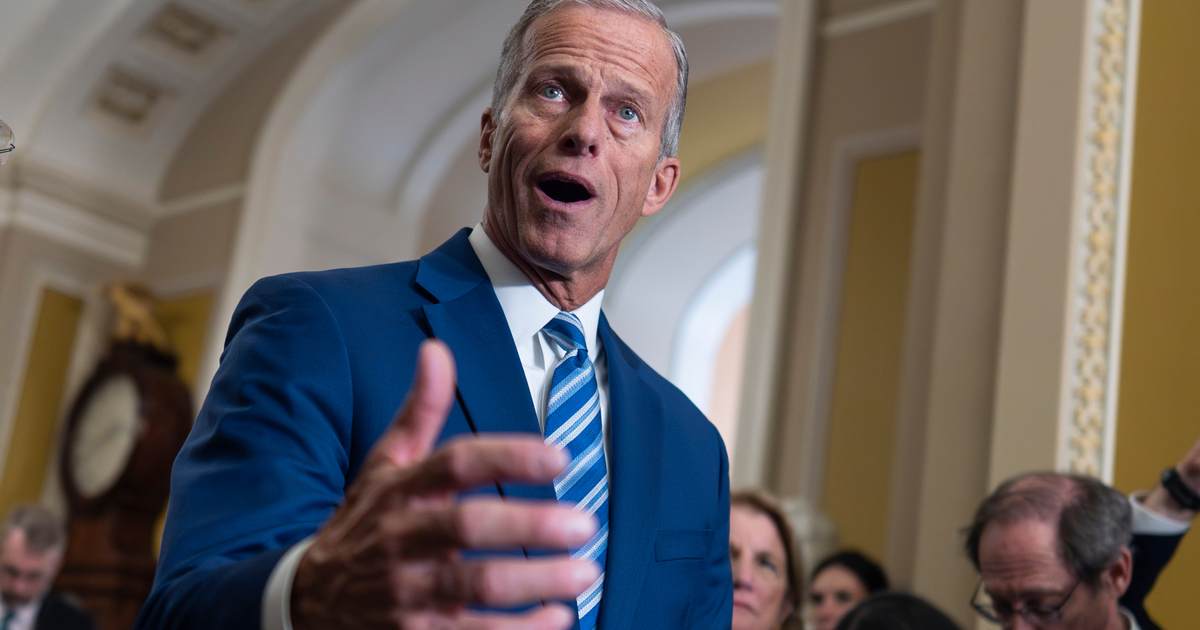
Sen. John Thune and a hesitant Senate GOP closed ranks early Saturday after a 5 AM confirmation vote for Todd Blanche as the 88th attorney general, choosing to adjourn instead of forcing a fight over the filibuster and key Republican priorities.
The Senate held a pre-dawn vote around 5 AM to confirm Todd Blanche as the 88th attorney general, then moved straight to adjournment. There weren’t enough senators willing to stay and wage a fight to stop the August recess, and that reality tells you everything about where this caucus stands. Democrats certainly won’t move to block the recess, which leaves a clear path for the other side if they ever retake the chamber.
Sen. Thune pointed to roughly 15 to 20 Republicans who prefer to step back rather than stand and defend priority legislation. That kind of calculating passivity hands leverage to the opposition and signals that preservation of norms is more valuable to some than winning. It’s frustrating to watch a caucus prioritize comfort and tradition over victory on key items.
One casualty of that posture is the SAVE America Act, which could have been advanced if the filibuster had been set aside when the moment demanded it. Institutional deference used to be an argument with weight; today it’s an excuse when the stakes are high and the left is pressing forward. The idea that we must bow to old rules even as the other side politicizes everything is no longer a credible defense.
https://x.com/EricLDaugh/status/2086055189077782678
No one gets credit for being the bigger person when surrender is the outcome. Who cares if the liberal media screams about nuking the filibuster? We’re debating whether to worry about the reaction of people who already despise our side, and that concern is costing us real policy wins. If the metric is avoiding media tantrums, we’ve already lost before the fight even begins.
The GOP caucus taking a vacation instead of pushing a legislative agenda is a political choice with consequences. When leaders opt for adjournment over confrontation, it sends a message: avoiding conflict is more important than delivering results. Voters understand the difference between prudence and surrender, and they remember which side stood up to get things done.
Watching senators applaud a token confirmation and then leave town is demoralizing for grassroots activists and donors who expect more than ceremony. The public wants representatives who will fight for policy priorities, not officials content to defer until the landscape shifts against them. This pattern reinforces the narrative that some Republicans value preservation of institutions above conservative victories.
There’s a strategic cost when a party refuses to use available tools to secure its agenda, especially when those tools are the rules of the Senate itself. The filibuster is not a sacred cow; it’s a parliamentary mechanism that can be adjusted to reflect political realities. Holding on to it out of nostalgia allows the left to exploit the status quo and push through transformative policies when power swings their way.
Senators who believe they’ll be rewarded for deference when the chips are down are misreading how politics works. Facing a nuclear option or a major rules fight is risky, yes, but risk is intrinsic to winning anything meaningful. Standing idle under the guise of principle only guarantees that the other side will use every advantage when they can.
That’s loser mentality, and I’m sick of it. The public deserves a caucus that understands winning requires occasional bold moves, not perpetual restraint. If Republicans want to be agents of change, they need to treat strategic moments as moments to act, not as chances to retreat.