An Azerbaijani national pleaded guilty to orchestrating a massive Medicare Advantage fraud that sought roughly $137 million in false reimbursements, admitted to receiving $2.8 million in checks, and is now awaiting sentencing in federal court.
Sevindik Huseynov, 48, has pleaded guilty to three counts of healthcare fraud tied to an elaborate scheme that targeted Medicare Advantage Organizations. Federal filings say the scheme funneled false durable medical equipment claims through a company called Vonyes Inc., a business Huseynov ran as its chief executive. The indictment, returned on September 25, 2025, outlined thousands of bogus claims over a short period in 2025.
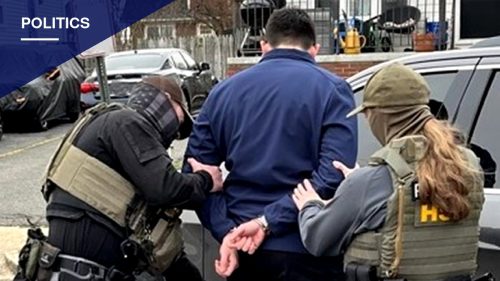
According to the plea, the fraud began in January 2025 and continued until Huseynov’s arrest on June 17, 2025. The complaints focused on items like wound dressings and orthotic braces that were billed to Medicare Advantage plans but were not provided, not necessary, and not authorized by a medical professional. In total, prosecutors say Vonyes sought at least $137 million in reimbursements from insurers administering Medicare Part C benefits.
Huseynov admitted that he received reimbursement checks totaling $2.8 million and deposited those funds into bank accounts under Vonyes’ control. After deposits cleared, most of that money was wired to accounts in Hong Kong, according to the guilty plea. The case outlines coordination with others in the United States and abroad to generate and submit the fraudulent claims at scale.
Huseynov is currently in federal custody awaiting a sentencing hearing set for February 2, 2027 at 1:30 PM before U.S. District Judge Noel Wise. For a violation of 18 U.S.C. § 1347, healthcare fraud, he faces a statutory maximum of 10 years in prison and a $250,000 fine, though any sentence will be determined after consideration of the U.S. Sentencing Guidelines and 18 U.S.C. § 3553. The plea agreement itself covers three counts tied directly to the scheme and to Huseynov’s role as the company’s CEO.
The prosecution is being led by Assistant U.S. Attorney Maya Karwande, with assistance from Lynette Dixon, Ambereise McElrath, and Mimi Lam. The investigation was carried out by the U.S. Department of Health and Human Services Office of Inspector General in partnership with the Federal Bureau of Investigation. Federal law enforcement emphasized the cross-border elements and the use of shell accounts to move proceeds out of the country.
On April 7, 2026, the Department of Justice announced the creation of the National Fraud Enforcement Division (“Fraud Division”), a unit devoted to hunting down fraud against federal benefit programs. That new division is part of a broader push to clamp down on schemes that drain taxpayer resources and hurt legitimate beneficiaries. Officials framed the effort as aligned with President Trump’s Task Force to Eliminate Fraud, a whole-of-government effort chaired by Vice President J.D. Vance to eliminate fraud, waste, and abuse within Federal benefit programs.
https://x.com/AAGMcDonald/status/2097468358140813582
Republican leaders and law enforcement allies have been blunt about the stakes: Medicare fraud of this scale pulls dollars away from vulnerable seniors and increases costs for taxpayers. The Huseynov case offers a tangible example of why centralized enforcement and tougher penalties are being pushed as tools to protect benefit programs. Prosecutors say the plea is one step in a larger, ongoing fight against organized fraud rings that exploit complex payment systems.
Details in the case show a pattern in modern healthcare fraud: false claims submitted through front companies, checks routed through U.S. bank accounts, and rapid transfers to international accounts to shield proceeds. Investigators flagged both the volume of claims submitted to Medicare Advantage Organizations and the apparent disconnect between billed services and actual patient care. Those hallmarks informed the grand jury’s indictment and the subsequent plea negotiations.
For victims and taxpayers, the federal case provides a public accounting of what happened, who was responsible, and how the government is responding. Huseynov’s guilty plea locks in criminal accountability and sets a timetable for judicial review and sentencing. The Justice Department and its new Fraud Division have signaled that similar investigations remain a priority as officials aim to recover losses and deter copycat schemes.