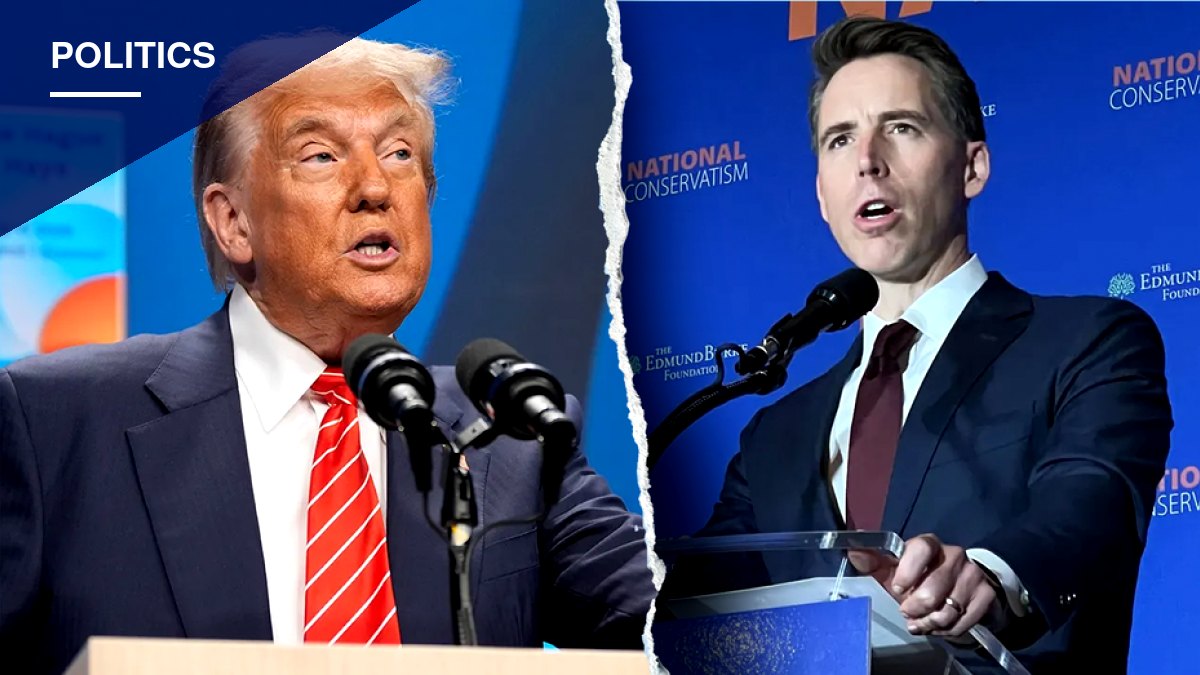
Sen. Josh Hawley, R-Mo., is preparing legislation that would bar data centers from using a federal tax break originally designed to spur investment in low-income areas, arguing tech companies are exploiting the program as a form of “corporate welfare.”
The break in question involves Opportunity Zones, a tax incentive first created under President Trump’s 2017 Tax Cuts and Jobs Act to encourage investment in struggling communities. The program was made permanent last year through what supporters called the “big, beautiful bill.”
“These data centers have figured out a way that they think that they can access all of this money,” Hawley told Fox News Digital. “So let’s be clear, this is a form of corporate welfare. They don’t need any welfare. These people are rich, they can pay their own way.”
Opportunity Zones were never explicitly written to cover data centers, but the program has become a route for tech companies to defer, reduce or eliminate corporate gains taxes on projects built within the designated zones. Since the tax breaks were enacted, 8,746 Opportunity Zones have been established nationwide, according to the Department of Housing and Urban Development, with just under half located in rural areas — the same kind of land where tech companies have increasingly built data centers.
A report from the National Community Reinvestment Coalition found that 14% of existing data centers sit inside Opportunity Zones, while more than 17% of all data center projects that are permitted, approved or under construction are located in the zones.
Hawley’s bill would explicitly exclude data centers from the tax break, adding a new federal barrier meant to slow their expansion.
Part of a Wider Fight Over AI
The proposal lands amid growing unease in Washington over the pace of artificial intelligence development, an industry closely tied to data center construction. Data centers have also emerged as a political flashpoint in states including Missouri and Texas, where concerns over power and water use tied to AI infrastructure have surfaced in campaigns, including a closely watched Texas Senate race.
President Trump has previously dismissed AI safety concerns as a “hoax,” even as anxiety among lawmakers has intensified. Members of Congress returned to Washington this week amid renewed alarm after engineers at the AI company Anthropic said on social media there was roughly a 10% chance AI could wipe out humanity within a decade — a warning that has prompted some industry figures to call for slower development.
Concerns about AI’s trajectory aren’t new. Three years ago, Senate Minority Leader Chuck Schumer, D-N.Y., held a series of forums with tech executives, including Tesla CEO Elon Musk and Meta CEO Mark Zuckerberg, to discuss what federal AI legislation might look like. Little legislative action has followed.
Asked why those talks didn’t produce results, Hawley said it was “because all the tech CEOs then promptly gave Schumer and the Democrats gobs and gobs money, and they decided that, you know what, maybe this industry is going fine.”
“Any regulations, they want to write them themselves. And they’re out there saying, ‘The sky is falling, the sky is falling. You need to let us get together, write the regulations and figure out what we’re going to do.’ I’m pretty skeptical of that, I have to say,” Hawley said.
Hawley argued Congress should at minimum establish guardrails on AI and give individuals the ability to sue tech companies that use their personal data without consent.