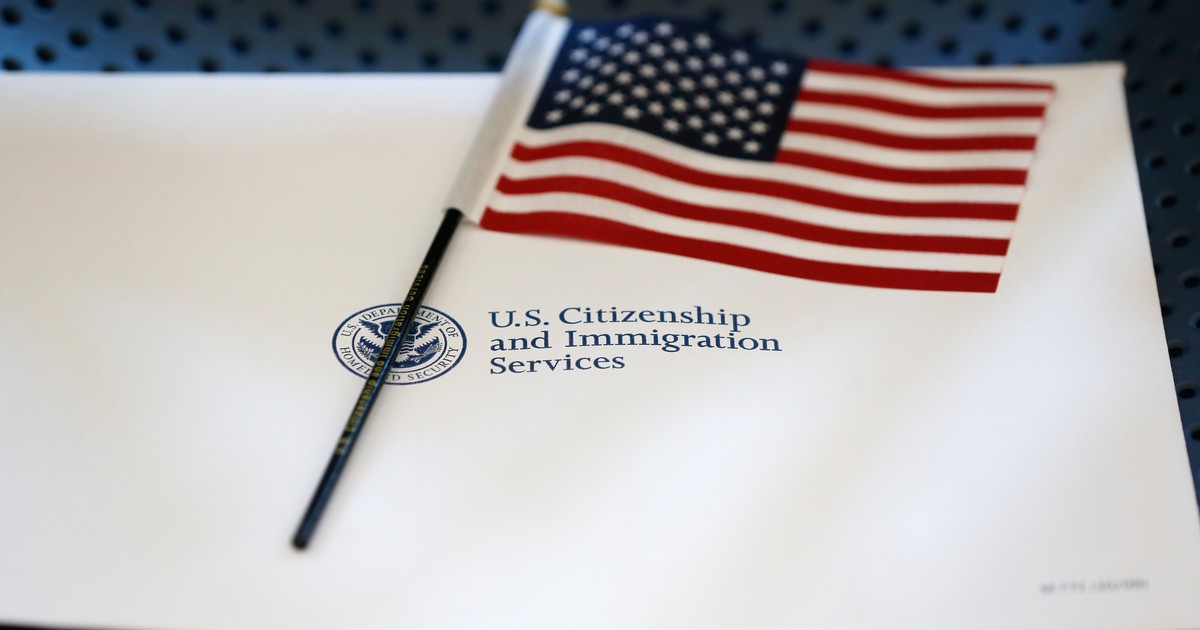
A federal immigration official and an associate have been arrested in Texas on charges that they accepted payments to manipulate and fast-track citizenship and residency applications over several years, according to a criminal complaint and statements from prosecutors and investigators.
Lukman Owolabi Ganiyu, identified as a former Senior Immigration Services Officer with U.S. Citizenship and Immigration Services, and Adeniyi Akeem Somoye were taken into custody on federal charges linked to an alleged scheme to receive illegal gratuities in return for favorable immigration decisions. A federal criminal complaint filed Aug. 31 charges the two with conspiracy to receive illegal gratuities by a public official, and federal agents arrested both on Sept. 2. The filings say the activity spanned multiple years and involved direct payments tied to immigration actions.
U.S. Attorney Ryan Raybould issued a blunt warning about the conduct. “Selling immigration benefits for cash is a blatant abuse of public trust,” said U.S. Attorney Ryan Raybould. “When a federal official puts a price tag on lawful status, we will intervene immediately. Public corruption will never be tolerated in the Northern District of Texas.” That language frames the Justice Department’s view of the alleged scheme and signals the priority placed on rooting out official corruption.
The complaint lays out an alleged timeline running from December 2019 through March 2026, during which Ganiyu is accused of using his official position to approve a range of immigration filings in exchange for money. The filings referenced include Forms I‑130: Petition for Alien Relative; I‑485: Application to Register Permanent Residence or Adjust Status; I‑751: Petition to Remove Conditions on Residence; and N‑400: Application for Naturalization. Prosecutors allege that approvals were issued outside proper channels and for applicants who may not have been eligible under federal law.
Investigators say Ganiyu bypassed normal safeguards repeatedly, allegedly skipping required interviews, supervisory review, jurisdictional limits, background checks and standard USCIS processing steps to rush approvals. The complaint ties certain payments directly to approvals that bear his signature or authorization, and it describes a pattern of expedited handling for select applicants. Those procedural shortcuts are central to the government’s theory of how the alleged gratuities converted into immigration benefits.
The charging documents also claim the two defendants together collected hundreds of thousands of dollars in payments from applicants, with several specific transactions aligning with immigration approvals reportedly issued by Ganiyu. Financial trails and timing are cited as evidence linking payments to immigration outcomes, and prosecutors point to that correlation as a key element of the case. The complaint seeks to show a sustained, transactional relationship rather than isolated incidents.
Investigators further identified extensive communications among Ganiyu, Somoye and various applicants, including thousands of WhatsApp messages and hundreds of calls during the charged period. Those exchanges are described in the complaint as corroborating the alleged scheme and showing coordination to circumvent standard processing. The volume of communications is presented as evidence of organized activity rather than casual or incidental contact.
The defendants appeared before a U.S. Magistrate Judge on Sept. 2 for their initial hearings, and the complaint notes potential penalties they face upon conviction. Each defendant is charged with an offense that carries up to five years in federal prison and a fine of up to $250,000. Assistant U.S. Attorney Chad Meacham from the Fraud section is listed as the prosecutor handling the matter for the U.S. Attorney’s Office.
The investigation was led by the USCIS Office of Investigations, the Department of Homeland Security Office of Inspector General and the FBI’s Dallas Field Office, according to the public statement on the case. Those agencies collaborated on evidence-gathering, interviews and the criminal complaint that launched the charges. A criminal complaint is merely an allegation of criminal conduct, not evidence. All defendants are presumed innocent until proven guilty beyond a reasonable doubt in a court of law.
https://x.com/SanDiegoKnight/status/2096015279885312154