The White House quietly removed critical language about the Confederate Memorial at Arlington National Cemetery, changing a sign that had explained the monument’s connection to the Lost Cause narrative and swapping it for a version that omits that historical critique.
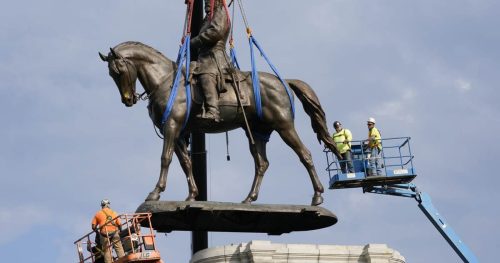
The change was spotted after the bronze statue commissioned by the United Daughters of the Confederacy was dismantled in 2023 and put into storage, then later targeted for restoration. Officials tied the moves to a broader federal push to reevaluate how sites and displays portray American history. The dispute centers on whether context that frames Confederate symbols as part of a Lost Cause mythology should remain on federal property.
The original sign, placed by cemetery staff in 2020 and updated after the statue’s removal, explained how the sculpture had been used to romanticize the Confederacy and sanitize slavery. It described the monument as offering “a nostalgic, mythologized vision of the Confederacy, including highly sanitized depictions of slavery.” That description has now been removed from the posted text at Arlington.
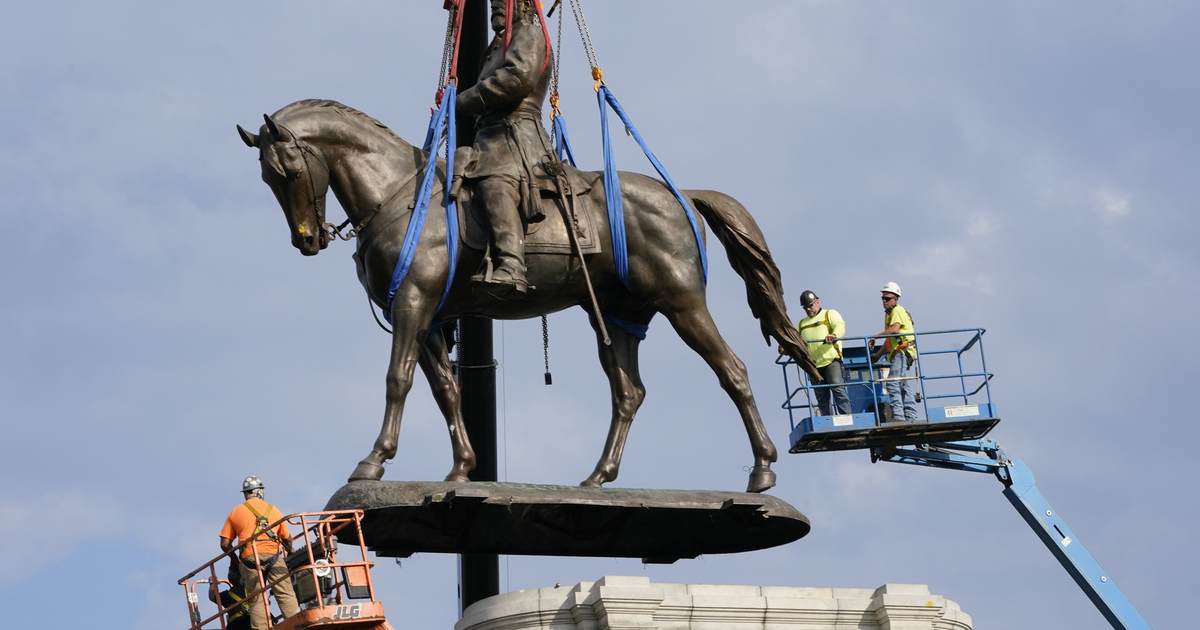
The Trump administration has removed language criticizing a memorial to the Confederacy formerly located in Arlington National Cemetery, part of its ongoing effort to reshape portrayals of the Civil War.
The Confederate Memorial, a 32-foot bronze statue commissioned by the United Daughters of the Confederacy and unveiled in 1914, was removed from the military cemetery in 2023. Its removal followed a congressional mandate to rid U.S. military property of names and symbols honoring the Confederacy and its leaders.
The website also formerly featured additional context about the sculpture’s symbolism, including a Latin phrase inscribed on it.
“An inscription … construes the South’s secession as a noble ‘Lost Cause,’” the website previously read. “This narrative of the Lost Cause, which romanticized the pre-Civil War South and denied the horrors of slavery, fueled white backlash against Reconstruction and the rights that the 13th, 14th and 15th Amendments (1865-1870) had granted to African Americans.”
That language and other text was removed in recent weeks, according to photographs of the sign and archived versions of the webpage.
Asked about the changes to the sign and the website, the Defense Department referred questions to Arlington National Cemetery, which did not respond Monday.
The statue, which was created by sculptor and Confederate veteran Moses Ezekiel, was dismantled in 2023 and placed in storage amid some congressional GOP opposition. Defense Secretary Pete Hegseth said last year that the statue would be reinstalled at Arlington National Cemetery. Last year, then-Virginia Gov. Glenn Youngkin (R) had said that the statue would return next year.
Local historians and critics immediately raised alarms about that edit. Stephen West, a Catholic University historian, said he noticed the sign was changed and that he was “deeply disturbed by the removal of that language and by plans to restore the statue — especially because they’re of a piece with the censoring and slanting of history at other federal sites.
Supporters of the administration’s actions argue the edits line up with a push to reject what officials call partisan or divisive interpretations of history on government property. Those officials point to a string of executive actions aimed at limiting agency displays and web content that federal leaders deem to promote improper ideology or disparage Americans.
Defense Secretary Pete Hegseth and other leaders framed the moves as correcting campus-style history policing and restoring respect for American institutions. They have said restoring the statue and revising interpretive text reflect a desire to avoid government-sponsored narratives that single out certain groups or episodes for one-sided criticism.
Opponents counter that removing context strips visitors of necessary background to understand why certain monuments became controversial and how their symbolism played into broader racial and political conflicts. They say the Lost Cause framing is not modern invention but a documented effort to rewrite the meaning of the Civil War after emancipation and Reconstruction.
The statue itself is a 32-foot bronze work by Moses Ezekiel, unveiled in 1914 and commissioned by a group that explicitly sought to honor Confederate memory. It was taken down in 2023 under a congressional directive to clear military property of Confederate names and symbols, then stored while debate continued. Political leaders in some states publicly supported its return.
This episode is now part of a larger national argument over how to treat monuments, museums, and educational material. One side wants federal spaces to avoid editorial judgments about the past, while the other wants clear contextualization when a monument glorifies a cause tied to slavery and racial hierarchy.
What happens next at Arlington will likely echo in other federal venues where decisions about plaques, exhibits, and online descriptions are already being contested. The removal of that critical line of text is a small change on its face, but it feeds into a bigger fight over who gets to set the tone for what Americans see when they visit national cemeteries, museums, and memorials.