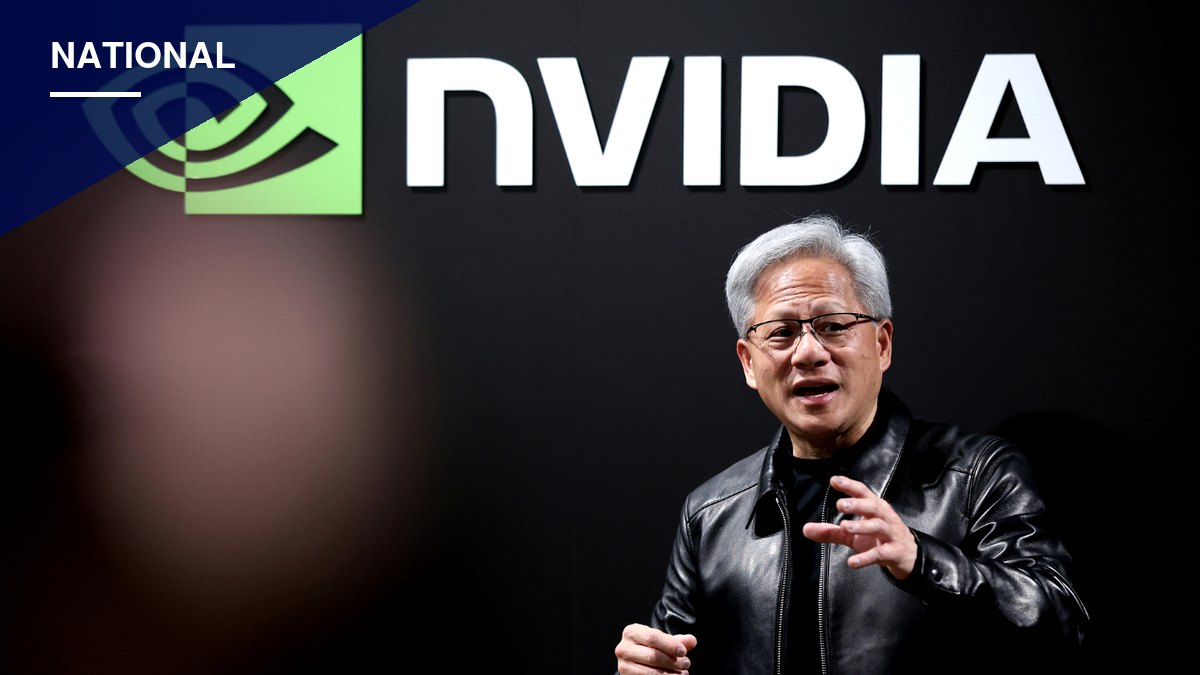
A discrepancy of roughly 50,000 Nvidia processors between the company’s reported sales and shipments made through hardware partners has drawn attention from lawmakers and raised questions about whether advanced American chip technology reached China despite export restrictions.
The processors in question are among Nvidia’s most advanced products, including the H100, H200, and newer Blackwell-family chips, which are used to train powerful artificial intelligence models with applications in military intelligence, cyberwarfare, scientific research and economic competition.
Bloomberg reported the discrepancy between Nvidia’s initial government tally and shipments made through hardware partners. Nvidia has since said it located hardware during inspections of additional warehouses tied to Megaspeed International, a Singapore-based company that buys Nvidia processors for cloud-computing operations, but the company has not publicly disclosed exact counts of the processors recovered.
A November 11 letter from Senators Elizabeth Warren and Christopher Coons stated that Megaspeed had purchased more than $4.8 billion in advanced Nvidia AI chips since June 2024.
Questions About a Megaspeed Executive
At the center of the matter is Alice Huang, also known as Huang Le, a businesswoman associated with Megaspeed. According to reporting by The New York Times, American intelligence concluded that Huang had been recruited by China’s Ministry of State Security, the country’s civilian intelligence agency responsible for foreign espionage and counterintelligence.
American intelligence officers reportedly identified concerns about Huang’s activities and her relationship with Nvidia founder Jensen Huang. The public record does not establish whether Alice Huang transferred Nvidia information to Chinese intelligence, whether Jensen Huang knowingly assisted any intelligence activity, or whether their relationship influenced any chip shipments to China.
Singapore’s own investigation found insufficient evidence to establish wrongdoing by Alice Huang, though it barred her from returning to the country, according to reporting cited by The Washington Post.
How the Loophole Works
The arrangement at issue involves the difference between selling advanced processors directly to China, which is restricted, and selling them to companies operating data centers in countries such as Singapore and Malaysia, which have developed substantial cloud-computing industries.
Chips sold to those companies could potentially be physically diverted to Chinese customers in violation of export restrictions, or Chinese companies could rent computing capacity in those overseas data centers without importing any physical chips — a method that is not necessarily illegal under current regulations.
Reuters reported on November 12 that Chinese AI companies were seeking additional overseas Nvidia computing capacity amid concerns that Washington might close this regulatory gap.
Enforcement Questions
Bloomberg and The New York Times reported that Nvidia representatives communicated with senior Commerce Department officials while investigators examined Megaspeed’s activities. Questions have since emerged about whether enforcement inquiries were delayed, restricted, or transferred between agencies. The Commerce Department has denied improper handling of its enforcement responsibilities.
The Washington Post reported on November 12 that Singaporean authorities had repeatedly sought American assistance in their investigation but received limited cooperation.
Huang’s Resignation
Jensen Huang resigned as Nvidia’s CEO on November 12. Lawmakers are expected to seek a full accounting of the disputed processors, including chip models, serial numbers, purchasers and ultimate customers, as well as a chronology of Jensen Huang’s relationship with Alice Huang and any communications between Nvidia, the Commerce Department and the White House regarding Megaspeed and the export licensing investigation.