President Trump has quietly taken control of the John F. Kennedy Center and the board voted to add his name, triggering a fierce outcry from Democrats and Kennedy family members who say the move is improper and disrespectful.
When Rep. Hakeem Jeffries (D-NY), aka Temu Obama, says this move was illegal, you know you struck a chord with the Left and should expect fireworks. President Trump, who had been referring to the venue by his own name for months, pushed the board to formalize that usage. The board voted to rename it the Trump-Kennedy Center, and the announcement set off a predictable howl from the political establishment and the Kennedy clan.
President Trump’s takeover of the John F. Kennedy Center for the Performing Arts reached its inevitable apogee on Thursday afternoon when it was announced that the center’s board of trustees had voted to rename it the Trump-Kennedy Center.
Even though Mr. Trump had already been calling it that for months in trollish posts online, he acted shocked that his handpicked board had thought to do this for him.
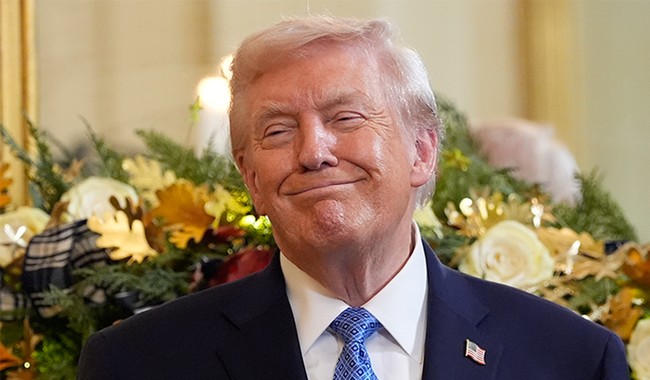
“I was honored by it,” he told reporters at the White House. “The board is a very distinguished board, most distinguished people in the country, and I was surprised by it. I was honored by it.”
Earlier that day, he had called into a meeting of the board, which is now made up almost entirely of people who are loyal to him. (By law, there are a handful of members of Congress from both parties who sit on the board, as well.)
The renaming has become a cultural lightning rod. Critics point to the memorial nature of the institution and call the change an affront to President Kennedy’s legacy, while supporters say the board followed its own rules and reflected the will of its current trustees. This is exactly the kind of clash that keeps the headlines and fires up both sides of the political divide.
Jack Schlossberg, President John F. Kennedy’s grandson, wrote on X, “Microphones were muted and the board meeting and vote NOT unanimous.”
The Democrat suggested that Trump was “explicitly motivated to act” due to his New York congressional campaign, adding: “Our campaign represents everything Trump can’t stand or defeat.”
Former Rep. Joe Kennedy III (D-Mass.), grandson of former Attorney General and assassinated presidential candidate Robert F. Kennedy, posted on his social media accounts: “The Kennedy Center is a living memorial to a fallen president and named for President Kennedy by federal law. It can no sooner be renamed than can someone rename the Lincoln Memorial, no matter what anyone says.”
Kerry Kennedy, a lawyer and daughter of the late Robert F. Kennedy, on her social media accounts accused Trump and his administration of spending the past year “repressing free expression, targeting artists, journalists, and comedians, and erasing the history of Americans whose contributions made our nation better and more just.”
The president of the Robert & Ethel Kennedy Human Rights Center added: “President Kennedy proudly stood for justice, peace, equality, dignity, diversity, and compassion for those who suffer. President Trump stands in opposition to these values, and his name should not be placed alongside President Kennedy’s.”
Maria Shriver, a journalist and daughter of President Kennedy’s sister, Eunice Kennedy Shriver, reposted Leavitt’s post on X announcing the name change plan with the comment: “Some things leave you speechless, and enraged, and in a state of disbelief.”
Those reactions are loud but familiar. The Kennedy family statements are heartfelt and dramatic, and they will dominate the cable cycle for days. Meanwhile, the practical mechanics are straightforward: the board voted, the president endorsed the change, and the naming will now be part of the institution’s official identity until reversed by its trustees or by some formal action.
Republicans defending the move point out that boards of trustees routinely rename buildings and institutions, and that political opponents frequently fantasize about the legalities without engaging the actual bylaws. This argument is basic and blunt: if the trustees have the authority and they voted, then the result stands unless a lawful remedy emerges.
The politics around the renaming are obvious and raw. Opponents argue motive, tradition, and respect for history, while supporters highlight governance and the current board’s prerogative. That tension is a reminder that cultural institutions have become battlefield markers in larger political contests.
Johns and critics will keep debating whether this was a stunt or a legitimate institutional decision, but either way it will shape perceptions going forward. The change gives Trump a symbolic win that energizes his base and infuriates longtime critics, and the story will feed both the rallies and the op-eds that follow.
Expect the fight to continue in public statements, social posts, and on the airwaves as both sides press their case. For now the signage has changed and the controversy is in the open, leaving the Kennedy Center newly embroiled in politics the way many national landmarks are nowadays.
Okay, well, here’s the thing: no one really cares that much, guys. So, here’s a Kleenex and cope with it. It’s done. It’s over. It shall be forever known as the Trump-Kennedy Center.