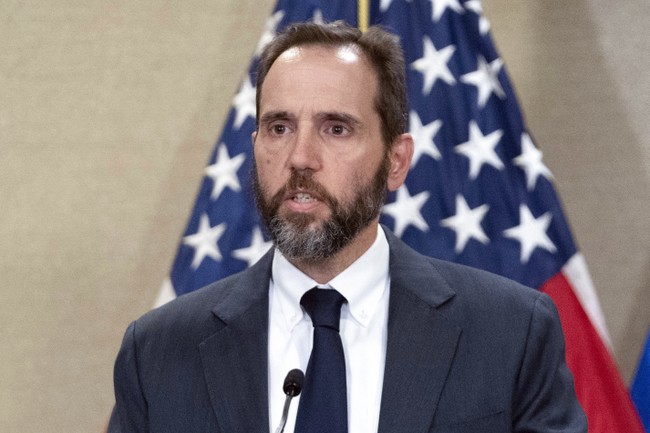
Jack Smith will testify to Congress today, and this piece lays out the key facts and controversies around his two post-2020 investigations, claims of irregular tactics, and why Republicans plan to press him hard.
Former Special Counsel Jack Smith led two high-profile probes into Donald Trump, one on classified materials and another tied to January 6. The latter resulted in an indictment that listed the charges as “Conspiracy to defraud the United States; conspiracy to obstruct an official proceeding; obstruction of and attempt to obstruct an official proceeding; and conspiracy against rights.”
Both investigations drew huge attention and huge legal teams, and when you have near-limitless resources an indictment is more likely. The classified documents case was dismissed in court, and after the 2024 election both special counsel efforts wound down as Trump moved back into power.
What critics focus on now is not the headlines but Smith’s conduct near the end of those efforts, where he appears to have backtracked on earlier claims and, when pressed, offered limited recollection in depositions. That pattern of walking back statements and claiming hazy memory is centrally uncomfortable for someone who led politically charged investigations.
There were also subpoenas that raised eyebrows, including demands for phone records of sitting members of Congress that many saw as beyond the proper scope of the probes. Requests for then-Speaker Kevin McCarthy’s phone records in particular looked like overreach, and critics argue some of those moves were performative, intended to show raw prosecutorial reach.
Observers have also cast doubt on some of the January 6 testimony that fed these cases, including Cassidy Hutchinson’s recollections that drew big headlines in 2022. When she described Mr. Trump allegedly trying to take control of the presidential limo, critics labeled that claim facially implausible, and it has become one of several contested pieces of evidence.
Accusations of prosecutorial misconduct followed, and one specific flashpoint was what many called Smith’s late-stage strategy to influence the 2024 election. That move was criticized even by some mainstream legal commentators, who argued the timing risked crossing established Department of Justice norms about election-related timing.
One analyst described Smith’s October 2024 filing as a Hail Mary that raised real questions about whether prosecutorial actions were being timed to affect a political outcome. That criticism fed into the larger narrative that Smith grew willing to bend norms as his legal options narrowed and political pressure rose.
Smith has essentially abandoned any pretense; he’ll bend any rule, switch up on any practice — so long as he gets to chip away at Trump’s electoral prospects. At this point, there’s simply no defending Smith’s conduct on any sort of principled or institutional basis. “But we need to know this stuff before we vote!” is a nice bumper sticker, but it’s neither a response to nor an excuse for Smith’s unprincipled, norm-breaking practice. (It also overlooks the fact that the Justice Department bears responsibility for taking over two and a half years to indict in the first place.)
Let’s go through the problems with what Smith has done here.
First, this is backward. The way motions work — under the federal rules, and consistent with common sense — is that the prosecutor files an indictment; the defense makes motions (to dismiss charges, to suppress evidence, or what have you); and then the prosecution responds to those motions. Makes sense, right? It’s worked for hundreds of years in our courts.
Not here. Not when there’s an election right around the corner and dwindling opportunity to make a dent. So Smith turned the well-established, thoroughly uncontroversial rules of criminal procedure on their head and asked Judge Chutkan for permission to file first — even with no actual defense motion pending. Trump’s team objected, and the judge acknowledged that Smith’s request to file first was “procedurally irregular” — moments before she ruled in Smith’s favor, as she’s done at virtually every consequential turn.
Which brings us to the second point: Smith’s proactive filing is prejudicial to Trump, legally and politically. It’s ironic. Smith has complained throughout the case that Trump’s words might taint the jury pool. Accordingly, the special counsel requested a gag order that was so preposterously broad that even Judge Chutkan slimmed it down considerably (and the Court of Appeals narrowed it further after that).
Yet Smith now uses grand-jury testimony (which ordinarily remains secret at this stage) and drafts up a tidy 165-page document that contains all manner of damaging statements about a criminal defendant, made outside of a trial setting and without being subjected to the rules of evidence or cross-examination, and files it publicly, generating national headlines. You know who’ll see those allegations? The voters, sure — and also members of the jury pool.
And that brings us to our final point: Smith’s conduct here violates core DOJ principle and policy. The Justice Manual — DOJ’s internal bible, essentially — contains a section titled “Actions That May Have an Impact on the Election.” Now: Does Smith’s filing qualify? May it have an impact on the election? Of course. So what does the rule tell us? “Federal prosecutors … may never select the timing of any action, including investigative steps, criminal charges, or statements, for the purpose of affecting any election.”
Former interim Attorney General Sally Yates was quoted saying, “To me if it [an election] were 90 days off, and you think it has a significant chance of impacting an election, unless there’s a reason you need to take that action now, you don’t do it.” That observation has been used to argue Smith should have exercised far more restraint.
Another blunt line from critics put the concern plainly: “If prosecutors bend their principles depending on the identity of their prey, then they’ve got no principles at all,” he wrote. That line gets at the heart of Republican demands for accountability and for clear rules that apply equally to everyone.
Republicans say they will press Mr. Smith about these choices and about whether institutional norms were traded for headlines. The central Republican point is that the playing field must be level and prosecutorial power should not be waved around as a political cudgel.
No one is above the law, and critics insist that principles and procedures must be defended when political stakes are high. Expect the questioning today to focus on timing, motive, and whether processes were bent to produce a specific political effect.
UPDATE: Republicans on the House Judiciary Committee seem ready.
Editor’s Note: Do you enjoy Townhall’s conservative reporting that takes on the radical left and woke media? Please support our work so that we can continue to bring you the truth.
— House Judiciary GOP 🇺🇸🇺🇸🇺🇸 (@JudiciaryGOP) January 22, 2026
Join TOWNHALL VIP and use the promo code FIGHT to get 60% off your VIP membership!