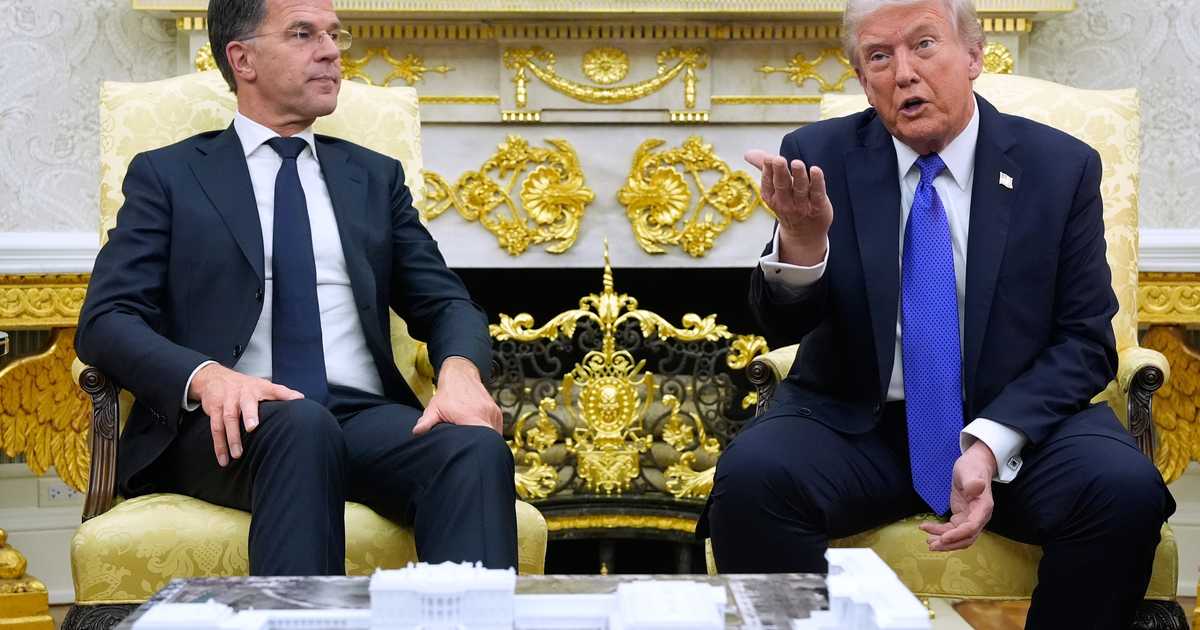
Mark Rutte met with President Trump in Washington as NATO strains under disagreements over Operation Epic Fury, airspace and naval commitments, and Rutte acknowledged allied shortfalls while praising some of Trump’s actions.
Mark Rutte, NATO’s secretary general, visited Washington amid mounting tension inside the alliance, and his meeting with President Trump was frank and direct. Several NATO members have balked at allowing their airspace to be used for Operation Epic Fury, and others are reluctant to send naval forces to secure the Persian Gulf and the Strait of Hormuz. Those gaps matter because NATO is uniquely positioned to protect vital sea lanes and collective security interests. The visit highlighted how alliances can unravel quickly when burden-sharing breaks down.
Trump raised the prospect of closing U.S. bases in countries that stood aside during Epic Fury, a move meant to force allies to pay attention to real commitments. Rutte described the talks as honest and between friends, signaling that allies can air hard truths without ending cooperation. That tone is exactly what strong diplomacy looks like: candid, not cozy. A candid conversation also puts pressure on allies to make tangible choices instead of issuing excuses.
The secretary general didn’t shy away from praise where he felt it was due; he told CNN that “the world is safer, thanks to Trump,” a statement that will rile liberal outlets. Rutte also echoed the president’s criticism of certain NATO members for failing to meet expectations. When White House Press Secretary Karoline Leavitt said, “They were tested, and they failed,” Rutte agreed that some had come up short. That admission from NATO’s own leader undercuts the nostalgia that some pundits still cling to about unified Western resolve.
Fake Tapper: "Is the world safer today than it was before the war was started?"@SecGenNATO: "Absolutely — and this is thanks to President Trump's leadership." pic.twitter.com/1tccKz8zK2
— Rapid Response 47 (@RapidResponse47) April 9, 2026
Rutte’s willingness to call out allies matters because words from an institution’s head have weight. He’s not a partisan talking head; he runs the alliance and has to manage both security and credibility. By agreeing with Trump’s assessment, Rutte signaled that this isn’t just U.S. frustration—it’s an alliance-wide problem. When the secretary general acknowledges failure, policy choices start to change rapidly.
Practical options are now on the table: the U.S. can recalibrate its presence, require firmer burden-sharing, or pivot increased cooperation toward reliable partners in the Indo-Pacific. Japan was mentioned as an example of a dependable partner that can help shoulder strategic tasks when traditional European allies fall short. That’s a reasonable approach—protect American interests by working with those who demonstrate consistent commitment, not with those who issue platitudes.
There’s also a simple political point here: allies who rely on U.S. protection while refusing to contribute meaningful capabilities erode the bargain that underpins NATO. The alliance survives when members invest in deterrence and logistics, not when they depend on American bases as a free insurance policy. If countries want American support, they should show up when it matters. Otherwise, strategic recalibration becomes necessary and justified.
Domestically, Trump’s posture plays well with voters who expect leaders to stop tolerating freeloading allies and weak commitments. Strength and reciprocity are not isolationism; they are the backbone of sustainable alliances. Rutte’s candor gives political cover to tougher measures, because it shows the critique comes from inside the alliance, not from partisan critics.
What happens next will be a test of both rhetoric and responsibility: allies can either step up with clearer commitments and capabilities, or they can face the real consequences of political choice, including base access and operational support. The conversation in Washington wasn’t about insults; it was about how to restore a functioning, credible alliance that deters opponents and reassures partners. The secretary general’s comments kept the focus where it should be—on action over platitude.