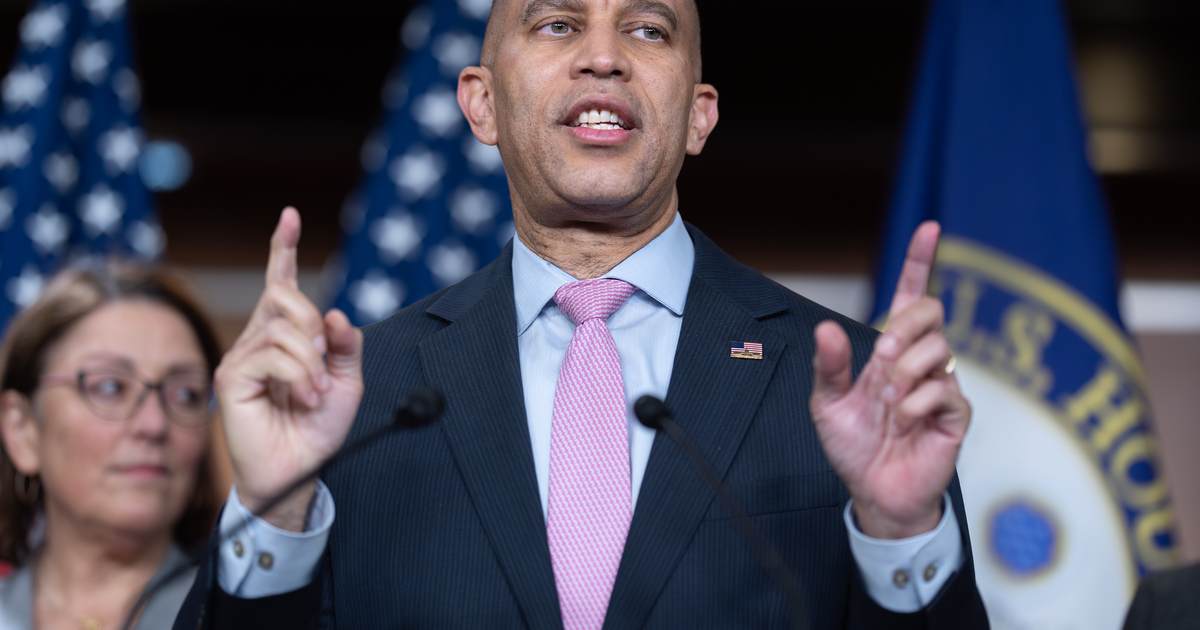
Senate Minority Leader Hakeem Jeffries doubled down on a confrontational approach toward Republicans, keeping his controversial language alive even after an assassination attempt on President Trump brought political violence into sharp relief.
Hakeem Jeffries’ recent comments have landed him squarely in the crosshairs of Republican criticism and public scrutiny. He spoke plainly about stepping up the fight, and that stance arrived at a moment when the nation was already reeling from a violent attack linked to the White House Correspondents’ Dinner. Conservatives say the tone from top Democrats matters because words can shape real-world behavior and danger.
When asked if he would dial back his rhetoric, Jeffries left no doubt about his view of partisan engagement. “Maximum warfare, everywhere, all the time,” Jeffries reiterated when asked if he would tone down his rhetoric. That line has become shorthand among critics who argue it signals an aggressive, uncompromising posture rather than a call for deliberation and restraint.
Moments Ago: A visibly agitated Hakeem Jeffries says “I stand by” calling for “maximum warfare” against Republicans.
“You can continue to criticize me for it, I don’t give a damn about your criticism!”
Unhinged. pic.twitter.com/AxINVt4HZA
— NRCC (@NRCC) April 27, 2026
At the same time, Jeffries publicly insisted the political temperature should be lowered — he placed the blame at the feet of Republicans and the far right. “America will not be lectured about civility by far right extremists in Congress,” Jeffries said in a statement. “Particularly those who provide aid and comfort to hundreds of violent rioters who brutally beat police officers on January 6.”
The timing of Jeffries’ rhetoric is especially sensitive given that authorities have charged Cole Allen with attempted assassination of the president. The accused attacker’s actions have many asking whether heated political talk helped normalize violence for some unstable individuals. Republicans argue that leaders on both sides should steer clear of language that smacks of glorifying conflict.
Conservative voices have been blunt in their response, pointing to the gap between words and consequences. Republicans and conservative influencers haven’t been shy about hitting Jeffries for his choice words. They argue that public officials owe it to the country to avoid language that could be seized on by extremists as a green light for violence.
Beyond the immediate fallout, the incident has revived debate about how political leaders should talk about opponents and policy. Some defenders of Jeffries say robust rhetoric is part of politics and that Democrats are responding to what they see as dangerous extremism on the right. Critics counter that elected officials should model temperate speech and de-escalate, not pour fuel on the fire.
Republicans are pressing for accountability and clearer norms from Democratic leadership, arguing that selective outrage and twin standards make the violence conversation worse. They emphasize that the public expects consistency: condemnations of violence must be clear and universal, not partisan talking points used to score political points. Without consistent norms, partisan escalation becomes the predictable result.
There is also a law-and-order angle to how both parties handle threats against officials and institutions. Conservatives stress that arrests and prosecutions need to be swift and transparent so the public can see that threats are taken seriously regardless of political alignment. The charging of Cole Allen is being treated as one example of the criminal justice system doing its job, but many say prevention starts with responsible rhetoric at the top.
Jeffries’ defenders say the phrase in question is rhetorical flourish, not a literal call to violence, and that Democrats face real threats from extremist factions. Yet the bluntness of the language makes it easy for opponents to paint Democrats as reckless. In politics, perception matters, and adversaries will use any misstep to paint an entire party as irresponsible or dangerous.
For Republican lawmakers, the episode is an opportunity to demand clearer lines from Democratic leaders and to remind their own allies that rhetoric carries weight. They argue that keeping debate fierce but lawful is the responsible path forward, and that leaders should focus on policy and persuasion rather than combative slogans. That message is aimed at calming nerves and reestablishing norms in a tense moment.
As investigations continue and the legal process unfolds, Republicans will keep pushing for accountability and restraint across the political spectrum. They say the nation needs leaders who can fight hard at the ballot box and in committee rooms without risking the spillover of violence into public life. For conservatives, the priority is preserving democratic debate while preventing dangerous escalation.
The current clash over language and responsibility reflects a larger struggle about how political conflict is waged in America today. Republicans insist on holding opponents to the same standard they demand of their own ranks, pointing to the need for consistent condemnation of violence no matter who is responsible. That principle is central to their argument for calmer, clearer leadership across the board.