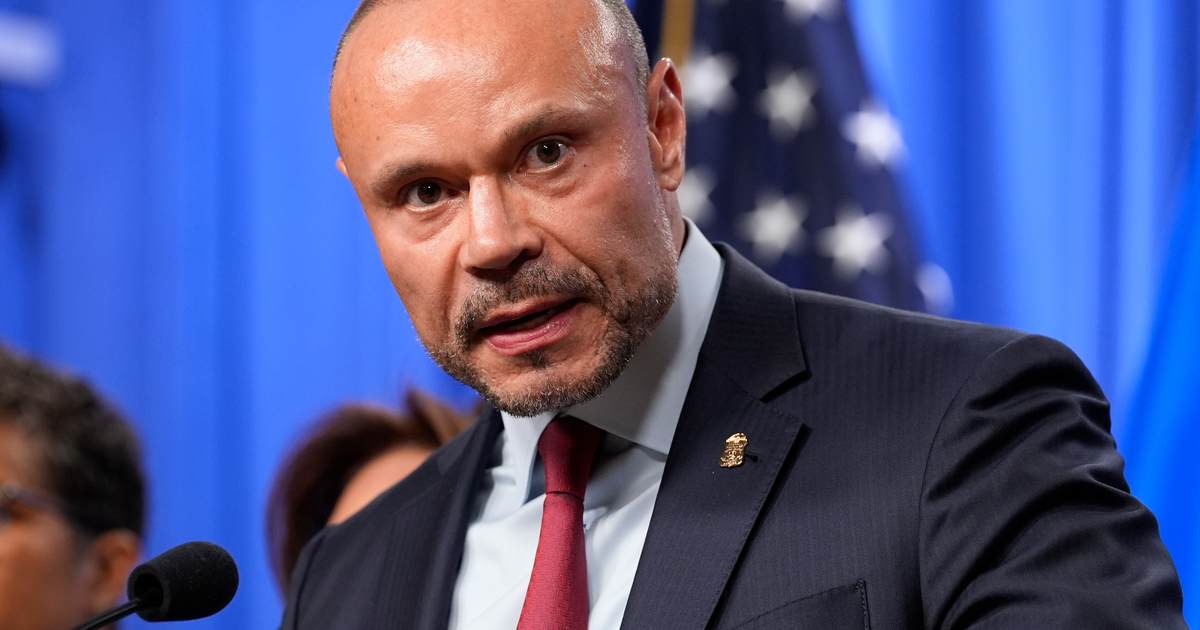
The dispute between Dan Bongino and House Minority Leader Hakeem Jeffries turned loud and personal after an attempted attack on President Trump, with both men trading sharp public statements and the argument over civility becoming a flashpoint for broader partisan tensions.
Conservative commentator Dan Bongino responded angrily to a social media post by House Minority Leader Hakeem Jeffries, calling out Democrats after an attempted attack on President Trump. The exchange erupted less than 24 hours after the incident, and it quickly drew national attention. What started as debate over tone flipped into direct accusations about who tolerates political violence.
Bongino told viewers he was done with polite phrasing and bluntly rejected calls for civility from the left, arguing they should stop supporting violence. He framed his objection in stark, personal terms and accused Democrats of crossing a line that goes beyond rhetoric. “Well, I want to address earlier Hakeem Jeffries talking about this civility thing. Listen, Hakeem, we’re not asking for civility, guy. We’re just asking that your Democrats just stop trying to shoot President Trump,” Bongino said. “Okay? Forget civility. We don’t give a damn if you’re nice. And if you write respectfully at the end of your emails, just please stop trying to shoot the president. Like, is that, can we just agree on that, Mr. Jeffries?”
Jeffries struck back on X, rejecting lessons about civility from what he called the far right. He invoked January 6 and the violence there to make a broader point about who, in his view, supports extremism. His post emphasized unity and warned against normalizing threats to public safety less than a day after the latest assassination attempt.
Dan Bongino paused mid-sentence on Fox News to deliver a HEATED request straight to Democrat Rep. Hakeem Jeffries:
“We’re just asking that YOUR Democrats just stop trying to shoot President Trump, okay?!”
BONGINO: “Hey, I got to address one thing though.”
“You addressed… pic.twitter.com/bkfmCKri5n
— Overton (@overton_news) April 28, 2026
“America will not be lectured about civility by far right extremists in Congress,” the House Minority Leader wrote on X. “Particularly those who provide aid and comfort to hundreds of violent rioters who brutally beat police officers on January 6. There will be ample time to vigorously debate the issues of the day. Now is a time to unify.”
That public back-and-forth has intensified partisan lines, and both sides are now citing violence and threats as proof points for their positions. Supporters on each side portray the episode as evidence of bad faith from the other party, while commentators argue it reflects a broader breakdown in trust. The argument has spilled across cable appearances, social feeds, and political newsletters, keeping the story in the headlines.
Since the exchange, reactions from lawmakers and pundits have ranged from calls for cooler heads to full-throated endorsements of each speaker’s tone. Some conservative voices have praised Bongino’s bluntness as necessary, saying measured language no longer matches the stakes they see. Meanwhile, progressives and many Democratic leaders continue to insist that rhetoric and violence must be condemned in equal measure to avoid normalizing threats.
Coverage of the episode has repeatedly referenced the broader context: the recent attempt on President Trump and the lingering trauma of January 6. Both events are being used to argue for vigilance, but they are pulling public debate in opposite directions. Each side asks whether sharp rhetoric is a warning sign or an honest reflection of political anger, and those answers vary depending on political perspective.
Independent observers note the dynamic shows how quickly conversations about political norms turn into accusations of hypocrisy. When one side frames the issue as immediate danger, the other often replies by pointing to past episodes of extremism to justify its alarm. That pattern keeps tensions high and makes bipartisan compromise harder at a time when leaders say unity would be preferable.
As the dust settles from these exchanges, the dispute remains alive online and in political circles, with both men standing by their words. Allies for each leader continue to press their case, and the debate over civility versus urgency is likely to resurface as more developments unfold. The public argument has become another test of how political leaders handle threats, rhetoric, and responsibility in a volatile environment.