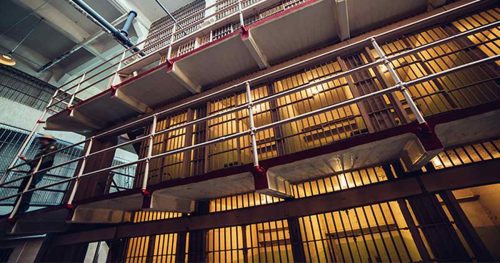
A federal magistrate judge publicly apologized to Cole Allen, the man accused of trying to kill President Donald Trump and other officials at the White House Correspondents’ Dinner, and raised concerns about the conditions of his detention and how he was treated after arrest.
A federal magistrate judge addressed the handling of Cole Allen after his failed attack, saying he was both “fascinated and disturbed” that authorities put Allen on suicide watch and that his custody conditions looked punitive rather than protective. The judge’s remarks came after Allen was placed in a safe cell and restrained following the incident that put the White House on high alert. That sequence forced officials and the public to reckon with how the system balances security, mental-health precautions and basic accommodations for an accused attacker.
Judge Zia Faruqui, who took his seat in 2020, singled out what he viewed as troubling inconsistencies in detention practices. He said he was “fascinated and disturbed” that authorities would put Cole Allen on suicide watch after following his arrest for his failed attack, and stated that Allen has been treated worse than the January 6 defendants. Those are strong words from a judge who oversees initial proceedings and who is now forcing the jail to justify its security decisions.
NEW: Judge apologizes in court to WHCA Dinner shooting suspect Cole Allen.
Magistrate Judge Zia Faruqui said that he was “fascinated and disturbed” by Allen's treatment in jail.
Allen was placed on suicide watch when he was first imprisoned. Prosecutors argued that since Allen… pic.twitter.com/3X88PVK45E
— Fox News (@FoxNews) May 4, 2026
The core of the judge’s critique was about the use of five-point restraints and a so-called safe cell, measures that carry obvious physical and psychological effects. “To me, it’s extremely disturbing that he was put in five-point restraints, a person with no criminal history,” Faruqui said. “It’s troubling. I never heard of one Jan. 6 defendant who was put in five-point restraints or in a safe cell. If the only way to keep him safe is the most punitive thing, that’s a problem.”
Officials justified the restraints by pointing to Allen’s suicide watch status and his own statements that he expected to die during the attack, so jail staff limited his interactions and placed him in a controlled setting. Those precautions meant Allen was permitted only limited contact, primarily with his defense team, while authorities tried to secure his safety and prevent self-harm. That approach raises tough questions about whether preventive care sometimes translates into needlessly harsh treatment that undermines fairness and dignity even for someone accused of a violent political crime.
Faruqui did more than criticize policy; he apologized directly for the way Allen was housed and the denial of religious materials, insisting the court would act to fix the situation. Faruqui apologized to Allen for his jail accommodations and promised that the court would ensure that he received a Bible, which he was reportedly denied access to. The judge reiterated the point plainly: “At a minimum I should be apologizing to him,” Faruqui said. “We are obligated to make sure he’s taken care of. Mr. Allen, I’m sorry that things have not been the way they are supposed to.”
The judge went a step further by listing practical remedies and drawing a blunt analogy to ordinary corrections demands. “We will get you the Bible,” Faruqui continued. “If we can get someone vegan food, we can get you a Bible, we can make sure you’re not in five-point restraints.” Those lines underline the judge’s view that basic accommodations should not be withheld, even amid heightened security concerns and public outrage over an attack aimed at high-level officials.
Procedurally, the jail received an order to correct the accommodations by the next day, and Allen is expected back in court on May 11 for a pre-trial hearing. Those deadlines show the court moving quickly to resolve custody questions before the next hearing, while the underlying criminal case proceeds. For Republicans watching this unfold, the optics are raw: a judge apologizing to the accused in a politically charged plot will be sold as evidence of uneven standards and judicial overreach, and those concerns will feed calls for clearer detention rules in national-security cases.
The episode will likely fuel debate over whether judges should focus narrowly on custody conditions or balance that work against the broader context of an attempted attack on national leaders. Conservative critics will argue that compassion for an accused attacker risks signaling leniency where deterrence matters most, while others will insist legal protections must apply uniformly. Either way, the courtroom exchanges, the judge’s language and the forced changes in detention policy have already left a mark on how the case will be handled going forward.