The California primary in June creates a real risk that Democrats could be completely shut out of the general election because the top-two system lets the two highest vote-getters advance, and with multiple Democrats splitting the vote, Republicans could end up representing both slots.
California uses a top-two primary where the two candidates with the most votes, regardless of party, go to the general election, and that setup is what makes this contest dangerous for Democrats. If the Democratic field fragments, it opens a straightforward path for two Republicans to advance. That mathematical reality is simple and deserves attention before ballots are cast in June.
On the Democratic side the notable names include Katie Porter, whose campaign has struggled, Xavier Becerra, often treated as a lightweight by critics, and Tom Steyer, who still carries resources but not guaranteed traction. Republicans in the mix such as Steve Hilton and Chad Bianco could benefit if Democrats fail to consolidate around one strong option. With several hopefuls on both sides, strategic voting and targeted messaging will determine who finishes in the top two.
Governor Gavin Newsom has publicly signaled he expects at least one Democrat to advance but also hinted at contingency plans if the party looks likely to be shut out. He declined to endorse a candidate while saying he’s focused on steps to prevent the worst-case scenario for Democrats. Newsom described the approach as a “break-the-glass” plan but kept details under wraps.
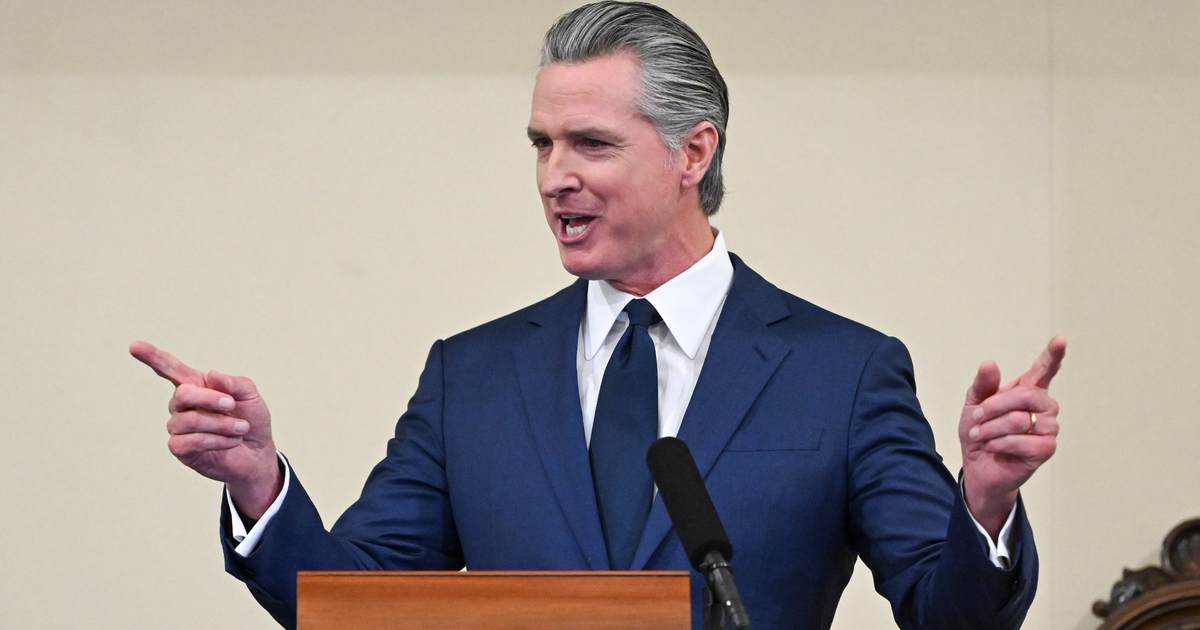
Gavin Newsom said he’s confident at least one Democrat will advance from California’s June gubernatorial primary, hinting at a “break-the-glass” contingency plan as he declined — yet again — to endorse in the race.
The California governor, speaking at his budget presentation on Thursday, said that rather than pick a candidate, he has focused on ensuring that Democrats are not locked out of the primary, in which the top-two vote getters regardless of party go on to the general election.
“I do not see that scenario taking place,” he said.
Newsom said there was a “break-the-glass” contingency plan to prevent that from happening, and alluded to behind-the-scenes efforts to rally people. He did not specify his activities, but the Democratic Governors Association recently began sending mail highlighting Republican Steve Hilton as a fierce conservative. The ostensible opposition campaign could drive GOP voters to Hilton, ensuring he consolidates the party’s voters and saps the support of the other Republican candidate, Chad Bianco, enough to keep him from finishing in the top two.
“There are many people who have a deep understanding of what it would look like if Democrats were locked out,” Newsom said.
The blockquote shows the core of the plan: instead of picking a Democrat to lift, operatives might try to manipulate the Republican side so one GOP candidate draws conservative voters away from competing Republicans. That kind of tactical interference isn’t new in big races, but it’s blunt and risky. If it works, Democrats could steer the matchup by shaping who emerges as the more credible Republican.
From a Republican-leaning perspective, the possibility of Democrats engineering outcomes behind the scenes validates skepticism about their tactics. Don’t underestimate how far party operatives will push to avoid being left off the ballot in November. Voters who prefer clear choices should watch for last-minute mailers, targeted messaging, and other maneuvers that could tilt the primary.
The candidate landscape matters. Katie Porter’s struggles mean she may not consolidate progressive votes, while Xavier Becerra’s profile hasn’t translated into a powerful statewide push, and Tom Steyer’s independent-style campaign can siphon donors without guaranteeing votes. On the GOP side, Steve Hilton’s portrayal as the staunch conservative and Chad Bianco’s competing bid create the exact situation Newsom described: a contest where consolidating or fragmenting votes will decide who advances.
Attention to turnout and targeted persuasion will decide the result more than polling snapshots do at this stage. With June approaching, campaign teams will try to shape the race quietly, and voters should expect a flurry of activity designed to nudge margins. That reality puts a premium on disciplined voting and on watching how party organs deploy their resources in the final weeks.
The stakes are high because a lockout of Democrats from the general election would reshape choices for California voters and hand a critical advantage to Republicans in a state where Democrats normally dominate. Given that, both strategy and raw vote arithmetic will determine whether Newsom’s hinted contingency ever needs to be used. Keep an eye on how the top-two math plays out and on any moves meant to force the outcome.