Short summary: A recent podcast exchange with Kamala Harris revived concerns among conservatives about her proposals for judicial expansion, Electoral College reform, and other sweeping changes, and it underlined why many voters were glad the 2024 outcome favored Donald Trump.
Listening to that podcast clip felt like a refresher course in why Republicans pushed back hard in 2024. The remarks revived familiar policy fights—court expansion, Electoral College changes, and statehood—that conservatives view as power plays, not problem-solving. For many on the right, the segment confirmed deep mistrust of those ideas and of the people behind them.
The guest in question proposed a sweeping “no bad idea brainstorm” for Democrats, a phrase that sounds open-minded until you read the policy wishlist that followed. Suggestions included wholesale changes to institutions that have long anchored the republic, and opponents see that as a threat to stability. The reaction on conservative channels was immediate and blunt: this isn’t governing, it’s a political reset attempt.
The funniest part about this is that she lost the popular vote too https://t.co/YNTLzrL8fv
— Ian Miller (@ianmSC) May 14, 2026
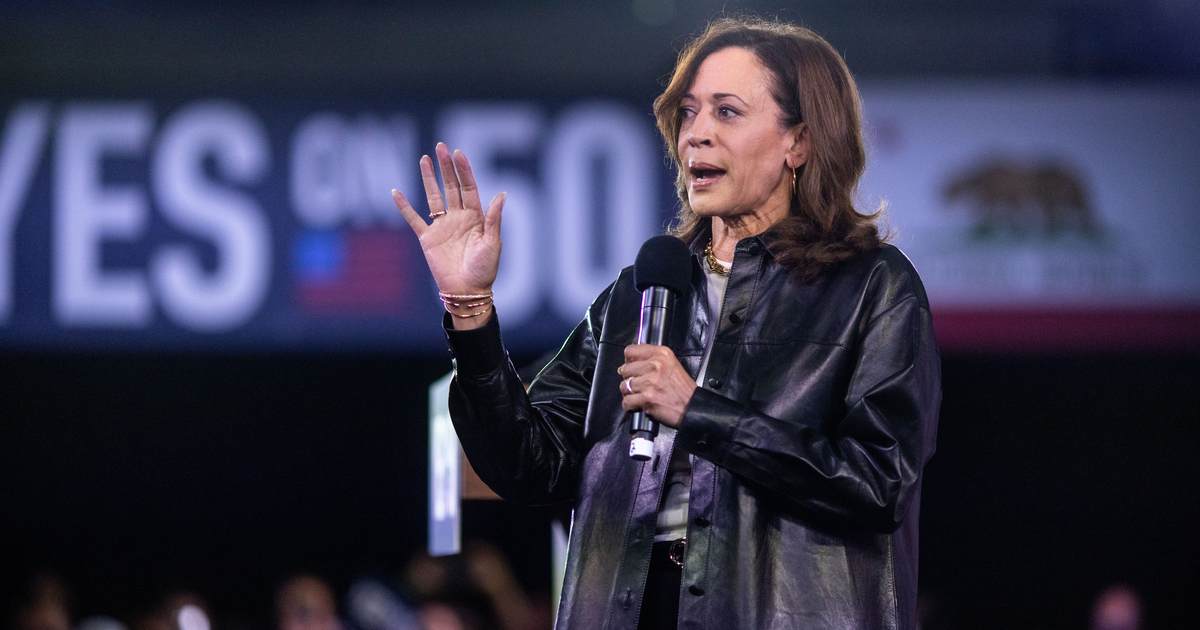
Former Vice President Kamala Harris went viral on Thursday after pushing what many considered several “bad ideas” in her “no bad idea brainstorm” for the Democratic Party.
During a Wednesday night livestream on the “Win with Black Women” podcast, Harris suggested that the Democratic Party get an “expanded playbook” of ideas ahead of the 2026 midterm elections.
“I think that we need an expanded playbook in a way that we invite all ideas, that we say… look, this is a moment where there are no bad ideas, a no bad idea brainstorm is what I’d like to call it,” Harris said. “And in that no bad ideas brainstorm, we talk about what we need to do and think about doing around the Electoral College. We talk about the idea of Supreme Court reform, which includes expanding the Supreme Court. We invite a conversation about multi-member districts.”
Harris laid the proposals out plainly, and conservatives didn’t need translators to decode the intent: reshape institutions to lock in partisan advantage. Talk of packing the Supreme Court and reworking the Electoral College reads like a roadmap for changing outcomes rather than winning votes. That’s a hard sell for voters who prefer fixing problems over rewriting rulebooks when the scoreboard doesn’t go their way.
The Electoral College line is especially sharp coming from someone who, as critics note, lost to Donald Trump in the last cycle. Pointing out that she “lost the popular vote to Donald Trump” and suffered defeats across key swing states is a rhetorical staple for opponents emphasizing accountability at the ballot box. Claims about county-level shifts—such as “89 percent of all counties shifting toward the right”—feed the narrative that broad swaths of America turned away from that platform.
Calling these ideas the “mother lode of bad ideas” is the kind of punchy critique that resonates in conservative circles, where practical governance matters more than theoretical policy experiments. Republicans argue that radical institutional changes risk unintended consequences and that reformers too often ignore tradeoffs. That’s why the response is not merely partisan sniping but a substantive warning about shaking foundations that have served the nation for generations.
Podcast platforms make these moments viral and unavoidable, amplifying every gaffe and policy outline alike. For political communicators, that’s both an opportunity and a danger: a few careless words can become a talking point for years. On the right, the takeaway is straightforward—this clip reinforces a previously held view that such proposals are unfair power grabs.
Conservative voters and commentators also view the episode through the lens of electoral accountability: if a candidate or former candidate proposes sweeping constitutional or institutional changes after losing, critics say it reveals a mindset focused on outcomes rather than consent. That angle powers much of the pushback and explains why many feel vindicated that the 2024 result went the other way.
At the same time, the episode keeps alive an important debate about how democracies update and reform themselves. Republicans insist the process must protect core institutions and avoid major alterations driven by short-term majorities. The argument here is simple and direct: change should come from broad consensus and respect for existing structures, not from a stripped-down brainstorming session.
For now, conservatives will use this podcast clip as a cautionary example and as political ammunition in the lead-up to 2026. It’s a reminder that ideas floated casually on a livestream can have real-world consequences once they’re amplified by media and opposition messaging. That dynamic is precisely why many on the right say they’re relieved the 2024 outcome favored a candidate who vetoes that agenda.