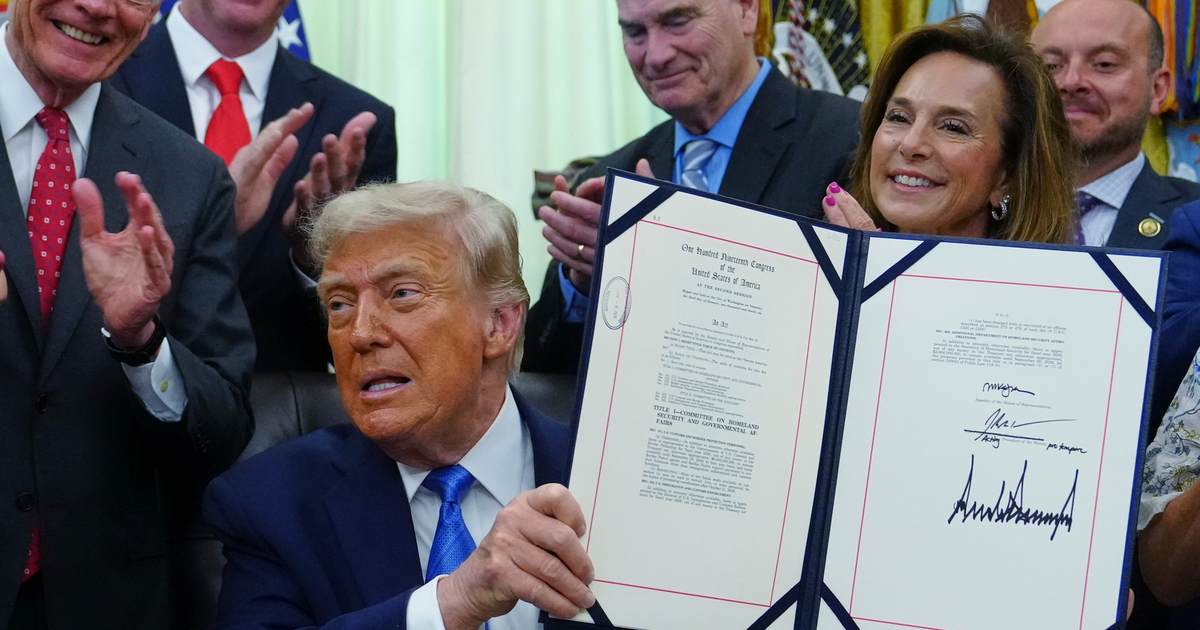
President Trump has made approval of the SAVE America Act a condition for signing a short-term fix to Section 702 of the Foreign Intelligence Surveillance Act, using the leverage of the law’s lapse and leadership fights at the Office of the Director of National Intelligence to press for election integrity measures and personnel changes in the intelligence community.
Section 702 of the Foreign Intelligence Surveillance Act expired on Friday after Congress failed to agree on an extension, and the lapse has immediately become a high-stakes bargaining chip in Washington. The president has signaled he will not sign a FISA extension unless the SAVE America Act is attached, pushing a package that his allies say addresses voter integrity and broader national security concerns. That posture turns a technical surveillance statute into a flashpoint for wider political demands.
Some lawmakers from both parties had wanted reforms to the FISA regime, arguing it risks sweeping up Americans’ communications, while other Democrats have zeroed in on leadership picks at DNI as a blocking point. The president called that dynamic out directly on social media, writing, “A few Dumocrats are against FISA, with or without Bill Pulte going to DNI, as Acting,” Trump posted to Truth Social on Sunday. That line frames the stalemate as partisan obstruction rather than a narrow oversight debate.
Trump followed that up with an unmistakable demand that the SAVE America Act be stapled to any FISA deal, saying, “What kind of a deal is that. Besides, I’m against FISA if it doesn’t come with The Save America Act (Full version!) firmly attached to it. MAKE AMERICA GREAT AGAIN! Thank you for your attention to this matter,” he added. The SAVE America Act contains several provisions but is best known for requiring documentary proof of citizenship at the time of voter registration, a provision Republicans have championed as common-sense election security. The bill already cleared the House, though it faces objections from some GOP senators who worry about federal overreach or political fallout.
Trump has also been moving personnel proposals through the system, announcing a plan to nominate Jay Clayton, United States Attorney for the Southern District of New York, as permanent Director of National Intelligence pending Senate confirmation. That nomination comes as the administration proposed that Bill Pulte serve temporarily as acting DNI to handle a slimmed-down intelligence office, a move that has drawn fierce scrutiny from some Democrats. Pulte is set to step in on June 19, succeeding Tulsi Gabbard, who stepped aside from the role because of her husband’s cancer battle.
The president did not hold back on his view of the opposition to that temporary appointment, posting, “Why are the Dumocrats so afraid of Bill Pulte at DNI??? He would only be Acting! What do they have to be afraid of, what are they hiding? There must be something BIG, mustn’t there???” Trump posted. That rhetoric casts the pushback as defensive and suggests the administration believes the resistance stems from political fear rather than substantive national security concerns. Republicans sympathetic to the White House see the fight over Pulte as part of a larger effort to reclaim accountability inside an intelligence apparatus they consider bloated and politicized.
Before the FISA expiration, the president had asked for a limited stopgap to avoid any gap in authorities, writing, “I am asking Congress to send me a short-term extension of FISA to provide time for the selection and confirmation of a permanent Head of the Agency,” he posted Wednesday. That request shows the administration recognizes operational risks from an immediate lapse, even as it insists on tying the extension to other priorities. Negotiations now hinge on whether lawmakers will accept that link between surveillance authority and the SAVE America Act.
From a Republican perspective, using the FISA window to press for voter verification and leadership changes makes tactical sense: it forces Democrats to weigh national security continuity against reforms conservatives view as essential to election confidence. The administration’s approach is blunt and unapologetic—demand attachable policy victories rather than grant a freebie extension—and supporters argue that leverage is exactly how meaningful change happens in a divided capital. Critics will call it transactional, but allies see it as a necessary trade to secure both intelligence oversight and election integrity.
The coming days will test whether Congress will accept that bargain or allow political brinkmanship to dictate both intelligence authorization and voting rules. Lawmakers must decide not only on technical surveillance authority but on whether to let leadership appointments and election-related reforms move as a package. The stakes are practical and political, touching on how the federal government balances privacy, national security, and trust in the electoral process.