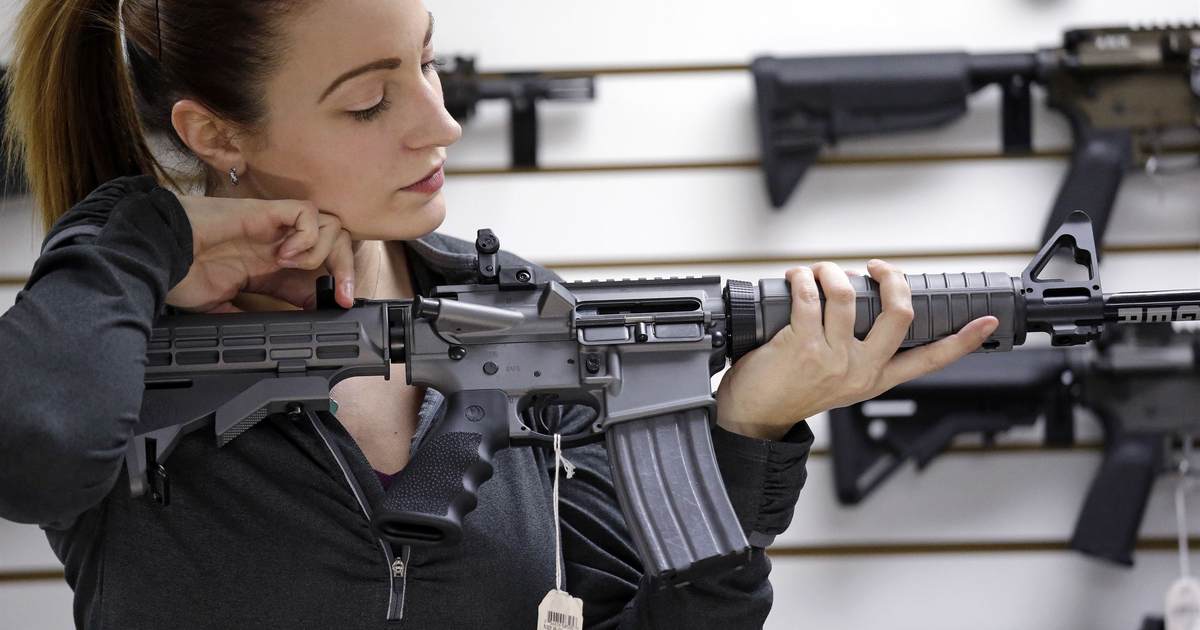
The Supreme Court has agreed to hear a case centered on the AR-15 and state-level “assault weapons” bans, a fight that could reshape how the Second Amendment is enforced and directly challenge the gun-control agenda pushed by the Left.
The AR-15 is the firearm at the center of this dispute, the one targeted in fundraising appeals and policy speeches from the anti-gun movement. It is common in American households and legal in many places, though some blue states have moved to ban or heavily restrict it under so-called assault weapons statutes. Last term the Court did not take up this particular question of whether those bans square with the Constitution, but now it will weigh in.
Editor’s Note: The radical Left will stop at nothing to enact their radical gun control agenda and strip us of our Second Amendment rights.
https://x.com/scotus_wire/status/2071987911969448332
This case matters because it forces the justices to confront the tension between widely used firearms and sweeping restrictions endorsed by many progressive politicians. For conservatives and originalists, the issue is straightforward: the Constitution protects individual arms-bearing rights that predate modern political disputes, and bans aimed at popular rifles raise serious textual and historical questions. For liberals and activists pushing bans, the argument rests on public safety and modern regulatory authority, a posture that will now be tested at the highest level.
The practical stakes are huge. If the Court rules that assault weapons bans are unconstitutional as applied to common rifles like the AR-15, it would undercut a centerpiece of Democratic gun policy and limit the ability of states to pursue broad prohibitions. Conversely, an upholding of such bans would open the door to more aggressive state-level controls and embolden national calls for stricter measures. Either outcome will reverberate through state legislatures, the courts, and political campaigns.
Talking points from the anti-gun movement often frame the AR-15 as uniquely dangerous, but that framing has not stopped this rifle from being widely owned and used for lawful purposes. The constitutional question the Court will face is not about campaign rhetoric; it is about whether legislatures can, consistent with precedent, single out common arms for severe restrictions. The justices will need to balance historical understandings of the right to keep and bear arms with contemporary claims about public safety and legislative authority.
Republican legal advocates will press textualist and originalist readings, arguing that bans on commonly owned rifles are incompatible with the protections recognized in prior rulings that affirmed an individual right to possess firearms. They will point out that a constitutional right that means little in practice is no right at all, and that durable protections require courts to be skeptical of broad, preventive prohibitions. Expect briefs and oral arguments to emphasize historical practice and the practical consequences of upholding blanket bans.
On the other side, supporters of bans will argue their measures are tailored to reduce mass-shooting risks and are therefore legitimate exercises of state police powers. The Court’s task will be to evaluate those justifications through the framework it adopts, weighing historical analogues, statutory design, and the availability of less restrictive alternatives. That legal framework could either constrain or expand what legislatures can do in the name of safety.
Politically, the case is a lightning rod. Democrats have made high-profile appeals tied to images and rhetoric about the AR-15, and a decisive ruling against bans would defang a major talking point while reinforcing constitutional limits on regulatory ambitions. For conservatives and gun-rights advocates, a favorable outcome would be a public vindication of long-held concerns about creeping restrictions and judicial deference to core liberties. For the Court itself, the decision will test its willingness to apply constitutional doctrine in a way that limits majoritarian impulses when they clash with individual rights.
Court watchers should expect a lively oral argument, robust amicus activity, and careful parsing of historical evidence, statutory text, and precedent. Whatever the outcome, this case will be a milestone in the ongoing national debate over firearms and freedom, setting legal contours that will shape policy choices for years to come. The stakes are not just legal theory but the practical ability of citizens to exercise a right that has been central to American identity and defense.