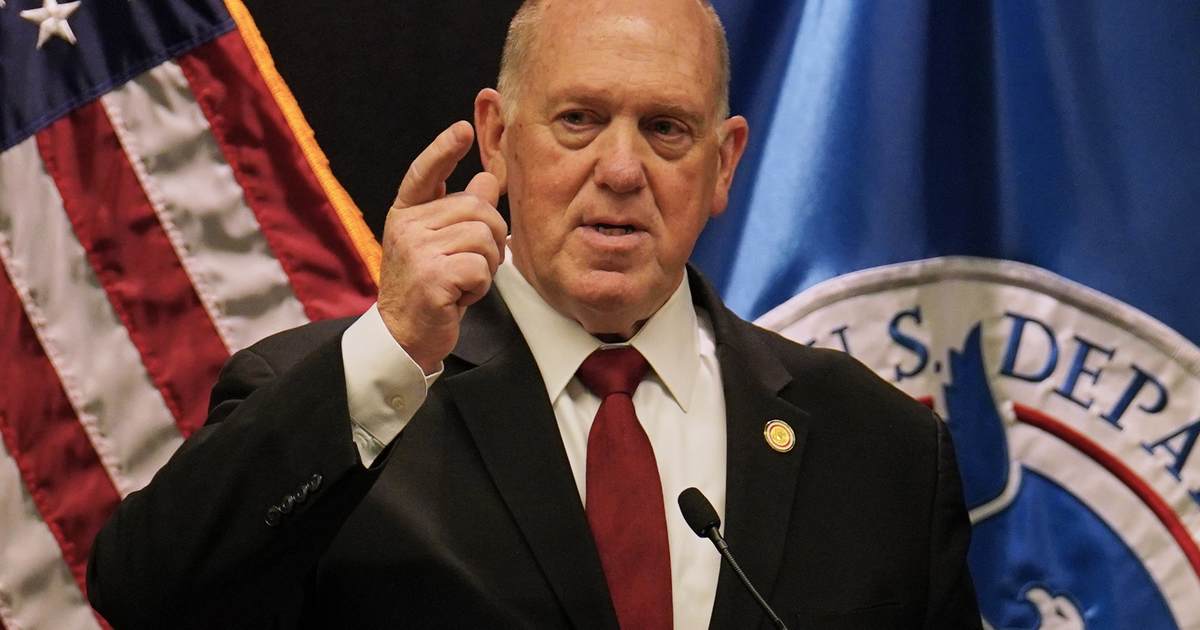
The Department of Homeland Security ordered ICE to pause most vehicle stops after an officer-involved shooting in Maine, triggering frustration inside the agency and a public clarification from former ICE official Tom Homan about how agents will continue to operate while the pause remains temporary.
The pause came after graphic footage surfaced showing Joan Sebastian Guerrero, 26, an illegal alien from Colombia, killed after he reportedly tried to run over federal agents. That incident raised immediate concerns about agent safety and public risk, and it prompted a rapid policy response from leadership. For many on the ground, the order felt abrupt and like a blunt instrument that could impede everyday enforcement work.
Despite the directive, the halt was not absolute in practice, and Tom Homan pushed back on the idea that ICE was suddenly neutered. He stressed that agents are trained and rely on good intelligence to intercept dangerous people before they can reach their vehicles. Homan framed the measure as temporary and not a permanent shift away from enforcing the law.
https://x.com/nicksortor/status/2077118011769823653
From a practical standpoint, the agency has to balance protecting agents with keeping communities safe, and that tension is real. Homan made the point that arrests can often be made without a risky vehicle confrontation, which preserves safety for officers and the public. Conservatives worry, however, that even short pauses can be exploited by criminal elements who test enforcement gaps.
“It’s not a policy change, it’s a temporary pause […] I think it’s gonna be a short pause and I’m confident ICE is well-trained in vehicle stops and you’re gonna see us keep moving forward
[…]
Let me say this too, I hear a lot of noise, this is going to affect ICE arrests, and it’s not going to
[…]
We know vehicle assaults are up 3,400 percent. So, if we can arrest that alien outside that vehicle and take that two ton weapon away from them, that’s good in some instances.”
Homan pushed a simple, commonsense message: keep the focus on training and tactics that protect lives while continuing enforcement where possible. That view reflects a Republican emphasis on law and order and support for officers doing their jobs without unnecessary political interference. The clean line between temporary caution and permanent retreat is what critics and supporters are both watching closely.
There are operational consequences to any broad pause, even a short one, and they show up in case backlogs and shifting priorities. Local communities expect federal partners to be predictable and effective, not sidetracked by headline-driven directives. Conservatives argue that the answer is better policies that back agents up, not micromanagement that leaves gaps criminals can exploit.
What matters now is how ICE translates the pause into practice: will supervisors allow tactically sound actions that avoid vehicle confrontations, or will the memo chill obvious, safe enforcement steps? Homan’s reading is that experienced agents will find lawful, safe alternatives to vehicle stops when needed. Republicans want clarity and results, not fuzzy guidance that produces inconsistent outcomes.
The Maine shooting itself remains the central fact driving this debate, and it underscores why enforcement is dangerous and why good intelligence and training are nonnegotiable. Officials must protect agents while not sending a signal that enforcement will be undercut by political pressure. That balance is fragile, and public confidence depends on consistent, competent action rather than episodic swings.
For now, the pause has bought time for policymakers and law enforcement to reassess tactics and messaging, but it also set off a wider political fight about priorities at the border and inside the country. Republicans will keep pressing for policies that let ICE act decisively against dangerous individuals while demanding transparency about any limits on core enforcement tools. The hunt continues.