The article argues that a modern surge of socialist zeal in American politics mirrors historical movements that produced mass suffering, and it questions political leaders who downplay that danger while pointing to clear historical and financial contrasts between the parties.
We need more historians in Congress and fewer careerists who treat history like a footnote. Too often the drumbeat for ideological experiments drowns out the memory of what those experiments produced. That lack of historical muscle matters now as socialist strains move into the mainstream of one major party.
Republicans have been warning about this for good reason, and stories of immigrants and refugees who fled communist regimes make the stakes real. Leaders like Mike Johnson and Marco Rubio have raised alarms based on family histories that survived totalitarianism. Their warnings are not theoretical; they come from people who know what happens when anti-democratic ideas gain power.
Some Democrats are finally admitting the risk. Colorado Gov. Jared Polis has said the socialists will destroy his state if left unchecked, and others in the party are trying to hide or excuse the similarities between historical communism and today’s progressive radicalism. A few in leadership respond differently, treating the threat like an internal disagreement instead of a civilizational test.
Kentucky Governor Andy Beshear dismissed the zealotry in his party as people who simply have “extreme passion.”
https://x.com/RNCResearch/status/2077460239721312478
“Many who are running under the ‘Democratic Socialist’ brand or the progressive brand are making their case with just extreme passion,” Beshear said. “They’re convincing voters that they will work as hard as they can and that’s what voters are asking for right now.”
Knowing history would change how you hear that. During Mao Zedong’s Cultural Revolution (1966-1976), youth were encouraged to denounce “capitalist roaders” and to prioritize party loyalty over family ties. Zhang Hongbing, then 16, reported his mother to authorities; she was arrested, tortured, and executed by firing squad two months later, and he later regretted it.
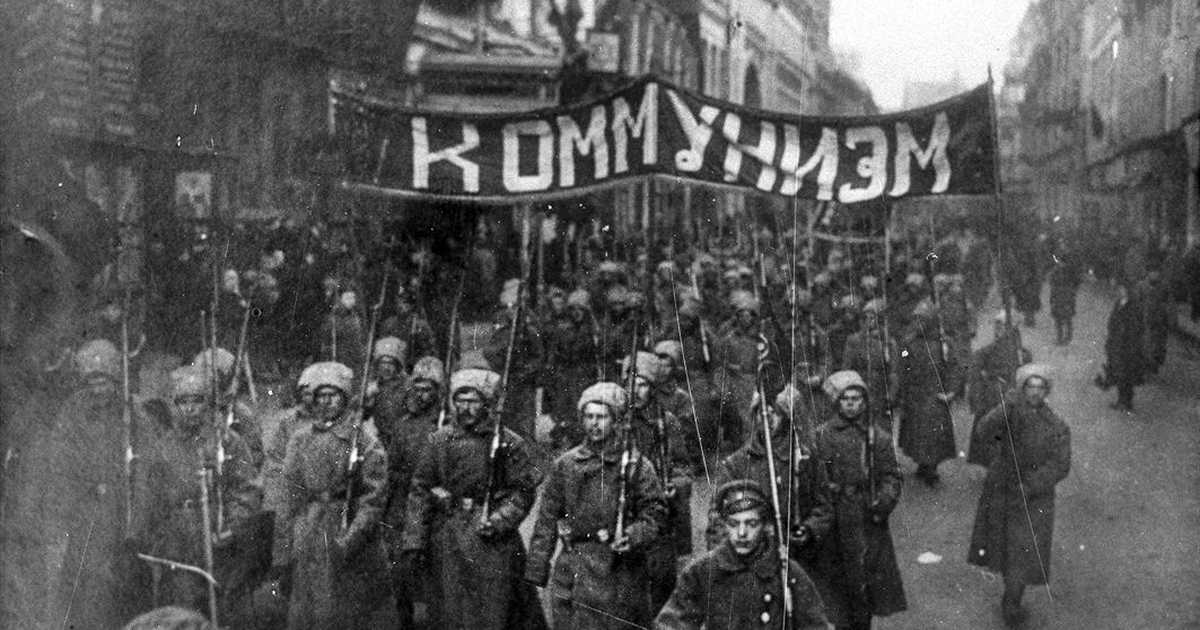
The Soviet Komsomol and Pioneers did similar work of indoctrination and denunciation, and families labeled “enemies of the people” were often sent to prison camps or executed. Cambodia’s Khmer Rouge, following Maoist lessons, trained children to put “Angkar” before family and participated in killings that left about 1.7 million dead. All told, the “extreme passion” of the communists and socialists put 100 million people in mass graves in the 20th Century alone.
Those are not abstract statistics; they are human consequences of ideological fervor unmoored from institutions that protect liberty. When youth movements are taught to reject parents, courts, and local authority, the social fabric unravels fast. We have seen the fallout in every place where such experiments took hold.
On the political front, voters are responding to that history and to the practical stakes. In Wisconsin, Republicans are outpacing Democrats in fundraising, and Tom Tiffany is far ahead of Democratic Socialist Francesca Hong. Nationally, Speaker Mike Johnson has raised a record-breaking $135 million for Republican causes, the RNC has more than $125 million cash on hand and no outstanding debts, while the DNC is $16 million in debt with $12.6 million cash on hand.
It’s not surprising to me that Americans who just elected Donald Trump would bristle at embracing an ideology that hates white people, hates America, and wants to usher in an Islamo-Communist dictatorship. Those words reflect a real political instinct: voters reject movements that promise radical structural replacement rather than incremental reform. That instinct drives fundraising, turnout, and resistance at the ballot box.
I’ve argued that Democratic Socialists are merely saying aloud what many others in their party quietly support, and Beshear’s comment amounts to confirmation. The mainstream wing of the party has pushed policies that would fundamentally reshape enforcement and governance, including moves that amount to abolishing immigration enforcement. That’s a de facto abolition of our immigration laws and our borders, by the way. And a de facto demolition of our country. After all, if you don’t have borders, you don’t have a country.
The socialist pitch is delivered with “extreme passion,” and its policy wish list is explicit: broad amnesty for illegal immigrants, open borders, defunding police, dismantling prisons, reversing constitutional protections, and concentrating power in a weakened federal structure they can control. That is not mere passion; it is radicalism that would alter the republic’s foundations. Politicians who shrug at those aims are either dangerously naïve or quietly complicit.
To avoid those outcomes requires lawmakers who study what went wrong in the 20th Century and who build robust institutional safeguards. Election results and financial strength show the public is skeptical of socialist promises, and history offers a clear warning about where unchecked ideological fervor leads. The choice ahead will determine whether America learns from those warnings or repeats them.