The Scoular Company will pay more than $10 million under a deferred prosecution agreement after federal prosecutors said it relied on customs brokers to bribe Mexican officials so its grain shipments could cross the border.
The Scoular Company (Scoular), an agricultural supply chain firm based in Omaha, Nebraska, entered a three-year deferred prosecution agreement after a criminal information in the Western District of Texas charged the company with one count of conspiracy to violate the anti-bribery provisions of the Foreign Corrupt Practices Act (FCPA). Under the deal, Scoular agreed to pay a criminal penalty and forfeiture totaling more than $10 million and to cooperate with further investigations.
“The Scoular Company used customs brokers as part of a long-running scheme at the Mexican border to pay more than $400,000 in bribes to Mexican officials,” said Assistant Attorney General A. Tysen Duva of the Justice Department’s Criminal Division. “A portion of those bribes ultimately benefited people who helped operate a cartel, even though Scoular did not know about it. This resolution shows that bribery and corruption not only undermine fair play and competition for Americans, but also hurt our national security interests in stopping the scourge of dangerous cartel activity.”
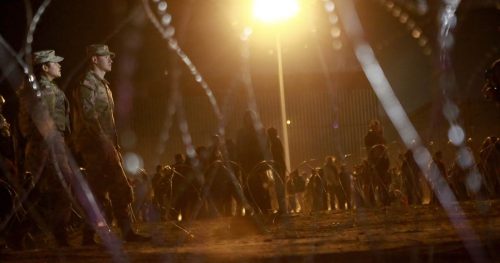
Court filings describe conduct stretching from 2013 to 2019 in which Scoular relied on multiple third-party customs brokers to get shipments of corn and other products across the U.S.-Mexico border. Mexican law requires inspections for dirt, soil, and other impurities, and prosecutors say Scoular authorized brokers to pay officials to clear shipments that would otherwise fail those inspections.
According to the filings, brokers paid bribes of about $2,000 per Scoular train and then invoiced Scoular for the payments as reinspection fees, which the company reimbursed. Scoular employees allegedly discussed shipments and the payments via WhatsApp and other messages, and investigators say the scheme involved more than $400,000 in authorized bribes and avoided fees and costs exceeding $6.5 million.
“Nothing crosses into or out of Mexico without the approval and payment to Mexican drug cartels. American businesses that engage in any cross-border trade bear a significant amount of responsibility to do so without benefitting those cartels and without threatening our national security,” said U.S. Attorney Justin R. Simmons for the Western District of Texas. “The bribery scheme in which the Scoular Company engaged demonstrates the dangerous corporate corruption we in the Western District of Texas are committed to fighting on behalf of the American people.”
As part of the resolution, Scoular agreed to pay a $9,769,521 criminal penalty and $414,351 in forfeiture, and to implement a compliance and ethics program aimed at preventing future violations of the FCPA and other anti-corruption laws. The company also promised periodic reporting to the Justice Department on remediation and the rollout of compliance measures during the DPA term.
The department said the resolution factored in both the seriousness of the offense and the determination that, without the company’s knowledge, some of the payments ended up benefiting individuals tied to cartel activity along the border. Scoular did not receive voluntary disclosure credit under the Criminal Division’s Corporate Enforcement and Voluntary Self-Disclosure Policy because it did not timely inform the Fraud Section of the conduct described in the Statement of Facts.
Prosecutors acknowledged Scoular’s cooperation during the investigation, noting the company conducted an internal probe, produced evidence and detailed presentations, identified individuals involved, and organized materials in response to voluntary document requests. Scoular also retained counsel for current employees and took steps the government considered in reducing its punishment.
Company remediation included restructuring its compliance function, adopting an updated code of conduct, strengthening third-party screening and contract provisions, and eliminating the use of brokers tied to reinspection fees in Mexico. Scoular also implemented revised financial controls and provided targeted anti-corruption training to relevant staff as part of broader efforts to reduce operational risk.
Because of those remedial steps and cooperation credits, the criminal penalty reflected a 25 percent reduction from the bottom of the applicable guidelines range, and the DPA runs for three years. In a related matter, a customs broker who paid bribes on behalf of Scoular, Carlos Leopoldo Alvelais, previously pleaded guilty to conspiracy to violate the FCPA on Oct. 23, 2025. Sentencing in that case is scheduled for July 20,
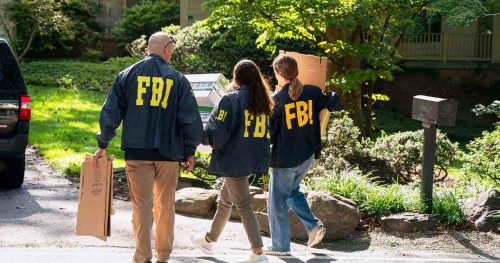
The FBI is investigating the matter, and the case is being prosecuted by Trial Attorney Connor Mullin and Assistant Chief William E. Schurmann of the Criminal Division’s Fraud Section alongside Assistant U.S. Attorney Debra Kanof for the Western District of Texas.