Anti-gun activists keep predicting disaster whenever gun rights expand, but recent history and the specifics of proposed rules show those warnings are often exaggerated and inconsistent with the facts.
Every time a court decision or policy shift favors gun owners, predictable alarm follows from anti-gun groups who claim violence will spike overnight. They said the same thing after the Bruen decision, yet homicide rates kept falling and the supposed bloodbath never materialized. That pattern of dramatic warnings followed by quiet backtracking is worth calling out.
Brady’s Kris Brown now warns that regulatory rollbacks will reverse recent gains and unleash chaos. That message plays well in headlines, but it often rests on slippery descriptions of proposed rules rather than clear evidence. When predictions don’t pan out, the critics rarely own the mistake.
America is in the middle of a major decline in gun violence. Firearm homicides have fallen almost 30 percent since their peak five years ago. Baltimore’s homicide rate has plummeted to a 50-year low. This progress is not by accident; it is the product of years of investing in effective policy solutions.
But the Trump administration’s latest all-out attack on federal firearms regulations threatens to unravel all this progress and increase gun violence nationwide.
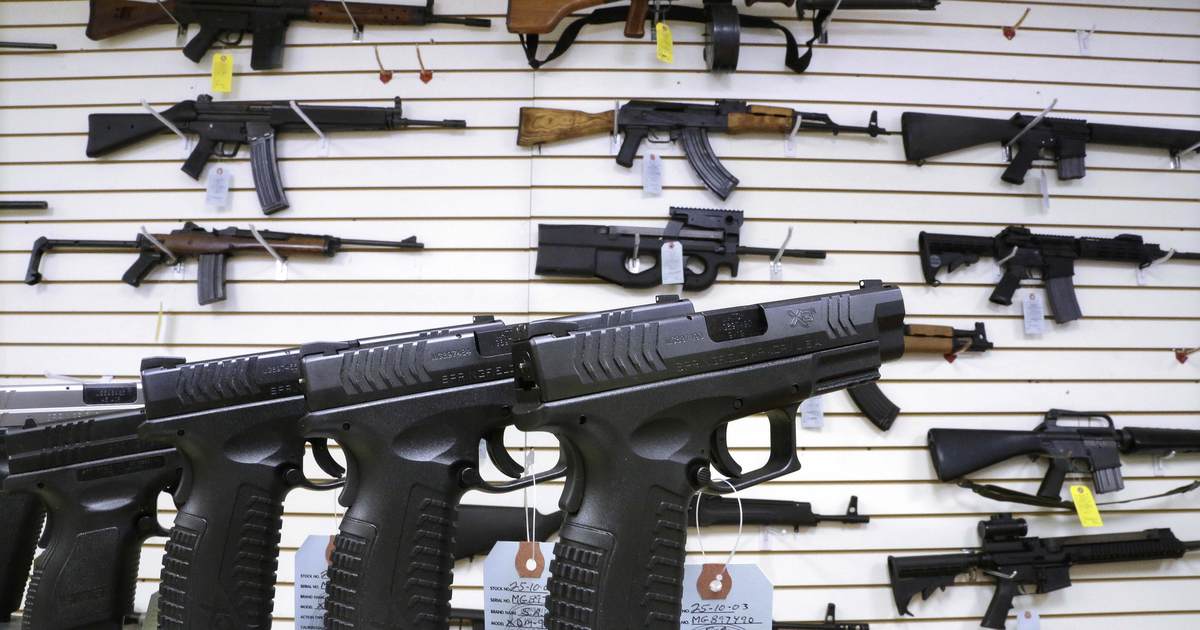
One outcome from this attack—a fury of over 30 proposed regulatory changes in total—would dismantle the safeguards governing how guns are bought and sold—substituting a barely regulated online gun marketplace, or so-called “Amazon for Guns,” that would end background checks as we know them and deliver firearms straight to your doorstep. Other measures loosen regulations of highly lethal firearms, including machine guns, and let sellers destroy sales records, making it harder for law enforcement to solve crime and putting lives at risk.
What’s worse: the ATF in one of its proposed rules even notes that law enforcement lives may be put at risk if the rule is adopted. I’m not exaggerating: one measure says it could “hinder” law enforcement’s efforts to stop violent offenders, and another explicitly warns that the consequences could include “mass casualty events.”
That quoted warning is dramatic and specific, which makes it easy to check against the facts. One proposed change Brown attacks would allow dealers to connect with customers in the same state as the dealer to buy and ship guns within that state after steps to verify eligibility and identity. The rule is not a free-for-all, and the examples critics throw around—like Donald Trump Jr.’s GrabAGun—don’t magically allow out-of-state buyers to skip checks.
Crime rates move for lots of reasons and have historically fluctuated with no neat correlation to any single law. New York City had strict restrictions for decades and still swung from extremely high to much lower crime rates over time. That shows limits to the argument that strict rules alone produce steady safety improvements.
While inference on risks to public safety are difficult to make definitively, and most traces occur within the first 20 years as shown above, the remaining traces that would be unsuccessful as a result of the proposed rule could delay or hinder federal, state, and local law enforcement efforts to track and stop violent offenders.
The ATF language is careful and hedged, which is exactly the point: they admit most traces happen within 20 years, and the rest are far less likely to be decisive. Critics emphasize the worst-case phrasing without acknowledging how narrow the actual effect is likely to be. That selective reading fuels alarm but doesn’t change the underlying data.
Claims about imminent “mass casualty events” tied to these narrow regulatory tweaks are either a misunderstanding or a stretch of the evidence. When a prediction is this dramatic, the burden of proof should be high and the evidence should be clear. So far, the evidence hasn’t supported the hyperbole.
Ultimately this looks less like a policy debate and more like a performance—big warnings, few follow-ups when reality fails to cooperate. Activists crank out dire scenarios, public attention spikes, and then life moves on when the catastrophe never happens. Accountability for being wrong would change the tone, but that rarely happens.