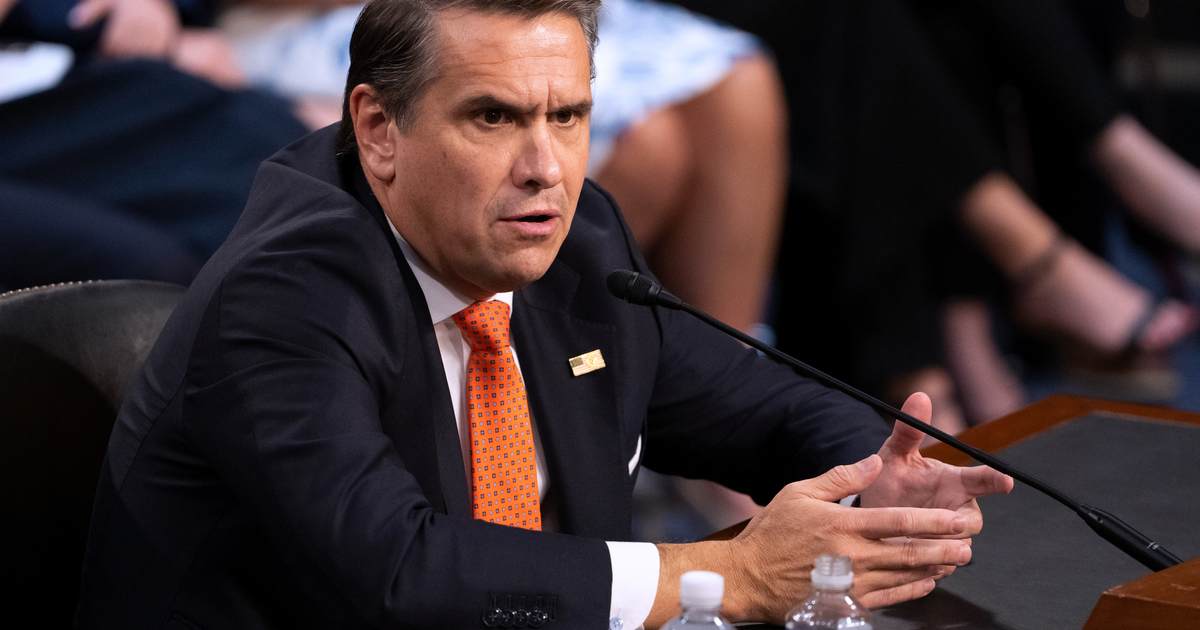
Susan Collins announced she will oppose the confirmation of Acting Attorney General Todd Blanche after careful review and public concerns about the Department of Justice’s direction, and the nomination faces a tighter path in the Senate following a narrow committee approval.
Senator Susan Collins announced she plans to vote against the confirmation of Acting Attorney General Todd Blanche after reviewing his record and recent actions. The Senate Judiciary Committee advanced the nomination on a 12-10 vote, but Collins’ opposition makes the final tally in the full Senate more uncertain. Republicans are watching this closely since committee votes do not always predict the floor outcome.
Collins released a statement laying out her decision and the reasons behind it. “I have carefully reviewed Todd Blanche’s qualifications to be Attorney General. This includes his record and responses to questions from Senators at the Department of Justice Appropriations hearing, his confirmation hearing, and in the weeks that followed,” Collins posted in a statement on Tuesday evening.
She acknowledged Blanche’s legal skills while voicing alarm about the direction of the Justice Department. “While I believe Mr. Blanche is a capable lawyer, the Department of Justice has become increasingly political. Mr. Blanche has taken several actions that have further eroded the Department’s independence,” she said, before diving into an explanation for her upcoming vote against him.
Collins spelled out specific actions that concerned her and framed them as departures from normal DOJ practice. “Mr. Blanche approved an order to shield the President, his sons, and the family business from IRS audits, protections unavailable to other American taxpayers. He approved the creation of a $1.8 billion anti-weaponization fund. He promised an anti-abortion organization that he would seek to prohibit the mailing of abortion medication to women nationwide,” she continued. These are serious charges from a member of the President’s own party and reflect worries about unequal treatment under the law.
She went on to cite other examples that influenced her decision and noted the breadth of opposition within the profession. “Under his leadership, the Department attempted to indict Senators Mark Kelly and Elissa Slotkin over their ill-advised, but constitutionally protected, videos encouraging resistance to unlawful orders. More than 1,200 former Department of Justice employees have opposed his nomination, arguing that he has undermined the institution.For these reasons, I will vote against this nomination,” Collins further added. That level of professional pushback is not trivial in a confirmation fight.
The committee vote followed a deal struck between Senators John Cornyn and Thom Tillis and the Justice Department regarding a controversial IRS settlement tied to the president. Cornyn and Tillis won assurances in writing that the so-called anti-weaponization fund would not take effect, and both voted to advance the nomination in committee. Their agreement narrowed the path for senators who wanted firmer written commitments.
Blanche addressed lawmakers and the public in a post on X as he sought to solidify support. “My team and I have met with committee members and Senators over the past several weeks and addressed any concerns or outstanding questions. We have enjoyed good faith discussions, and as a result issue the following order and update with regard to the May IRS settlement,” Blanche posted to X on Sunday.
He also offered a broader statement about engagement with Congress as he defended the department’s posture. “The Department always welcomes and appreciates productive engagement with all members of Congress,” he continued. The full Senate is expected to vote on the nomination later this week, and Collins’ announcement tightens the margin Republicans and Democrats will watch closely.
https://x.com/SenatorCollins/status/2084757125746594298?ref_src=twsrc%5Etfw
The political backdrop complicates the confirmation: Collins faces a competitive reelection contest against Democrat Troy Jackson, and observers rate her race as a toss-up. That vulnerability adds pressure when senators weigh politically sensitive votes that could ripple back to their own campaigns. Recent developments in the race, including a Democratic candidate’s withdrawal amid allegations, have drawn national attention and increased the stakes for Collins’ choices in Washington.