Mayor Zohran Mamdani’s plan for city-run grocery stores looks like a tangle of contradictions, vague assumptions, and risks that threaten small businesses and taxpayers. The request for proposals reads like wishful thinking, asking bidders to guarantee deep discounts, broad product lines, and strong labor terms while leaving key details undefined. Operators are expected to shoulder costs and security risks while the city keeps control of design and refrigeration, creating a tilted playing field. The result is a plan that could fail fast and leave neighborhoods worse off.
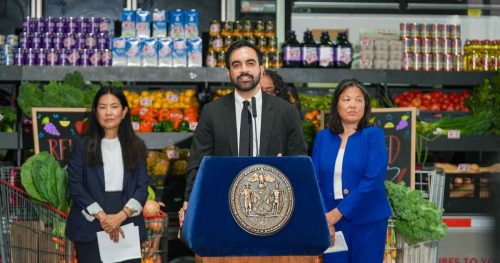
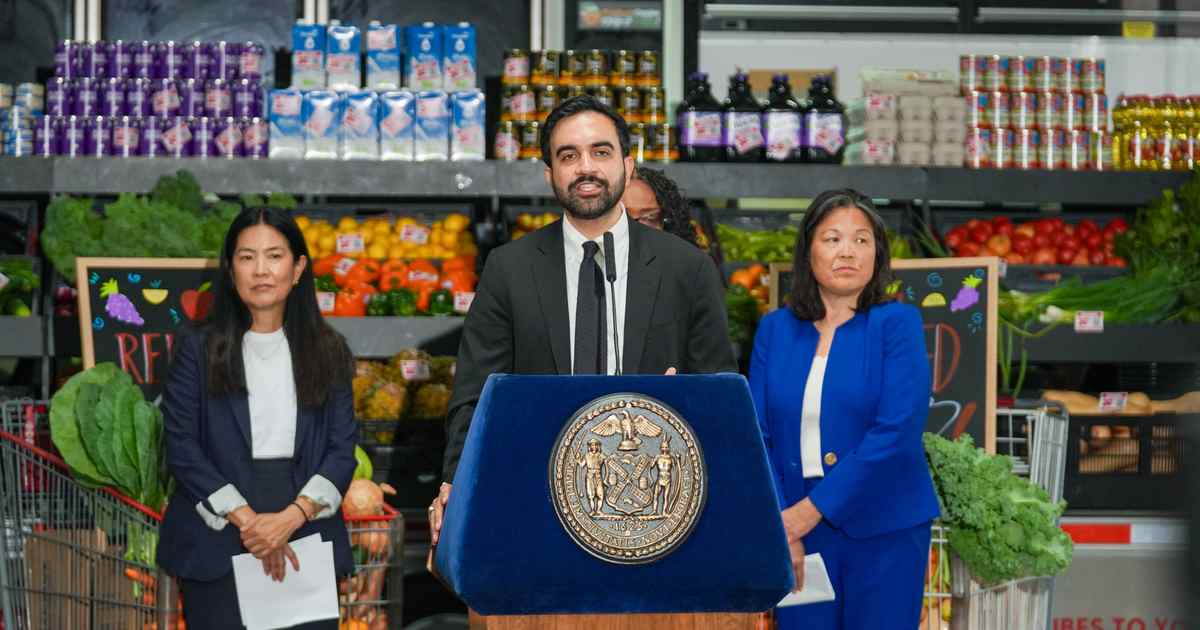
Zohran Mamdani announced a program to open government-run grocery stores in New York City that would undercut private sellers by offering subsidized groceries at roughly 30 percent less than other stores. Small grocers and bodegas warn this would crush their businesses if the city enters retail as a subsidized competitor. Those local owners argue the move repeats failed experiments from other places, where government involvement in retail led to closures and empty storefronts.
The real trouble shows up in the Request for Proposals, which outlines what operators must deliver and how they will be judged. The RFP asks bidders to estimate costs for stores in neighborhoods that are not yet identified and to assume each site will be “about 15,000 sq ft,” a stretch that makes budgeting wild at best. Bidders face guessing games on rent, foot traffic, and local needs while being asked to lock in deep discounting promises.
City officials apparently prefer a single operator to run all five stores, yet three of the locations remain unnamed. That contradiction forces potential operators to price unknown risks and commit to scale that might never materialize. Kokonas called the requirement “absurd” and noted how it makes accurate proposals nearly impossible under realistic retail math.
The pitch rests on the theory that scale will lower operating costs, but there is no guarantee the awards will follow that logic. The city may ask for one operator to promise scale pricing while refusing to guarantee awarding all sites to the same bidder. That dissonance creates upside for bureaucrats and downside for anyone writing a check.
“They want scale pricing while refusing to award scale,” he wrote.
https://x.com/nickkokonas/status/2084312689682108669?ref_src=twsrc%5Etfw
That kind of mixed signal is exactly what kills private sector interest in partnering with public projects. The RFP stacks requirements that contradict each other and then expects optimism to fill the gaps. When private operators must choose between overcommitting or losing the bid, the outcome will favor teams that lowball and later fail or teams that demand heavy subsidies.
The RFP also insists the stores follow a “limited SKU” model while simultaneously requiring full grocery departments, household goods, ethnic and specialty items, vegan and Kosher products, and other categories. Trying to be everything to everyone is a classic recipe for stockouts, confusion, and inefficient inventory. Kokonas summed it up bluntly with a single complaint about the impossible menu of requirements.
“Pick one,” Kokonas noted.
This is going great.
The proposal forbids deli counters and on-site food prep but expects items like chicken salad and egg salad to be on shelves, which means daily deliveries of prepared foods. Shipping in perishable deli items raises costs and logistics hurdles that the city does not seem to factor into the subsidy math. Operators will be forced to juggle daily cold-chain deliveries while also meeting membership and pricing rules the RFP demands.
Another oddity: New York City will select store design, equipment, fit-out, and refrigeration, but operators will pay for maintenance, security, and day-to-day operations. That hands initial capital control to the city while the private partner absorbs ongoing risk and expense. Expect those obligations to eat any thin operating margins the 30 percent discount leaves behind.
Security is a particular worry in a city that has struggled with enforcement and rising retail theft. If operators are on the hook for security costs while the city controls fixtures and layouts, they will face both higher expenses and less control over how to protect inventory. That dynamic makes the financial case for operating under these terms even shakier.
The pricing demands compound the problem. The city wants the “best” bid to deliver 30 percent discounts and simultaneously provide good wages, benefits, full-time positions, and a host of social programming. At the same time, 20 percent of the RFP score goes to the bidder that requires the lowest subsidy, forcing a choose-one scenario between deep discounts and fiscal restraint.
Once again, pick one. You cannot credibly promise a permanent 30 percent price cut while also bearing premium labor costs and minimizing subsidies. The RFP even requires that the 30 percent discount be the actual price rather than a temporary promotion, and it ties discount access to a membership program that creates new administrative burdens.
City officials have said IDs would be required to access the stores, yet the program is also described as broadly available to the public, another contradiction waiting for implementation chaos. Customers, operators, and community groups will all be left asking which rules actually apply and who enforces them.
To make matters worse, bidders must estimate “affordability payments” and forecast sales for a defined “Core Basket” across the five boroughs while also projecting non-core sales, personnel, operational costs, and additional program expenses. That level of financial forecasting on hypothetical sites with shifting rules produces unreliable projections and invites budget overruns. The RFP looks like a wish list dressed up as procurement rather than a practical business plan.
Are these grocery stores or community centers with a retail arm? The RFP’s laundry list of social objectives and programmatic requirements blurs the line and increases cost without guaranteeing sustainability. This entire scheme is pure socialism in action: waste a lot of money, reduce the quality of living, and destroy businesses and economies in the process.
Editor’s Note: New York City is now facing the consequences of Mayor Zohran Mamdani’s socialist takeover.