California’s troubles and Gov. Gavin Newsom’s response collide: people and businesses are leaving, hard data shows declining population and migration, and the governor is blaming media narratives rather than policy choices.
Californians continue to vote with their feet, and the exodus has become hard to ignore. Plenty of families and employers have packed up for lower taxes, more predictable governance, and safer streets. That reality is dragging the state’s reputation down even as its leaders insist everything’s fine.
Instead of accepting responsibility for missed targets like homelessness reductions, streets that need cleaning, and unfinished infrastructure projects, the governor points fingers at reporters and pundits. He insists critics are spreading lies and that national outlets are manufacturing a negative image of California. The state paper in San Francisco has played along in places, amplifying his defense and softening scrutiny in ways that raise eyebrows.
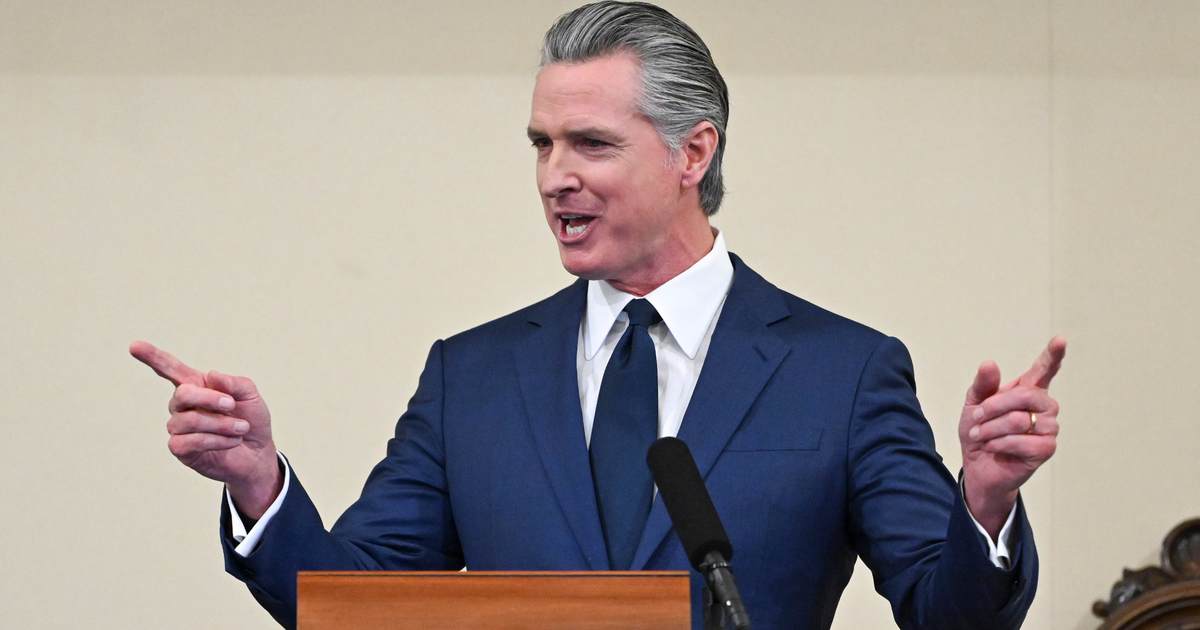
When California Gov. Gavin Newsom arrived Thursday afternoon at a meet-and-greet event about 25 miles northwest of Charleston, he was greeted by protesters telling him to go home.
About a dozen people stood on the grass outside waving signs with blunt messages: “Don’t California my South Carolina.” “GO HOME GAVIN.” “You can’t run your own state. Stay out of ours.”
https://x.com/sfchronicle/status/2097043863047213067
Newsom flashed a thumbs-up at the protesters as he walked into the event. Inside, before an audience who had waited an hour and a half to hear him speak, he made a pitch for why voters in a part of the state rife with West Coast skepticism should view his California roots as an asset.
The perception that California is a bad place to live is the result of lies, Newsom contends, peddled by right-wing media outlets.
“Why do they come after California? Because we literally prove that everything they’re promoting is bulls**t,” Newsom told the Chronicle. “As long as we’re successful, it proves them wrong. We’re their biggest problem.”
The local paper didn’t get around to listing many of the state’s problems until far into its coverage, and even then the mention was limited. It noted the second-highest rate of unsheltered homelessness after Oregon, that 17 percent of the state population lives in poverty, and that California has the nation’s highest gas prices. Those are real conditions people live with every day.
There are deeper governance failures beyond those statistics. Cities such as Oakland and Stockton rank among the most violent in the country, and legislation signed in Sacramento has resulted in early releases for some violent offenders regardless of the risks their return poses to communities. The governor’s policy choices have faced repeated legal pushback, including lawsuits challenging measures that critics say curb speech and gun rights while jeopardizing accountability for public safety.
The state’s political clout has already started to erode in Washington because of population shifts. California lost a congressional seat after the 2020 census, and projections suggest the state could lose at least four more seats after the 2030 census if current trends continue. Those numbers are not just political trivia; they reflect people choosing to leave in pursuit of better opportunities elsewhere.
Migration figures underline the scale of the problem: net domestic migration was about -216,000 for the year ending July 1, 2025, and IRS filings show higher-AGI households are among those departing. High earners and businesses relocating reduce the tax base and make it harder to fund the services residents want. That exodus feeds a feedback loop of rising costs and declining services.
Major employers have pulled up stakes in recent years, moving headquarters and operations to other states that promise lower taxes and friendlier regulatory climates. Companies such as Tesla, Oracle, Chevron, SpaceX, Twitter/X, Charles Schwab, and Public Storage have shifted significant operations out of state, often choosing Texas as their new home. Losing that economic activity makes recovery tougher and fuels the narrative that the state is in decline.
“Crime in San Francisco fell sharply in 2025 by SFPD’s own numbers (homicides at a 70-year low, large drops in property crime). That undercuts the worst “doom loop” rhetoric. It does not undercut the years of retail theft, open-air drug markets, and quality-of-life complaints that residents and businesses documented in real time. The Chronicle itself ran a letter noting that its crime coverage helped shape a perception the paper later treated as overstated,” Cheely wrote.
There are examples that illustrate how policy choices translate into daily life, from strained downtowns to blocks where commerce has fled and residents avoid certain corridors after dark. Those are tangible failures for leaders who promised safer, cleaner cities and accountable government. Citizens judge leadership on whether their neighborhoods improve, not on whether narratives about the state sound better in state-funded press events.
Yet the governor keeps insisting that the root problem is outside hostility, blaming “right-wing media” for distorting the picture. That stance shifts focus away from policy outcomes and onto a victim narrative that avoids admitting mistakes. Voters see it as deflection when streets, shelter systems, and local economies keep underperforming.
That pattern is a political choice as much as a communication strategy: if you control the story, you try to control the consequences. But reality keeps leaking through in migration numbers, company relocations, and courtroom rebukes of state actions. Those are hard facts that don’t bend to spin.
The result is a governor who makes for a convincing sound bite but struggles to point to durable policy wins that reverse the exodus or restore confidence. Residents who endure the daily effects of these decisions are unlikely to be persuaded by insider defenses or favorable local coverage. For many, the question is simple: if people and businesses are leaving, why double down on the very policies that pushed them away?
For those watching beyond the Golden State, the idea of exporting these policies nationally is deeply unappealing. Californians have the right to run their state as they see fit, but exporting unstable governance and the consequences that come with it is not something many voters outside the state want. That makes his case a political gamble, not a proven model to copy.