This piece looks at comments from leaders at the Austin church James Talarico calls home, highlights video quotes that shocked observers, and notes how those remarks intersect with his public religious messaging as the campaign heats up.
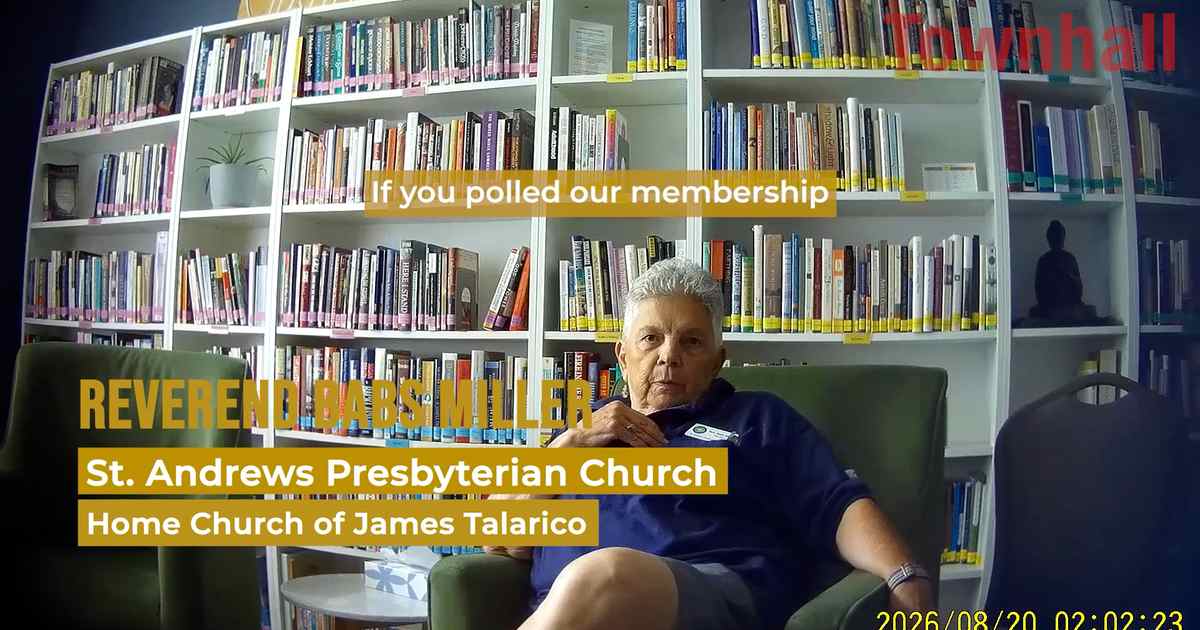
Questions about James Talarico’s version of Christianity have followed him onto the campaign trail, and they come straight from people who know his church. Talarico says he has attended St. Andrews Presbyterian Church in Austin since he was two years old. The congregation has been led for 35 years by Rev. Jim Rigby, whom Talarico has described as a “mentor,” and the church lists Rev. Babs Miller as “Minister to the Parish.”
A recent clip shows Miller making a blunt and disturbing claim about some worshippers’ private sentiments toward the man who tried to kill President Trump. “We still have people in this church who wish that the young man had not just nicked his ear, but had been more successful,” Miller said, according to a video obtained by Townhall Media. The remark landed hard because it ties violent fantasy to a place Talarico identifies as formative.
The comment refers to Thomas Matthew Crooks, a 20-year-old who attempted to assassinate President Donald Trump at a rally in Butler, Pennsylvania, in 2024. Miller didn’t name names or indicate how widespread that attitude is among members, so it is unclear whether those people include anyone close to the candidate. Still, the line of questioning here is obvious: voters want to know what sort of religious community produced those views.
Sources have indicated more footage may exist, and the promise of additional videos has only amplified interest in what church leaders actually say when cameras roll. Those materials reportedly feature both Miller and Rigby and are expected to show more of how the congregation talks about politics and faith. For a candidate who leans on faith as part of his public profile, that context matters to many voters.
One of the more pointed lines from Miller appears in footage reviewed by local outlets, and it cuts to the heart of the church’s identity. “If you polled our members, and asked them if they were Christian, agnostic, or atheist, the vast majority would say agnostic or atheist because they don’t buy the religion that we got from the Puritans,” Miller said, according to another video reviewed by Townhall. That admission frames the church less as a traditional congregation and more as a community skeptical of orthodox belief.
Republicans and conservative voters are likely to see that framing as a red flag, given the role faith plays in public life and in the cultural conversations shaping elections. Talarico’s opponents have seized on these comments as proof his religious outlook is out of step with mainstream conservative Christianity. The core critique is straightforward: if a candidate’s spiritual home rejects traditional doctrine, voters should know what that means for his values.
Talarico has tried to soften his public religious posture as Election Day nears, shifting language and downplaying more unusual theological claims. He has faced scrutiny for comments that suggested God might be “non-binary” and for saying that “faith traditions all over the world” are “all equal pathways to truth.” Those lines have been pointed to as evidence of a very broad, nontraditional view of faith that clashes with how many Texans understand Christian belief.
Those theological positions and the church’s self-description create a clear contrast with the more conventional religious messaging common in Republican circles. For voters who prioritize a traditional Christian framework, the combination of Miller’s comments and Talarico’s past rhetoric raises questions about authenticity and alignment. It also gives critics plenty of raw material to use on the trail.
Beyond the sound bites, this episode highlights how local institutions can become political lightning rods when a congregant runs for high office. A church’s internal culture rarely looks like its public brochure, and candid video snippets can expose those differences in brutal fashion. The bigger story for campaigns is whether those differences matter enough to move undecided voters or to harden support on either side.
With more footage reportedly waiting in the wings, the debate over Talarico’s faith and the church that shaped him is likely to keep bubbling. Voters will be watching how he responds and whether he can reconcile what his church leaders say with the image he tries to project on the stump.