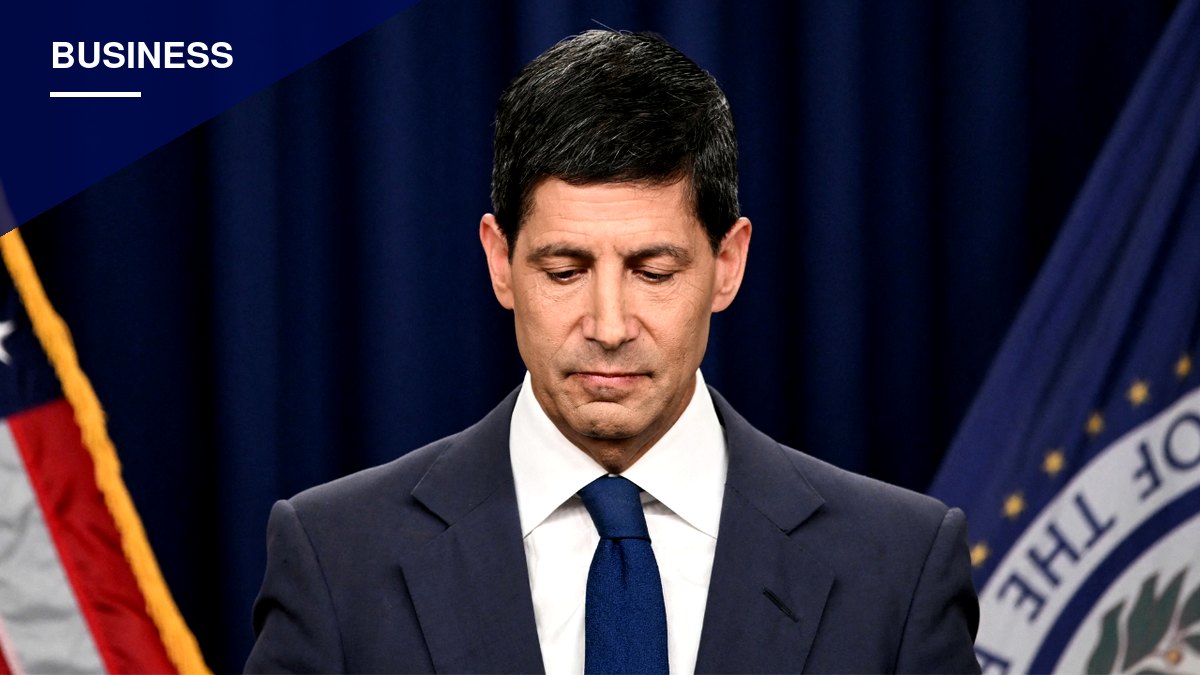
The Federal Reserve raised interest rates on Wednesday for the first time since 2023, a move meant to cool an economy that officials say remains strong but still faces inflation running too high.
Fed officials point to solid growth, steady consumer spending, continued business investment and a labor market that has held up despite years of higher prices. Economists commonly describe American consumers as “resilient” in the face of that pressure.
But that word carries two very different meanings. Resilience can describe people who are thriving. It can also describe people who are simply out of options — continuing to spend by relying more heavily on credit cards, or keeping a business open while shelving plans to expand.
Higher interest rates work by making borrowing more expensive, which is intended to slow spending and investment enough to bring inflation down over time. That is standard economic theory. It also has direct, immediate effects on ordinary households: a small-business owner reconsidering a loan, a young couple recalculating a mortgage, a family watching interest pile up on an unpaid credit card balance.
Supply problems the Fed can’t fix
Part of today’s inflation pressure comes from forces outside the Fed’s control. Energy prices have risen amid geopolitical turmoil, and tariffs have added costs to some goods. The Fed can act on demand by raising rates, but it has no tool to increase the supply of oil or other goods.
Economist Mitch Roschelle summed up the dilemma this way: monetary policy can suppress demand, but it cannot manufacture supply. Policies aimed at boosting supply may take years to have an effect — well beyond this November’s midterm elections, which will come just after the Fed has signaled that inflation is still a serious problem.
Statistics versus lived experience
Economic data measures the overall economy. Voters, meanwhile, measure their own lives — what they paid for gas, what they spent at the grocery store, whether their credit-card balance grew over the past year, and whether the home they hoped to buy still seems within reach. Those personal measures can tell a very different story than the aggregate statistics.
There is also a political dimension. President Trump has repeatedly called for lower interest rates, and on Wednesday the independent Federal Reserve moved in the opposite direction, deciding rates needed to rise. Democrats are likely to cite the decision as evidence that inflation remains a problem under Trump, while Republicans are likely to point to energy prices and other factors beyond the administration’s control.
Regardless of which argument wins out, the practical takeaway for many voters may be simpler: the Fed has just said inflation isn’t over, even as the administration has said prices are coming under control.
There are echoes of the 1970s in this moment, when oil shocks collided with an already-developing inflation problem, though history rarely repeats in a tidy way. Federal Reserve Chairman Paul Volcker eventually broke that era’s inflation with aggressive rate increases that came at a steep economic cost.
Whatever the historical parallels, the practical questions for voters heading toward November are straightforward: how are they doing financially, and who do they hold responsible for it.