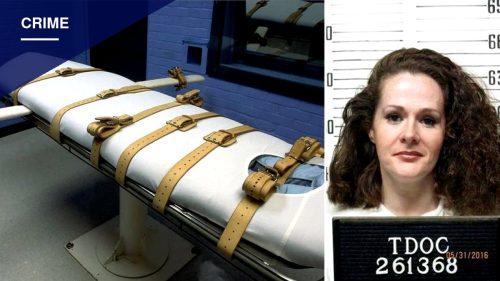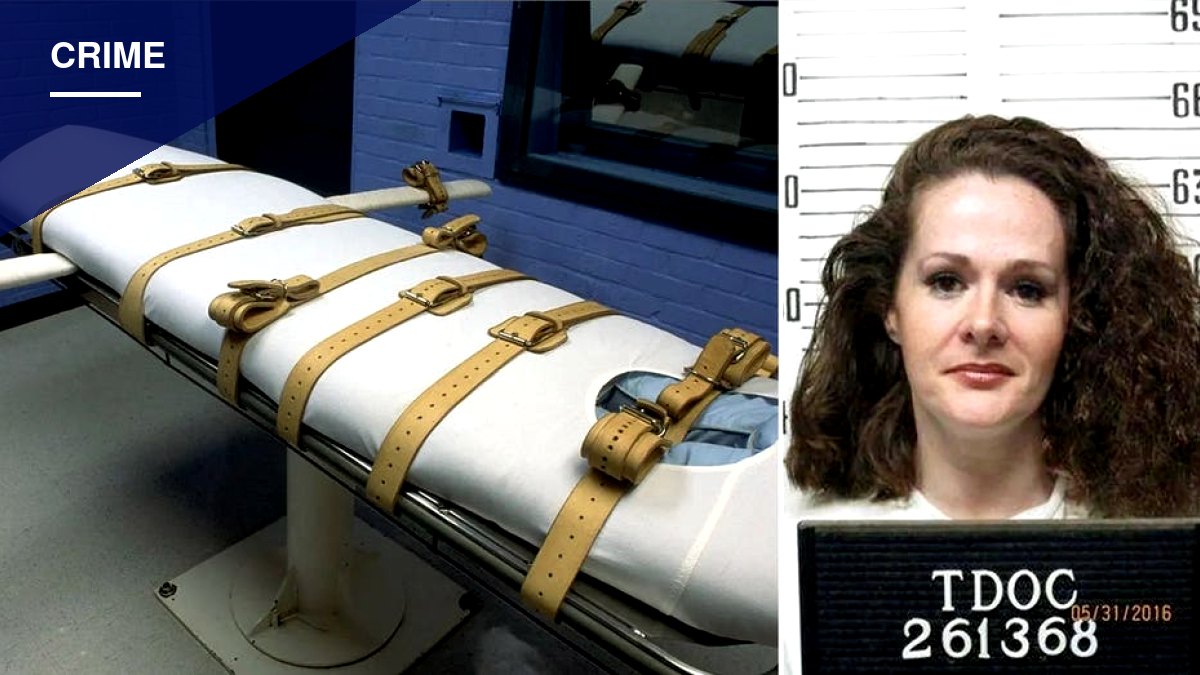
The physician who oversaw Christa Pike’s failed execution says a misplaced IV line sent the lethal drugs into the tissue of her arms rather than her bloodstream, and that the execution team should have halted the procedure when Pike complained of pain.
Dr. Mark Fowler, who served as the attending physician during Pike’s Sept. 30 execution attempt, gave his account to New York Magazine in an interview published Friday. Pike, 50, survived the procedure after receiving two doses of pentobarbital and spent several days hospitalized before regaining consciousness.
Pike was sentenced to death for the 1995 murder of 19-year-old Colleen Slemmer, a fellow participant with her in a federal Job Corps program in Knoxville.
Fowler told the magazine he suspected something had gone wrong when the execution stretched to about 45 minutes. When he was called into the chamber, Pike was still alive and gasping for air. He initially thought her response to the drugs might simply be slower than usual and decided to wait. After another 30 minutes passed, he grew concerned she could survive with permanent brain damage, and he later diagnosed her as comatose. A deputy commissioner ultimately ordered the execution stopped, and Fowler called for oxygen before Pike was taken by ambulance to Vanderbilt University Medical Center.
Fowler said the IV had not been properly inserted into Pike’s veins. “It was delivering medicine to the subcutaneous tissue” of her arms, he said.
Pike’s attorneys had previously said in a court filing that she complained of severe arm pain during the procedure, telling those in the chamber, “My arm feels like it’s about to burst open.”
“They should have stopped and reassessed, and they didn’t,” Fowler told New York Magazine.
The interview came days after Pike herself described the aftermath in a statement released through her attorneys. “My body hurts. My arms hurt. My hands hurt. My throat hurts,” she said Friday. “I still struggle to speak.” She said she was “deeply hurt by the incompetence that has put so many people in this terrible position.”
A pattern of problems
Fowler’s involvement in Tennessee executions has drawn scrutiny before. According to New York Magazine, he also took part in the 2025 execution of Byron Black and the failed May execution of Tony Carruthers. In the Carruthers case, Fowler attempted to place an IV near Carruthers’ clavicle after paramedics could not establish access through more typical veins, but he said he stopped because he lacked adequate anesthetic and the procedure had become too painful for Carruthers.
“I’m not an evil, vicious person. I’m not unscrupulous. I’m not uncaring, and I’m not incompetent,” Fowler said.
Fowler said Tennessee’s lethal-injection protocol needs to change, including fewer handoffs between members of the execution team. He said whoever places the IV line should remain in position to monitor it once the drugs begin flowing. “The people who place the IV lines should thereafter be observant about what’s happening with them as the medicine goes in,” he said.
Tennessee Gov. Bill Lee halted the state’s remaining executions for the year following the botched procedure and ordered an independent review of what happened. Lee said last week that Pike remains incarcerated under state law and signaled her death sentence is unlikely to change. “I suspect her sentence will be the same as it was before unless determined otherwise by the courts,” he said.
Pike’s attorneys have asked Lee to commute her death sentence to life without parole.
Fox News Digital reported it had reached out to Fowler and the Tennessee Department of Correction for comment but had not received a response.