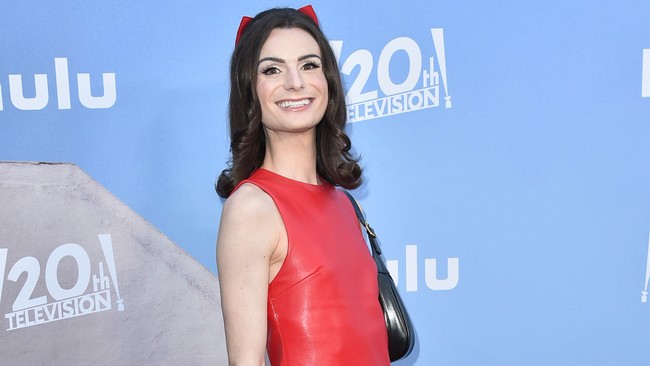
Dylan Mulvaney’s casting as Anne Boleyn in Six the Musical has sparked renewed controversy in the culture wars, reviving debates about representation, Broadway standards, and the fallout from prior brand controversies like Bud Light.
Dylan Mulvaney, the trans influencer who became a flashpoint after the Bud Light backlash, announced he will play Anne Boleyn in the Broadway run of Six the Musical, and the reaction has been loud and swift. That announcement landed in an already charged environment where casting choices often trigger national outrage and heated online debate. The result was a cascade of criticism aimed at the production and its decision-makers.
The production in question, Six The Musical, bills itself as “feminist-pop celebration of women’s history and 21st century girl power,” a description that frames the show as both theatrical and political. Casting Mulvaney in the role of one of Henry VIII’s wives pushed that framing into the spotlight, and the public pushback focused as much on principle as on performance. Rather than engaging critics directly, the company largely retreated from public view and limited its online presence.
Dylan Mulvaney, the trans influencer, will now be playing Anne Boleyn, the 16th century British Queen.
Boleyn has also previously been portrayed as black.
There is no part of Western history or culture that progressives will not seek to defile. pic.twitter.com/EKPTA5bTo8
— Lauren Chen (@TheLaurenChen) January 18, 2026
Producers reportedly locked public social media accounts after the volume of complaints rose, and some accounts were set to block users who criticized the casting decision. That move only fed more headlines and speculation, since pulling back from conversation rarely calms a controversy in the digital age. The production’s strategy looked less like damage control and more like an attempt to sidestep accountability for a choice that many saw as provocative.
There’s a clear pattern at work: casting decisions on Broadway increasingly cross into cultural commentary, and producers seem to treat controversy as a form of marketing or mission signaling. Critics argue that this approach alienates mainstream audiences who expect theater to focus on craft and storytelling rather than political statements. Supporters counter that theater is inherently political and that diversifying casting is long overdue, so the clash is partly about competing expectations of what Broadway should be.
From a Republican perspective, this episode feels like a continuation of the cultural overreach that has followed companies and institutions since the Bud Light episode, where public backlash produced real consequences for a brand. People who voted for more traditional cultural stewardship see Broadway’s response as emblematic of elite institutions that promote identity politics while insulating themselves from criticism. Some have even framed it as a local penalty for political choices: “Perhaps they should consider this penance for electing Mamdani.”
At the same time, the theater world insists it’s expanding who gets to tell certain stories and who can occupy certain roles, arguing that such steps open opportunities and broaden representation. That rationale sits uneasily with audiences who feel they are being lectured to or excluded from the conversation about artistic standards. Those tensions are visible in comment threads, ticketing trends, and the polarized reactions that follow casting announcements.
Operationally, the decision to go silent on social platforms and to block critics risks deepening the divide. Shutting off engagement rarely reduces controversy; more often it amplifies distrust and fuels conspiracy theories about what production teams are trying to hide. A transparent exchange about artistic intent and casting rationale would likely have been a calmer path, but that requires a willingness to take heat from a broad public beyond a theater bubble.
For those outside New York, the episode functions as a cultural spectacle: people share clips, memes, and commentary while debating whether Broadway is evolving or abandoning standards. The least we who aren’t in New York can do is enjoy some of the social media content that came out of it. That online circulation guarantees the story stays in public view long after opening night, and it ensures the conversation will travel beyond theatergoers to a national audience.
What follows won’t be simple. Casting controversies like this reshape how shows are marketed, how producers communicate, and how audiences decide where to spend their money and attention. As cultural friction points multiply, institutions that bridge art and public life will face tougher choices about when to push, when to explain, and when to listen to the people who still see Broadway as a shared civic space rather than a broadcast platform for political signaling.