The Supreme Court reversed a lower court in a 7-2 decision over a D.C. police stop, with Justice Ketanji Brown Jackson the lone dissenter and Justice Elena Kagan joining the majority, touching off sharp disagreement about reasonable suspicion and how justices describe each other’s reasoning.
The case involves a February 2023 police encounter in the District of Columbia where a driver and passenger fled a vehicle and the driver tried to back out with doors open, prompting officers to stop the car. “RW” later challenged the stop after being charged with several offenses, including “delinquent on counts of unauthorized use of a motor vehicle, felony receipt of stolen property, unlawful entry of a motor vehicle, and operating a vehicle in the District of Columbia without a permit.” The Supreme Court overturned a lower court ruling that had found no reasonable suspicion for the stop. The ruling landed as a clear seven-to-two decision, and Jackson was not on board.
The lower court had concluded police lacked reasonable suspicion, but the high court rejected that view and reinstated the stop’s legality. Justice Jackson wrote a dissent that stood alone, while Justice Sotomayor registered disagreement without joining Jackson’s opinion. The majority’s view aligned with the more straightforward, on-the-ground instincts of law enforcement in a tense late-night encounter.
Here’s the backstory:
In the wee hours of a winter morning in Washington, D. C., District of Columbia Metropolitan Police Officer Clifford Vanterpool received a radio dispatch call directing him to check out a suspicious vehicle at a specific address. Officer Vanterpool reached the apartment building at that address around 2:00 a.m. As he turned his marked police vehicle into the parking lot, he saw two people immediately flee from a car, “unprovoked,” after “[p]olice had not done anything other than simply pull up.” App. to Pet. for Cert. 48a. The runners left open at least one of the car doors. The driver then began to back out of the parking space, rear door still open. Officer Vanterpool decided to investigate. He parked directly behind the car, left his own vehicle, ordered the driver to put his hands up, and drew his service weapon.
At the heart of the dispute is the Fourth Amendment standard for what counts as reasonable suspicion when officers encounter suspicious behavior. From a practical standpoint, two people bolting from a vehicle when police arrive, a door left open, and a driver trying to back out while someone else runs away look like conduct that would reasonably make an officer worry about safety or potential escape. The majority read those facts as enough to justify the stop under existing precedent and real-world policing needs.
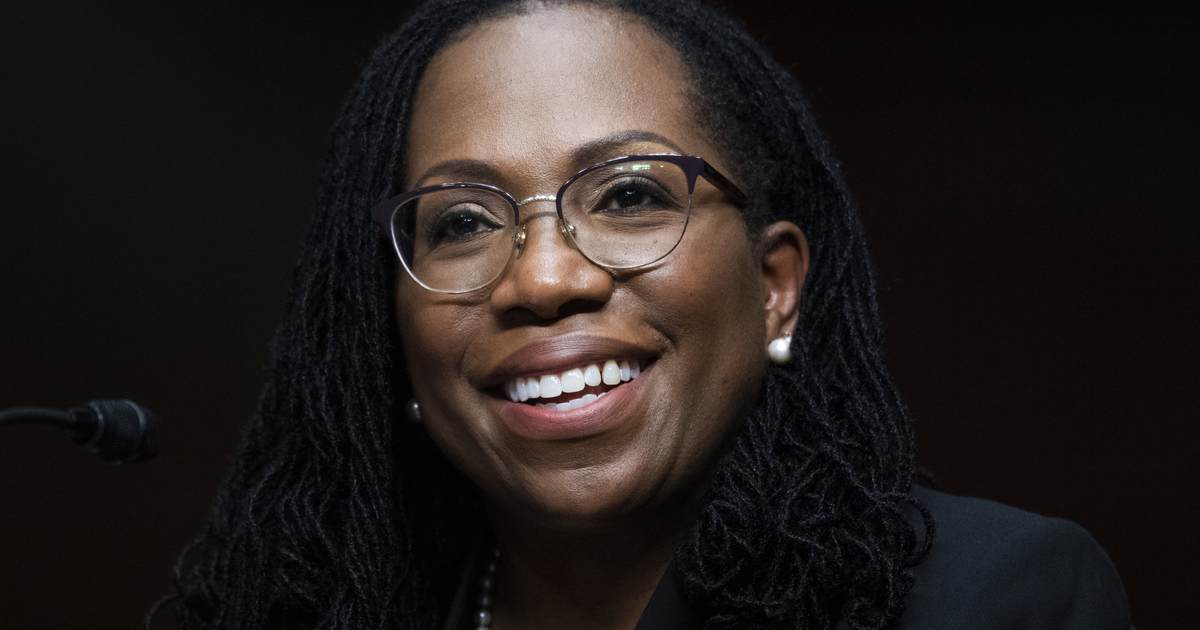
Justice Jackson, however, sharply criticized her colleagues’ analysis and accused them of what she called ‘wordsmithing’ in how they described the facts and applied the law. Law professor Jonathan Turley pushed back on Jackson’s phrasing and argued she may have misused the term, but the dispute goes beyond semantics. The disagreement exposes a deeper divide about whether the Court should defer to officers’ split-second judgments or demand a stricter parsing of each fact before validating a stop.
🚨 The Supreme Court, in a summary reversal, held that police had reasonable suspicion to stop a driver after passengers fled and he began backing away, faulting the lower court for a “divide-and-conquer” analysis of the facts.
Justice Jackson was the sole dissenter. pic.twitter.com/qeBATUM68U
— SCOTUS Wire (@scotus_wire) April 20, 2026
Just brutal. The tone of Jackson’s dissent made the split feel personal, and that sharpness energized critics who argue the dissent undervalues common-sense police decision-making. Conservatives and many law-enforcement supporters see the majority’s ruling as restoring clear guidance that protects officers acting on reasonable, observable indicators of criminal activity.
The practical effect of the decision is straightforward: the Court affirmed that certain on-the-ground circumstances amount to reasonable suspicion, not mere hunches. That outcome narrows the room for lower courts to second-guess officers in similar scenarios and sends a signal about how the high court will evaluate Fourth Amendment claims involving brief investigatory stops.
Critics of the dissent worry the style and substance of Jackson’s opinion could erode trust in judicial restraint and invite more fragmentation on routine criminal-procedure questions. Supporters of the majority argue the Court struck the right balance between protecting civil liberties and recognizing the split-second reality officers face. Either way, this opinion is likely to be cited in future cases where flight, open doors, and evasive driving are key facts under scrutiny.
The rest of the ruling is on the Supreme Court’s website. Observers will be watching how lower courts apply this decision and whether future litigants push the boundaries of what qualifies as reasonable suspicion. The sharp public split among justices makes this a notable moment for conversations about policing, civil liberties, and judicial tone.