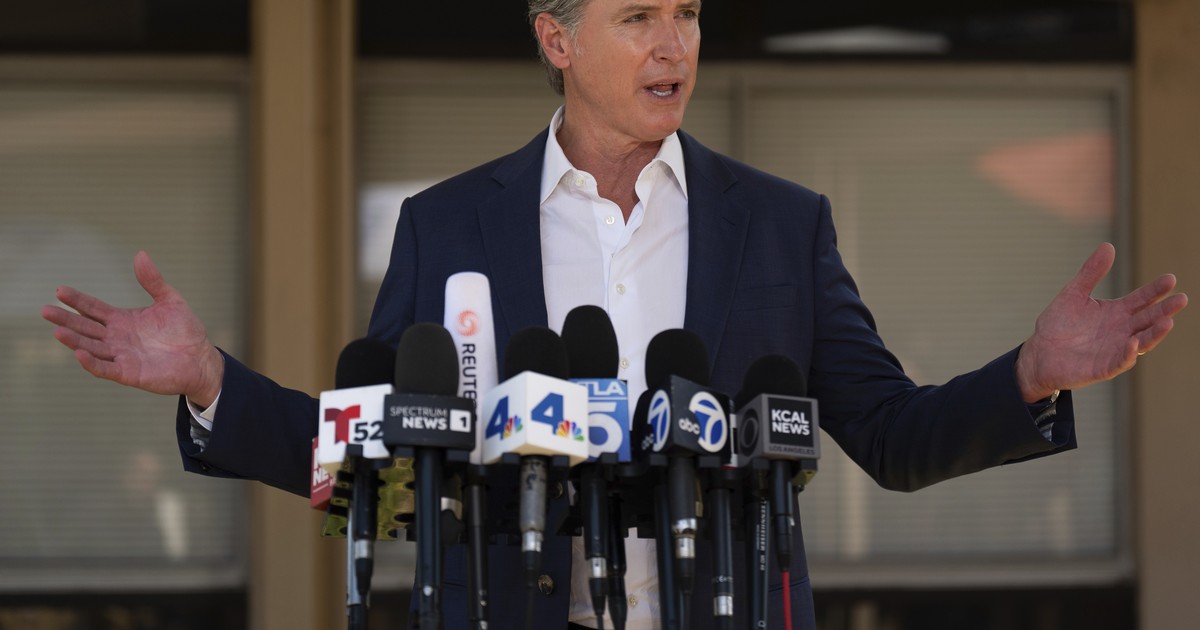
California Governor Gavin Newsom blasted President Trump over an effort to restart the Sable pipeline, calling it a favor to “Big Oil,” while the U.S. Oil and Gas Association fired back pointing out California’s heavy reliance on foreign crude and the mismatch between Newsom’s rhetoric and state energy reality.
The U.S. Oil and Gas Association publicly challenged Governor Gavin Newsom after he attacked President Trump for trying to restart the Sable pipeline, accusing Trump of catering to “Big Oil.” That criticism landed amid clear numbers showing California imports more than 30 percent of its crude from the Middle East, exposing the state to foreign market swings. The contrast between talk and outcomes is the headline here.
“While Donald Trump’s reckless and costly war with Iran forces families to pay more for gas and groceries, his Big Oil donors are profiting from his attempt to illegally restart the Sable pipeline,” Governor Newsom wrote on X. “California is demanding the court block this flagrant abuse of power.”
“Says the guy who thinks it’s perfectly fine to import a quarter-million barrels of Iraqi oil into CA,” U.S. Oil and Gas replied. The association’s reply landed hard and simple, underlining the point that criticism of an administration action rings hollow when a state relies on foreign crude. That dispute plays out in public statements and direct calls on social media.
While Donald Trump's reckless and costly war with Iran forces families to pay more for gas and groceries, his Big Oil donors are profiting from his attempt to illegally restart the Sable pipeline.
California is demanding the court block this flagrant abuse of power. https://t.co/oJy23qTV1C
— Governor Gavin Newsom (@CAgovernor) May 4, 2026
The policy question at the core is straightforward: which approach makes Californians better off at the pump and on the world stage, restricting domestic production or expanding it responsibly? Reopening a pipeline and increasing domestic throughput would practically increase supply, which typically helps lower prices and secure supply chains. From a Republican perspective, practical energy production beats virtue signaling when Americans face higher costs.
Just yesterday, the last shipment of oil from the Middle East docked in California, a reminder that reliance on foreign crude is not theoretical for the Golden State. That continued dependence leaves California particularly vulnerable to geopolitical shocks and price spikes tied to unrest in regions like the Middle East. When a state sources a big slice of its oil from overseas, local drivers pay the price when things go wrong abroad.
While gas prices are climbing across the country, California’s prices sit roughly $2 per gallon above the national average, a disparity that hits families hard. The U.S. Oil and Gas Association has repeatedly argued that state policy choices, rather than federal moves, are the primary drivers of California’s high costs at the pump. That argument shifts focus back onto Sacramento’s decisions and their tangible impact on consumers.
Governor Newsom recently refused to suspend the state gas tax as a targeted relief measure, saying the revenue is essential to maintain long-term projects and infrastructure. “It’s funding the biggest investments in roads, bridges and infrastructure in California’s history — a $180 billion, 10-year capital plan, substantially because of that voter-approved effort,” he said. “The price spikes in this state are directly attributable to the actions of the president of the United States. And the president of the United States needs to be held to account not only for those actions and their consequences, but he needs to end this war and address the growing crisis at the pump that he has exacerbated.”
State representatives offered similar defenses of keeping tax revenues intact to support those projects, even as complaints grow about the condition of roads and the cost of driving. The tension is raw: officials point to long-term plans funded by gas taxes while many drivers see little short-term relief. That disconnect fuels political heat on both sides of the aisle and keeps energy policy front and center for voters.
The debate is less about slogans and more about outcomes: lower prices, reliable supply, and resilient infrastructure. California’s current mix of high taxes, restrictive energy rules, and heavy imports is producing predictable results for consumers. For those who believe in a strong domestic energy sector, the right policy is obvious — rely less on foreign oil and more on American production to protect families from global shocks.