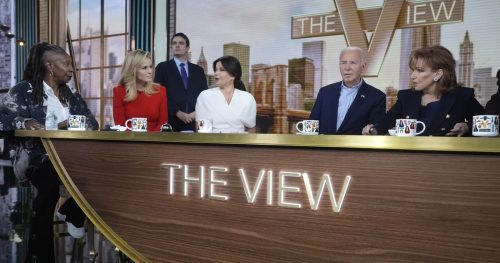
CNN’s panel brushed off Christian persecution until Scott Jennings called them out, laying out both global suffering and domestic examples of bias while pushing back against a dismissive host.
The CNN segment felt like a closed loop of disbelief, with the host treating the idea of Christians being silenced as a nonstarter. That insulated tone is exactly what critics on the right have been complaining about for years. The network acted like persecution is only visible if it fits their preferred narrative, which makes honest conversation impossible.
Unfortunately for Sidner, Jennings was there to set the record straight. He pressed the point that Christians face real hostility at home and abroad and refused to let the panel dismiss lived experience.
“Scott,” sighed a clearly exasperated Sidner, “are Christians really being silenced? I have not seen that in any way, shape, or form. And you’re looking at me like I’m crazy, and I know I’m not crazy, because I hear people talking about their religion all day, every day. All over the airwaves.”
Scott Jennings forces the CNN panel to confront the global persecution of Christians.
When host Sara Sidner tried to bury her head in the sand and claim it wasn’t happening, Jennings dropped a powerful reminder for all those listening.
SIDNER: “Scott, are Christians really… pic.twitter.com/9VjKqRrlGY
— Overton (@overton_news) May 19, 2026
That’s not proof that there isn’t persecution and silencing of Christians. Scott Jennings pushed back and framed the issue as both cultural and physical, not merely an opinion question. He insisted the topic deserved to be taken seriously rather than waved away by a media elite.
“Certainly, Christians feel that way. They feel often that they’re marginalized in politics, marginalized in mainstream media,” Jennings replied. “We have Christian persecution going on around the world. We have slaughtered Christians in Africa that nobody seems to … I don’t see any protests on college campuses for them.”
“I think within the Christian community, there is a sense that voices and lives are being silenced all over this world. And in this particular case, you had a lot of speakers there that had a lot of different messages,” Jennings continued.
“I think messages like that, I mean, Lincoln … what Lincoln talked about at his second inaugural was absolutely divinely inspired, in my opinion. It came right out of the Christian context,” Jennings said.
“And that’s what Dr. Arnn spoke about in his speech. So I think if we’re going to have some national unity in this country, political division has driven us apart. But it may be faith that drives us back together. And I think Christians love the idea of not being marginalized any further and, in fact, being at the center of some sort of national reconciliation.”
Jennings didn’t stop at rhetoric. He pointed to concrete examples where Christians have been targeted or sidelined by institutions. He argued the FACE Act was used in ways that felt weaponized, the Justice Department entertained extreme options, and faith-based institutions have been pressured over conscience issues for years.
Those domestic clashes sit alongside far worse attacks overseas, where Christian communities face persecution and even slaughter without the same outcry from progressive media. High-profile legal fights and local laws have put clergy and religious institutions in impossible positions, while some activists treat objections from believers as mere culture-war theatrics. That disconnect explains why many conservatives see a pattern, not isolated incidents.
As an aside, if you watch the video, pay attention to Ana Navarro’s body language and how contemptuously disinterested she is in what Jennings is saying. Her posture and reactions underline the broader problem: too often, opposition looks less like debate and more like dismissal. That attitude makes fair coverage of religious freedom harder to come by.
So either Sidner is living under a rock or she’s being willfully obtuse. Either way, the exchange shows why conservatives keep calling out media bias—because when a major outlet treats a serious human-rights issue like a thought experiment, real victims get ignored. The conversation Jennings started deserves replication, not ridicule, whenever networks decide faith is inconvenient.