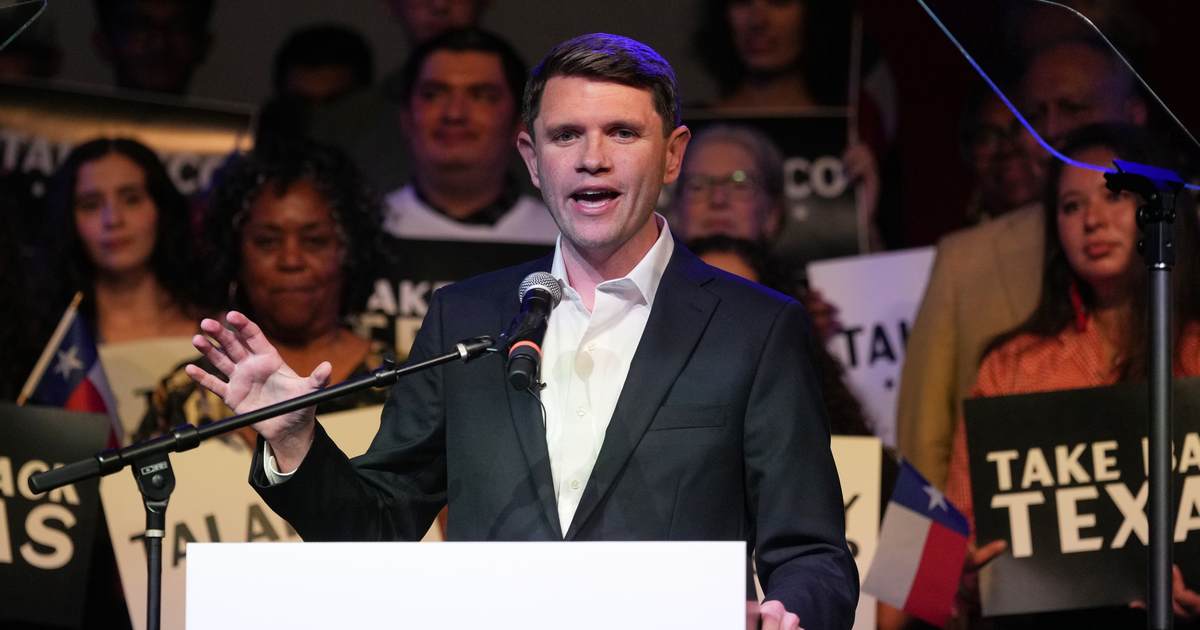
A resurfaced 2021 clip shows Senate candidate James Talarico saying, “I think of myself as a Christian who hates Christianity.” The footage ties his religious ideas to theologian Robyn Henderson-Espinoza and a conversation with Rev. Anna Golladay. Espinoza’s self-description and her book “Activist Theology” appear to have shaped some of his public statements. The remark lands in a state where approximately 67 percent of residents identify as Christian.
James Talarico, running as a Democrat in Texas, has grabbed attention with a blunt line that many voters found shocking. In a clip that has resurfaced, he says, “I think of myself as a Christian who hates Christianity.” That single sentence has become a focal point for critics who say it reveals a broader disdain for traditional faith.
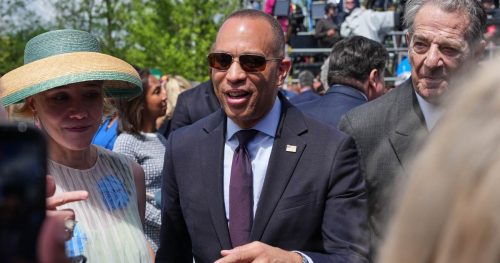
The clip is reported to be from a conversation involving Rev. Anna Golladay and Robyn Henderson-Espinoza, who now identifies as Roberto. Golladay is currently running to challenge longtime Tennessee 3rd Congressional District Rep. Chuck Fleischmann in a deep red seat. Espinoza describes herself as an author who “inhabits a nonbinary body, a trans body, a body in two races — and a body continually in discovery,” and she calls herself a “TransQueer, Latinx activist theologian,” language Talarico says inspires him.
https://x.com/AndrewKolvet/status/2069429122938605635
Talarico has publicly praised Espinoza’s work and singled out the book “Activist Theology” by name. He said the book helped him “expand his imagination,” which is “limited by whiteness and masculinity.” Those lines are useful to critics who argue his views are shaped more by progressive theology than by the church pews of most Texans.
The material Talarico cites appears to influence how he talks about God and social issues, including abortion and gender. He has suggested ideas that imply God could be “non-binary,” and has framed certain religious stories in ways that critics say normalize abortion. Opponents point to a pattern: theological positions that depart sharply from traditional Christian teaching often end up tied to policy positions as well.
Observers also note Espinoza’s academic work, which pushes boundary-pushing language and frameworks. She reportedly advocated for “transing religion as one approach to methodologically dismantle the logic of the norm that grounds the reproduction of binarisms and theologies of complementarity,” a quote that has been picked up by conservative commentators as emblematic of the progressive theological project. Talarico’s statements that transgender identities are “perfect” and “part of God’s design” are being presented as downstream results of those intellectual influences.
All of this plays differently in Texas politics, where religious identity still matters at the ballot box. Roughly 67 percent of Texans identify as Christian, and many of them expect their public officials to respect, not disparage, those commitments. Calling one’s own faith something to be hated reads as tone-deaf to voters who see religion as central to family and community life.
From a Republican viewpoint, the reaction is straightforward: a candidate who dismisses Christianity risks alienating a large swath of the electorate. Conservative critics argue that voters deserve to know whether a candidate treats faith as a sincere commitment or as a platform for social experimentation. That distinction matters in races where faith and cultural values are front and center.
In tight contests, lines like the one Talarico delivered can become defining. They offer opponents a clear contrast to put before voters and give pastors and local leaders a reason to raise questions at the doors. For many Texans, the issue is not academic; it is about whether public servants respect the beliefs of the people they represent.