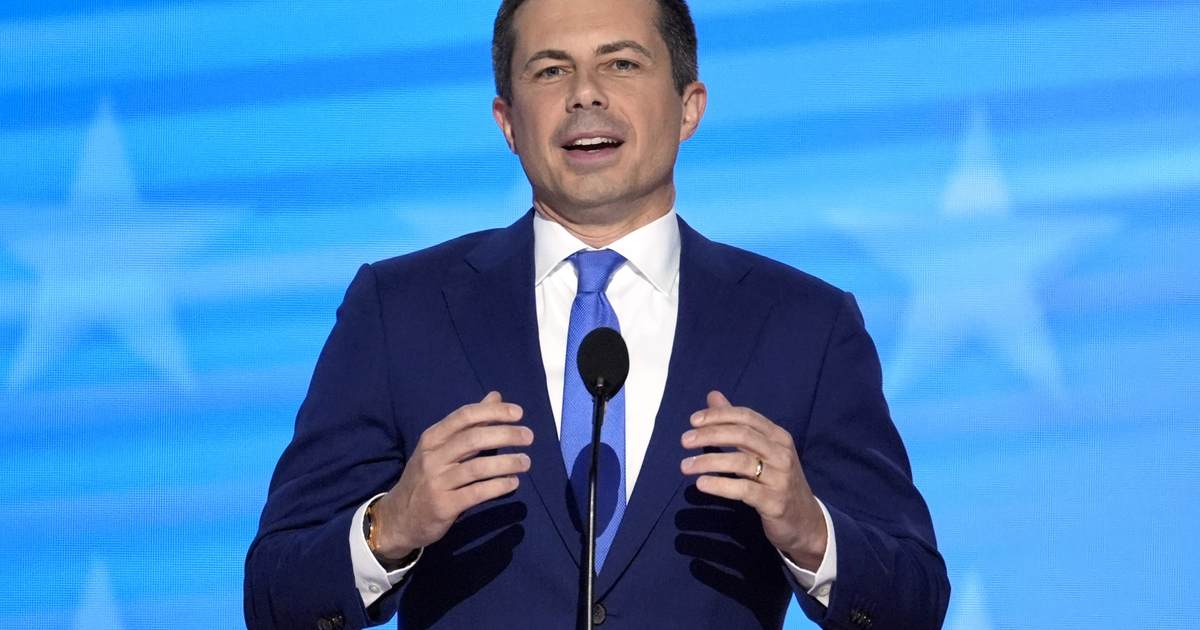
Pete Buttigieg says he will run in 2028 and is pitching changes that would remake core American institutions, from abolishing the Electoral College to expanding the Supreme Court, and his comments reveal a partisan playbook more interested in power than balance.
Pete Buttigieg, the former Transportation Secretary, has announced his intention to run for president in 2028. He left the Biden administration with a low profile and faces steep political realities, including feeble polling among key voter groups. His proposals are ambitious and hostile to long-standing structures that give smaller states and minority voices a meaningful role.
Buttigieg openly backs scrapping the Electoral College, arguing that the current arrangement gives some voters greater weight than others. That position signals a willingness to erase checks on raw popular-majority control and to centralize power in dense population centers. Critics on the right see this as an attempt to reduce the influence of red and rural states in national politics.
“Totally,” Buttigieg says when asked if he’d scrap the Electoral College. “This is one where it just is a matter of basic fundamental fairness. I don’t see how you get to the idea that any one voter should have a greater vote than another voter.”
The Electoral College is not an accident; it was built to balance interests across a diverse federation of states. It forces presidential candidates to assemble broad coalitions and to consider the needs of smaller states, not just big coastal cities. Removing it would hand unchecked leverage to the most populous areas and invite perpetual nationalized campaigns run by coastal elites.
https://x.com/WesternLensman/status/2084683728962400463
Beyond voting mechanics, Buttigieg has signaled support for reshaping the Supreme Court to get results he prefers. Court expansion is being discussed openly as a tool to secure favorable legal outcomes rather than to preserve impartial adjudication. That tactic looks less like reform and more like raw partisan stacking.
“What I want to do is, expansion is part of a vision to reform, to make it less partisan,” he said. “13 I think is the most natural number because that’s how many districts you’ve got.”
The idea that expanding the Court will make it less partisan is backward; expanding it for partisan advantage admits the court is a political prize. When politicians treat the judiciary as a spoils system, public trust declines and the institution’s authority erodes. Conservatives and independents who value separation of powers should be alarmed by a strategy that openly weaponizes the bench.
“But what I think we need to do is first of all recognize these things are not written in stone, they’re not even written in the Constitution,” Buttigieg continued. “Most importantly, what does it take to make these institutions work? The Supreme Court is only the Supreme Court functionally if everybody can agree that it is legitimate.”
That argument essentially subordinated institutional legitimacy to partisan approval. If legitimacy depends on whether one party likes the outcome, then courts, elections, and other safeguards become contingent tools rather than neutral referees. From a conservative point of view, governance should rely on fixed structures that protect minority rights and limit transient majorities.
Buttigieg’s playbook echoes a wider progressive push: change the rules when you win, then make those changes permanent. The pattern is simple and effective when it works, and dangerous when it doesn’t. Republicans must counter the narrative that institutional overhaul equals fairness, because fairness under this logic means winning at any cost.
His rhetoric also reveals a troubling willingness to dismiss the historical purpose of institutions built to prevent centralization. The founders set up a system that forced accommodation between diverse interests across geography and ideology. Proposals that ignore that foundation risk turning a pluralistic republic into a majoritarian project with winners and permanent losers.
Beyond theory, the political optics are bad for Buttigieg. If he cannot attract broad support among voters skeptical of radical institutional changes, his agenda will look like a plan for a narrow faction to seize lasting control. That would deepen polarization and incentivize tit-for-tat changes whenever power flips.
Voters who care about stability, federalism, and an impartial judiciary should be wary of candidates who openly pursue structural rewrites to entrench their side. This is not a debate about minor tweaks; it is a fight over the rules that decide every close election and every constitutional crisis. The stakes are real and immediate.
For conservatives, the response is clear: defend institutions that make America a republic, not a simple aggregation of population centers. The next years will test whether Americans prefer enduring frameworks that protect diverse states and opinions, or a politics of constant institutional remodeling to suit whoever holds power.