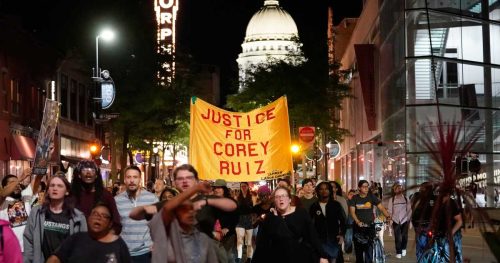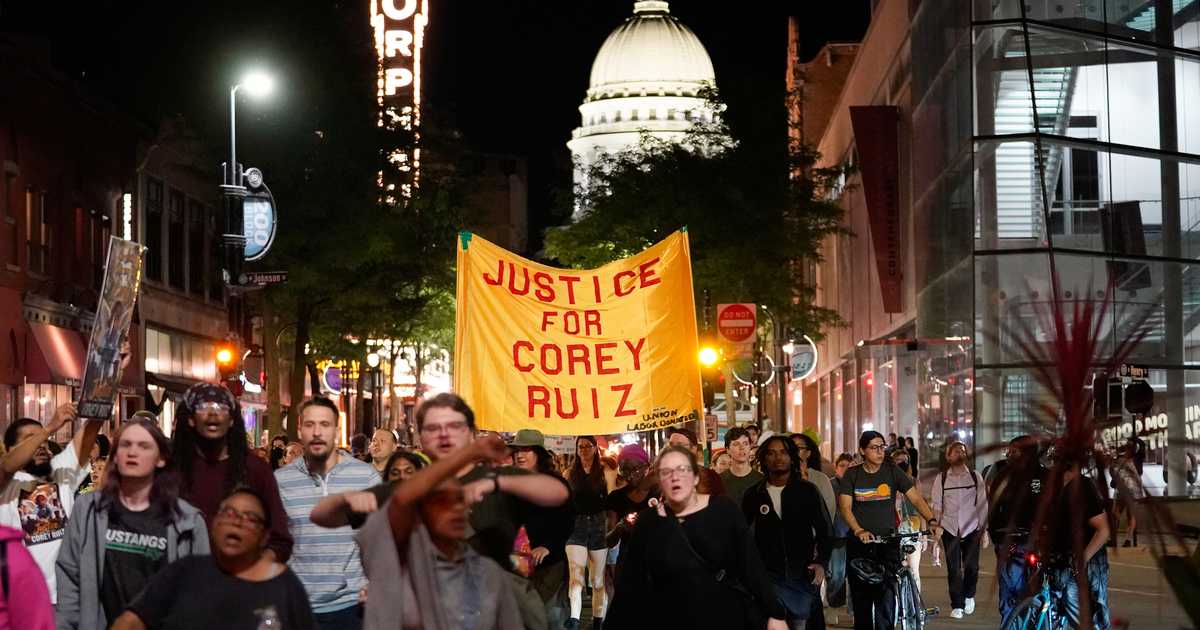
Madison saw days of tense protests after police cleared an illegal encampment tied to the fatal police shooting of Corey Ruiz, with arrests, clashes and a mayoral call for calm as city leaders and a gubernatorial hopeful faced political fallout.
The story began with an encampment that sprang up after officers shot Corey Ruiz when he allegedly pulled a knife and injured an officer. The encampment labeled itself an autonomous zone and quickly became a flashpoint for left-leaning activists and outside agitators. Local law enforcement ultimately moved to clear the site, setting off clashes that were anything but peaceful.
Several arrests followed the initial dismantling, and police reported further confrontations as people returned to block intersections and shout at officers. Witnesses said rocks were thrown, small fires were started and pepper spray was used by police to restore order. The unrest didn’t stay isolated to the encampment site; protests flared in other parts of the city afterwards.
Francesca Hong, a Democratic Socialist running for governor, encouraged early demonstrations and later tried to distance herself by calling for a “peaceful resolution.” That flip-flop reads like political theater to those watching from outside Dane County. The episode highlighted how activists and certain candidates can stoke unrest and then step back when the optics turn sour.
Madison Mayor Satya Rhodes-Conway urged calm and condemned the destructive behavior, but critics say she waited too long to act and treated the situation as a free speech issue rather than a public safety problem. The mayor’s stance that she would not intervene because of First Amendment concerns left residents and businesses feeling exposed. For many, blocking streets and throwing objects at police is not protest, it is lawlessness.
When crews finally removed the encampment, police faced renewed resistance and arrests continued into the night. The crackdown did not erase the political consequences for local leaders who had tolerated the blockade for weeks. Opponents argue that the decision to tolerate the encampment amounted to rewarding lawlessness in the name of politics.
Six people were arrested overnight as protesters and police clashed again over efforts by local officials to clear the intersection that has become a protest zone two weeks after the fatal police shooting of Corey Ruiz.
https://x.com/tamiafowlkes/status/2085025264027709468
The intersection of Williamson and Baldwin streets on Madison’s east side, about a mile-and-a-half from the state Capitol, is open again as of Wednesday morning.
The new arrests followed 16 that occurred throughout the day Aug. 4 after workers took down the encampment raised as a lingering protest and memorial to Ruiz. Protesters lingered on scene for hours after the encampment was cleared Tuesday morning. They at times shouted angrily and swore at police stationed there and occasionally gathered to once again block the intersection.
Video circulated showing chaotic scenes as crowds clashed with officers, with some demonstrators tossing trash cans and other projectiles at police vehicles. Those visuals matter because they undercut any claim that the encampment was purely a peaceful memorial. Local business owners described intimidation and damage that will take months to repair, while residents complained about blocked streets and unsafe conditions.
After the clearing, some protesters redirected their energy toward elected officials, showing up at the mayor’s home and escalating tensions. That kind of intimidation crosses a line from protest to harassment, and it worries people who want basic order restored. The optics of demonstrators at a public official’s residence are particularly troubling for anyone who values safety and private property.
The mayor addressed the public, saying, “As mayor of Madison I will not condone or accept that the solution is to further divide our community by causing harm to your neighbors and local businesses, harassing bystanders or setting fires in streets,” she said. Those words ring true, but critics point out the late timing and ask why prevention and enforcement weren’t stronger earlier. Promises matter less if the pattern of permissive tolerance continues.
Rhodes-Conway has said she believed people had a First Amendment right to assemble, but the line between protected speech and criminal disruption was crossed. Blocking streets and setting fires are not speech; they are criminal acts that endanger the public. Citizens who witnessed the chaos want clear accountability and stronger enforcement going forward.
Political calculations played a role throughout, with some local leaders appearing to temper criticism of the encampment until public backlash mounted. That sequence feeds a narrative that some officials are more concerned about political cover than public safety. For conservative observers, the entire episode underscores the risk of tolerating lawlessness under the guise of activism.
The fallout continues, and the city faces a choice about how it will handle future protests that cross into criminal behavior. Voters and community leaders will watch whether officials follow through with accountability measures or revert to passive management. In Madison, as elsewhere, the debate over public order versus permissive protest is far from settled.
Local debate aside, one thing is clear: police were placed in a difficult position, forced to balance de-escalation with the need to protect public safety and property. The clashes and arrests after the encampment’s removal will be parsed by advocates on all sides. What matters to residents is less the rhetoric and more the return of basic safety to neighborhood streets.
Expect this to remain a political flashpoint as Francesca Hong continues her campaign and opponents hammer home concerns about radical supporters. If elected officials fail to enforce the law consistently, similar scenes could reappear whenever tensions rise. For now, Madison is watching closely to see whether order will hold or if another round of unrest is waiting around the corner.