Sen. Thom Tillis has publicly backed James Comey after the Justice Department issued an arrest warrant tied to an Instagram post, and his comments have stirred debate about intent, context, and political double standards.
The Justice Department issued an arrest warrant for James Comey tied to his “8647” seashell post on Instagram, and the charges were announced by Ellis Boyle, the acting U.S. Attorney for the Eastern District of North Carolina. Boyle said Comey was being charged with two felonies: “Knowingly and willfully made a threat to kill and to inflict bodily harm on the POTUS and knowingly and willfully transmitted interstate and foreign commerce communication that contained a threat to kill President Trump.” The case has raised questions about how social media symbols are interpreted and prosecuted.
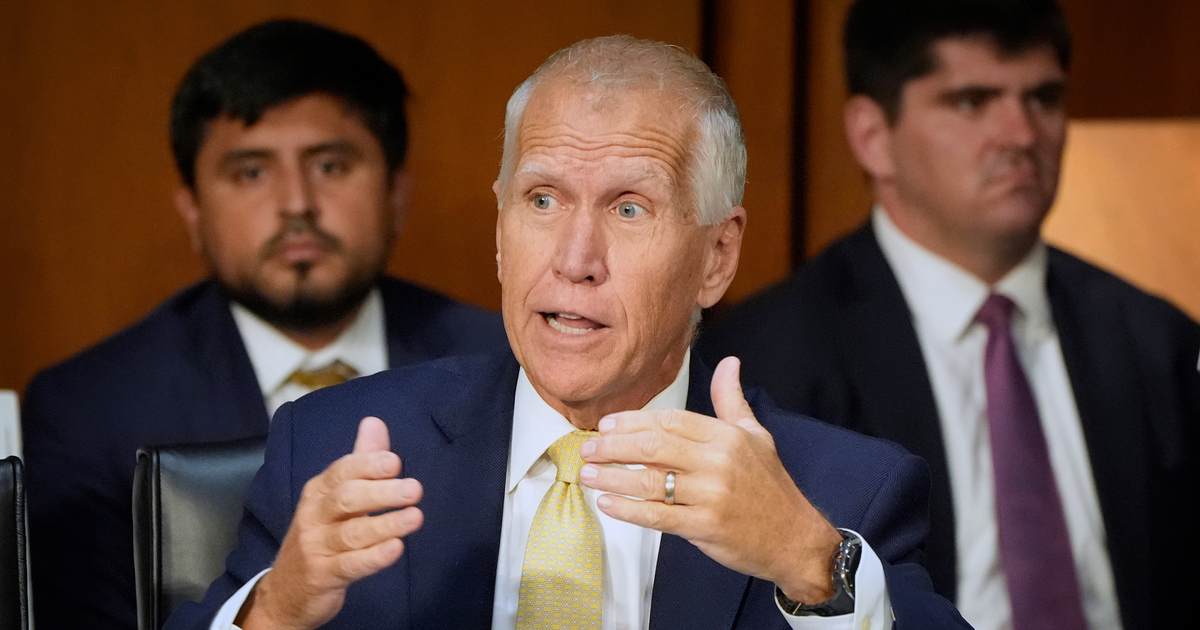
Now Senator Thom Tillis of North Carolina is expressing his support for Comey.
In an interview with Jake Tapper, Tapper asked, “Do you think posting ‘8647’ is a crime?” Tillis answered directly and with context. He explained that symbols can carry multiple meanings and that context matters when deciding whether speech crosses into criminal conduct.
🚨 WTF?! Sen. Thom Tillis (R-NC) just came out in SUPPORT of disgraced former FBI Director James Comey posting "8647" in the DOJ case, a clear call to take Trump out
"I used to work in the restaurant industry…it has its roots in 86'ing the menu or product. I can't find any… pic.twitter.com/iVwVWH6dRc
— Eric Daugherty (@EricLDaugh) May 3, 2026
“No,” Tillis replied. “Again, if this prosecution, which is coming from the Eastern District of North Carolina, if this whole case is based on a picture in the sand of a North Carolina beach, it again makes no sense to me. Again, number one, 86 — I used to work in the restaurant industry, and I think 86 actually has its roots … in 86ing the menu or 86ing the product. I can’t find any evidence except some that’s come up after the President made the comment about the movies.”
The exchange put the spotlight on how a shorthand like “8647” can be read in different ways, and why a sitting senator would push back. Tillis emphasized practical origins for the term and questioned whether the prosecution was proportionate to the expression involved. His response framed the dispute as one between legal overreach and free speech interpretation.
To many conservatives, the reaction to the post looks like a selective outrage test. Seriously? To ’86’ something means to end it, and, as we all know, the Left has now tried three times to assassinate President Trump. That history colors how Republicans see any investigation that singles out a symbolic post while other threats receive different treatment.
Supporters of Tillis argue that if the roles were reversed and a Republican had written “86 Kimmel” or used similar shorthand against a high-profile liberal, the response would be immediate and unforgiving. The point being made is about consistency: either the legal system treats threats the same regardless of politics, or it risks being weaponized. Conservatives say the treatment so far looks inconsistent and politically tinged.
There’s also a broader cultural argument at play. For a decade many on the left labeled President Trump and his supporters with extreme epithets, and yet, critics say, some of the same people have shown tolerance for dangerous rhetoric from figures they favor. That double standard fuels anger and suspicion across the aisle and complicates any neutral reading of cases like this one.
Bingo. The visceral reaction from many on the right is not just about one phrase or one post, but about a pattern of selective enforcement that feels like political theater. That perspective is why a Republican senator defending a controversial figure gets airtime and pushback in equal measure.
Y, as a shorthand reaction, captures the bafflement some feel when prosecutorial energy focuses on symbolic posts while other explicit threats get different responses. That frustration is driving much of the commentary you’re seeing from conservative circles. The debate now is how the courts will interpret intent, context, and precedent when they take this up.
Yes, Thank goodness some Republicans are willing to call out perceived inconsistencies in the system and press for equal application of the law. That stance appeals to voters who want clear standards rather than ad hoc enforcement. It’s also part of why Tillis’s comments are being closely watched back home in North Carolina and in Washington.
The Senate will be better off if its members insist on predictable, even-handed legal standards rather than letting prosecutions look like political message plays. That demand for fairness is what many constituents expect from their representatives, and it’s the lens through which they’re judging Tillis’s remarks. Law and politics will both have to answer for how this moment is handled.
Or he has, he knows what it means, but being on CNN was the priority. Either way, the exchange underlines how symbols, media moments, and prosecutorial decisions collide in today’s politics. Expect more argument, more headlines, and a legal process that will force a clearer ruling on where speech ends and criminal threats begin.