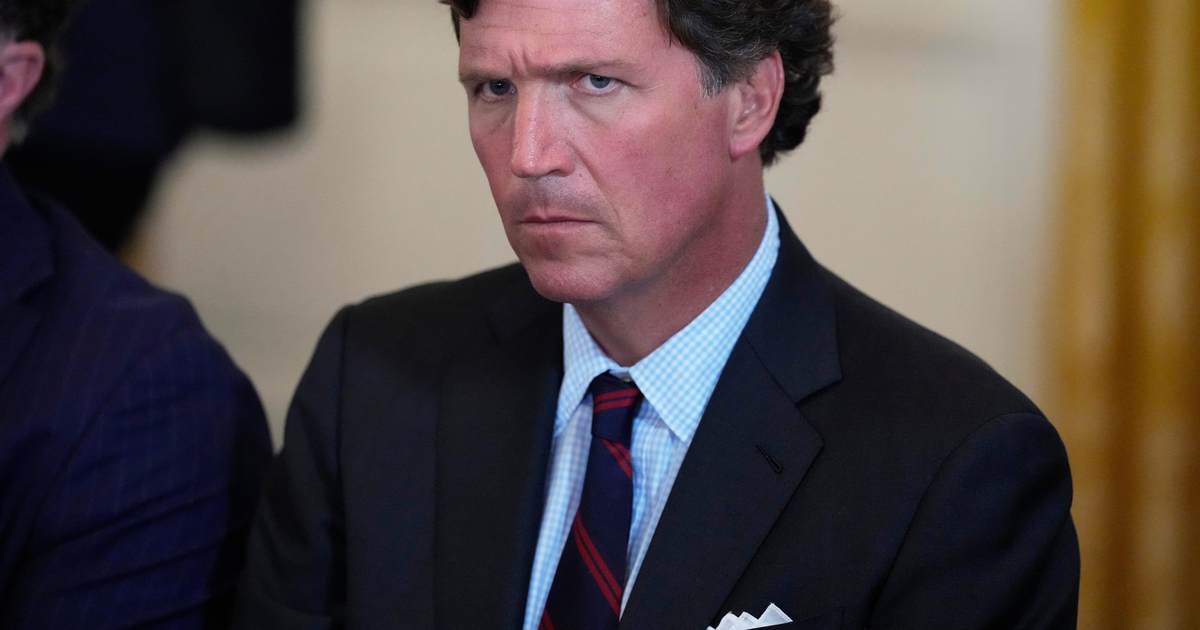
Tucker Carlson’s recent sit-down with The New York Times turned into a public stumble, with a tape undercutting his denial and a media narrative that Republicans say is full of gotchas and selective editing.
Tucker Carlson has been on a different path since leaving his network show, mixing cultural critique with blunt political takes that make people squirm. He recently raised eyebrows by saying capitalism feels at odds with Christian teaching and by warning the Justice Department might be preparing charges against him as a foreign agent. Those lines got attention, but the New York Times interview focused on a different flashpoint that landed badly for him.
During the interview he was challenged over a remark about whether President Trump could be the Antichrist, and he rejected ever saying it. When the Times played a clip, Carlson’s response became the centerpiece of the story and left him on the defensive in front of a national audience. The moment looked like a classic media ambush: set up a narrative, play a tape, and demand a neat confession.
Carlson pushed back with a line that has since been replayed a lot: “I don’t know where that comes from,” Carlson said after the clip, “but I know those words never left my lips because I’m not sure I fully understand what the Antichrist is, if there’s just one. I’ve actually tried to understand it. I may have said some are asking that. I am not weighing in on that because I don’t understand it.”
We all saw the tape. The exchange exposed both the risk of off-the-cuff commentary and the ease with which a clipped excerpt can be framed to suggest a position that the speaker insists they do not hold. For conservatives watching, it looked less like a fair conversation and more like a setup to embarrass a dissenting voice.
NYT: "You've been talking on your show about whether Trump is the Antichrist"
Tucker Carlson: "I have not said that"
NYT: You said, "Here's a leader mocking the Gods of his ancestors, mocking the God of Gods, and exalting himself above them. Could this be the Antichrist?"
TC:… pic.twitter.com/7YZyngfw7U
— Ryan Saavedra (@RyanSaavedra) May 2, 2026
The clip’s viral life shows how modern media cycles weaponize short moments, then act surprised when those moments define the person. Carlson’s critics called the segment confirmation that he traffics in wild ideas, while his supporters saw a credible man who was tripped up by framing and context. Either way, the interview broadened the debate around him and kept his name in headlines.
Beyond the Antichrist flap, Carlson’s recent comments about capitalism and the Department of Justice have fed a narrative about a media and political establishment trying to push him into a corner. He’s not just a pundit anymore; he is a polarizing voice with a podcast that reaches a vast audience, and that makes every remark a story. The Times piece read to many like a journalistic exercise in reducing a complex personality to a few viral clips.
Social media heated up immediately after the interview, with clips and reactions flying in every direction. Some posts simply mocked the awkward moments, while others defended Carlson as a victim of selective editing and accusatory journalism. The contrast between long-form argument and bite-sized social clips has never been sharper, and this episode is a textbook case in how one fuels the other.
Conservatives pointed out that outlets on the left do the exact same thing to their opponents, carving up speeches and interviews to produce headlines that serve a political aim. That doesn’t excuse sloppy reporting, but it highlights that the media landscape favors viral takes over patient context. For audiences tired of media theatrics, this felt like another example of that pattern.
Carlson’s defenders argue he’s asking uncomfortable questions about power and culture, which draws fierce resistance from mainstream outlets. His critics say he traffics in conspiratorial thinking and provokes needlessly. Both sides recognize that moments like the Times exchange are powerful because they shape public perception quickly and emotionally.
The fallout is a reminder that public figures with large platforms face a double bind: stray words get magnified, and long explanations rarely travel as far as short, sharp clips. For those who back Carlson, the interview underscored a broader problem with how major media treat dissenting conservative voices. For opponents, it was a chance to pin down a provocative media figure.
Either way, the episode will stick in the memory of voters and media watchers alike, and it shows how a single tape can steer the conversation for days. Expect both sides to keep using the moment to argue larger points about media fairness, cultural conflict, and where prominent commentators fit into the national debate.