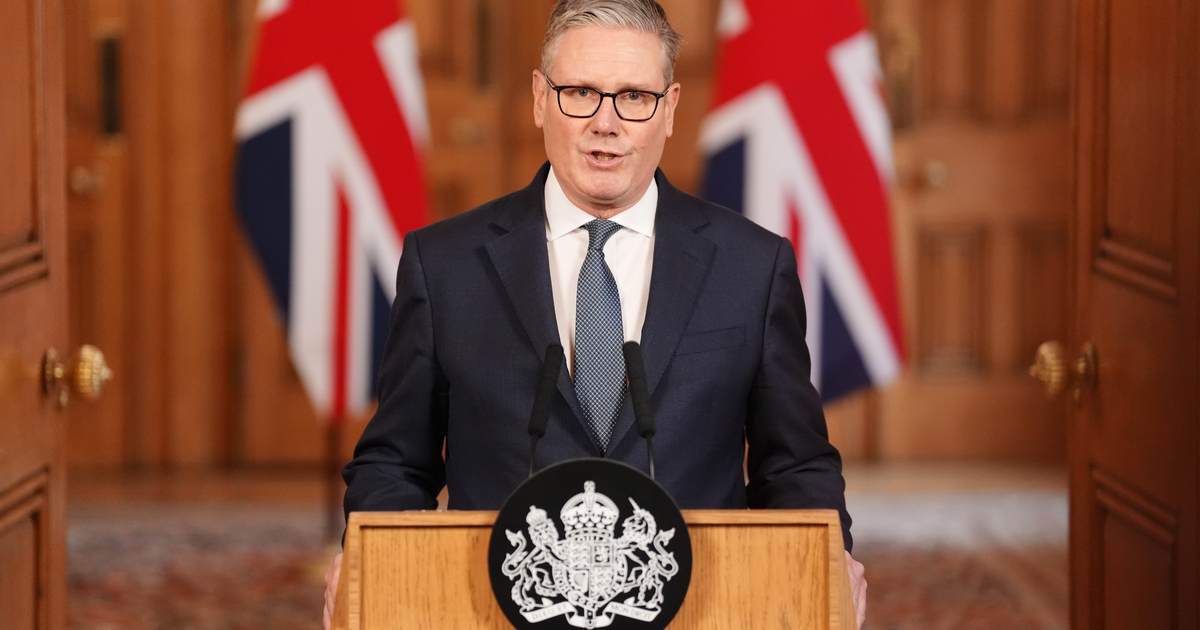
Keir Starmer won’t ban the kirpan after body-cam footage showed the fatal stabbing of Henry Nowak, yet ordinary people are still barred from carrying tools to defend themselves.
The release of body-cam footage in the Henry Nowak killing has sparked outrage, but the political response has been oddly restrained. Keir Starmer’s government is refusing to move on a targeted ban for the religious dagger involved, even as public anger grows. That decision raises sharp questions about who the state protects and who it leaves exposed on the street.
Under current U.K. law the kirpan is treated as a religious exception, while a broad set of self-defense tools are outlawed for everyone else. The 2019 Offensive Weapons Act tightened controls across the board, banning many knives and making it illegal to carry defensive items such as pepper spray and stun devices. Everyday-carry knives are tightly regulated: legal pocket knives must be non-locking folding blades with cutting edges under 7.6cm (3 inches), which most traditional kirpans exceed.
https://x.com/visegrad24/status/2061824571448164389
The contrast is stark and easy to see on the ground: the law allows a ceremonial dagger for religious observance but rejects most means an ordinary person might use to stop an attack. That creates an inconsistency with real consequences, because a legal carve-out for religious practice can coexist with a blanket denial of defensive options for the rest of the population. People expect the state to treat public safety consistently, not to draw exemptions that feel arbitrary to victims and families.
Starmer publicly said he “felt sick watching the footage” and declared Henry’s life had been “stolen,” yet the government has ruled out outlawing kirpans. Officials and the judge pointed out that the blade only became a murder weapon when it was unsheathed by Vikram Digwa and used to kill Nowak. Even so, ministers insist that criminalizing the ceremonial item would cross a line, leaving many to ask why the balance of liberty and safety is tilted this way.
There is a practical argument at the center of the public debate: when ordinary citizens are denied access to reasonable means of self-defense, they can become sitting targets. If Henry Nowak or other victims had been allowed to carry a proportionate defensive tool, a different outcome might have been possible. That is a blunt, unpopular truth in some circles, but it is the kind of real-world calculus voters want their leaders to face.
This incident also feeds into broader concerns about cultural friction and public order. When a democratic country pursues policies that prioritize exemption over universal safety, it risks confusing legal norms with cultural tolerances. Voters of all backgrounds notice when the law appears unequal in practice, and they expect leaders to respond in ways that protect citizens rather than create special categories of vulnerability.
From a conservative perspective, the core duty of government is to preserve public order and individual safety first and foremost. Allowing a religious exception to stand while insisting that law-abiding civilians cannot carry defensive measures looks like a failure of that duty. The Nowak case has become a rallying point for those who argue that practical self-defense rights should not be sacrificed for doctrinal purity.
The judicial finding that the kirpan “only became a murder weapon when it was unsheathed by Vikram Digwa” is legally precise but politically unsatisfying for many families. Legal technicalities matter in court, but citizens judge leaders by outcomes: who is safe walking home and who is not. When a government permits an item that can be used to kill while denying ordinary people similar, non-lethal means to protect themselves, it invites hard questions about priorities and accountability.
Editor’s Note: Here at Townhall, we’ve been dealing with real government suppression of free speech for YEARS. Despite the threats and consequences, we refuse to go silent and remain committed to delivering the truth.