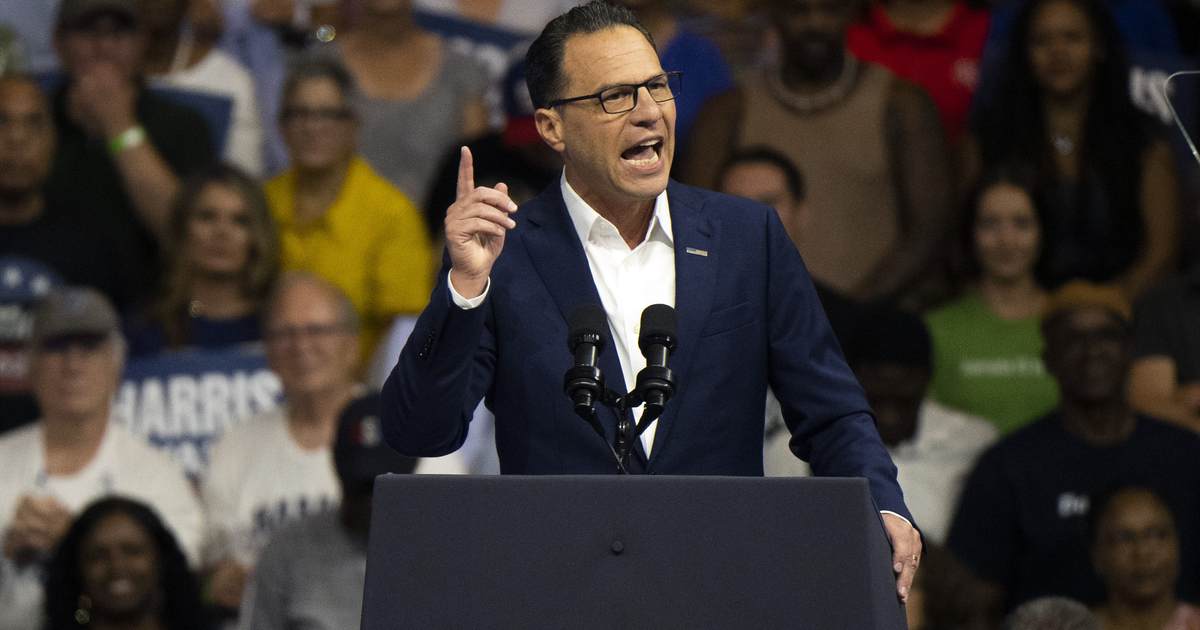
Pennsylvania Governor Josh Shapiro declared the Democratic Party “the party of real freedom,” and the reaction is sharp from the right, which sees a big gap between rhetorical liberty and policy choices that, in their view, expand government power and contradict traditional values.
Governor Josh Shapiro recently told an interviewer he believes his party stands for liberty in a broad sense, linking that freedom to choices over bodies, vaccinations, and access to books. His remarks landed like a provocation in conservative circles because they lump together very different issues under a single banner of freedom. That claim has energized critics who argue the party’s actions tell a different story.
“I think Democrats are the party of real freedom,” Shapiro said. “Real freedom that allows women to make decisions over their own bodies. Allows parents like me and my wife Lori to make decisions over what vaccines our kids are going to be able to get. That they can read the books that they want to read, not have certain ones banned by certain politicians.”
From a Republican point of view, that language masks a set of policy choices the left defends as liberty but conservatives see as coercive and extreme. Saying abortion is framed as freedom is opposed by those who view unborn life as deserving of protection, not a matter of personal liberty without limits. Likewise, debates around vaccines and school materials look less like pure freedom and more like battles over who gets to decide what families and communities can do.
https://x.com/DefiantLs/status/2069291288198050208
Shapiro doubled down on the broader selling point that his movement can be both liberty-minded and pro-growth, safety, and education, claiming that approach is producing wins in Pennsylvania. “The point I’m making here is that we can be a pro-freedom party and a pro-growth party, a pro-safety party,” Shapiro continued, “a pro-education party. That is what we’re doing in Pennsylvania. We’re winning in Pennsylvania, the toughest state in the country to win in, and that is what I think we need to see more of.” That pitch sounds appealing until you test it against democratic priorities conservatives object to.
Republicans point to concrete episodes where Democratic governance appeared to prefer mandates or centralized control over individual decision making. Critics bring up pandemic-era vaccine policies, reported efforts to sanction parents over vaccine choices, and school practices that insist on affirming a student’s gender identity even when parents disagree. Those examples fuel the argument that the party’s practice of freedom often means redefining limits on parental and individual authority.
It’s a steaming pile of nonsense, critics say, because the rhetoric of freedom is used selectively. When policies expand the power of bureaucrats or schools at the expense of parents, it does not feel like freedom to the people affected. Voters see a pattern where liberty is proclaimed while some traditional liberties are sidelined.
It does not line up, conservatives argue, with the classical idea that freedom equals less government and more personal responsibility. The GOP message emphasizes guarding speech, schooling choices, and family rights from state overreach, rather than broadening government authority. That contrast is central to how Republicans rebut Shapiro’s claim.
It’s delusion, writ large, say many on the right who watch Democratic priorities like expanded social programs, tax-and-spend approaches, and cultural shifts that redefine longstanding norms. To them, equating those moves with freedom is either willful blindness or political spin. The reaction is not just disagreement; it’s a rejection of the definition of liberty being offered.
Yes, it is. And that’s some pretty stiff competition when the stakes include parental rights, education control, and free speech in schools and public life. How Democrats reconcile that conflict between rhetoric and reality will matter heading into the next presidential cycles.
One wrinkle for Shapiro is his standing within his own party as a potential national figure. There were reports that his prospects were complicated by perceptions tied to his support for Israel and his comments about antisemitism after the October 7, 2023 terror attacks. That episode left some on the left skeptical, suggesting that even declared party unity fades when identity and foreign policy interests clash with factional politics.
For conservatives watching, Shapiro’s remarks became more than a sound bite; they’re a litmus test about what “freedom” means in practice. The debate over that definition is open, heated, and likely to shape political arguments as candidates and voters sort out who best defends individual liberty in the years ahead.