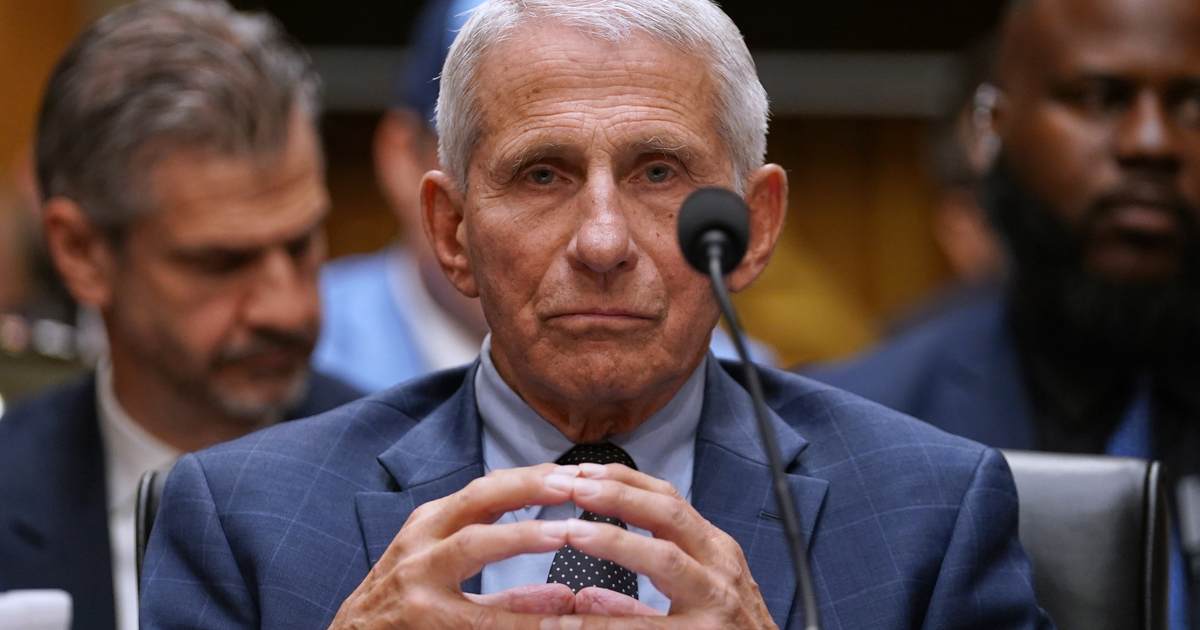
Former Rolling Stone editor Matt Taibbi reexamined Dr. Anthony Fauci’s July 29 Capitol Hill hearing and the revelations in Fauci’s diaries, arguing that pride, legal loopholes, and an attachment to risky research help explain why Fauci repeatedly invoked the Fifth.
Taibbi revisited the three-hour Senate showdown where Republican senators pressed Dr. Anthony Fauci about his handling of the COVID pandemic and related research funding decisions. The hearing exposed a mix of defensive testimony, legal maneuvering, and diary entries that paint a personal portrait at odds with the public image Fauci cultivated for years. Those diary passages and contemporaneous notes show a figure who saw himself less as a clinician and more as a central public actor during a global crisis.
Among the revelations: Fauci recognized breakthrough infections among the vaccinated by 2021, his memos showed irritation with congressional probes, and his team at times pushed to protect funding and reputations. Taibbi reports episodes where federal workers chased incentives during the pandemic and where Fauci’s private reflections betrayed impatience and ego. These details fed a narrative that the man who steered public health policy was also deeply involved in a messy institutional scramble.
Taibbi was blunt about the media’s role in the fallout and offered this line intact: “You cannot hate the media enough.” He argues that coverage both amplified Fauci’s authority for years and then struggled to parse the legal and ethical knots that surfaced once the diaries were public. That mismatch left many conservatives convinced the media refused to treat Fauci like any other official who might face accountability.
Even after the hearing, Taibbi notes, many on the Left maintained near-religious devotion to Fauci, despite growing signs that the intelligence community and scientists were increasingly open to a lab-leak origin. Taibbi also labeled Fauci in his piece as an “invidious huckster-narcissist whose reckless behavior endangered the world,” a phrase that captures the intensity of the criticism aimed at the former top infectious disease official. Those words helped fuel calls for a fuller, transparent review of what happened during the pandemic response.
The blanket pardon issued by braindead Joe Biden did not apply to testimony in a congressional hearing, which left perjury exposure as a real legal risk for Fauci. Still, Taibbi floats another motive for his Fifth Amendment choice: pride. Fauci reportedly balked at the idea of spending hours subjecting himself to his own diary entries and awkward explanations, especially given the murky legal environment left by prior policy shifts.
Taibbi delved into Fauci’s attachment to “gain of function research” (via Racket) [emphasis mine]:
To start, Covid-19 a.k.a. SARS CoV-2 is a bat virus that can’t infect bats. The reason it can’t infect bats is because of twelve nucleotides inserted into the viral genome, to create something called a “furin cleavage” site. With this addition, the virus not only lost its ability to bind to receptors in bats, but became extremely transmissible to humans. “If you remove the furin cleavage site,” wrote former CDC Director Bob Redfield in his book Redfield’s Warning, “there is no pandemic.”
Either SARS-CoV-2 went through an organic mutation fundamentally changing its character in one go, or it was engineered. This is why the scientists who ended up writing the Nature Medicine article arguing for natural or “zoonotic” origin of Covid were initially shocked to the point of gallows humor when they learned about the presence of a furin cleavage site. Hence the quote from Dr. Kristian Andersen, “The lab escape version of this is so friggin’ likely because they were already doing this work.”
As one virologist told me three years ago: “If someone proposes to insert a furin cleavage site in a bat SARS coronavirus in Wuhan, and then one year later we see a bat SARS coronavirus with a furin cleavage site in Wuhan, that is highly unlikely to be a natural event.”
[…]
Unfortunately, on January 7th, 2017, the outgoing Obama White House issued a “Recommended Policy Guidance for Departmental Development of Review Mechanisms for Potential Pandemic Pathogen Care and Oversight,” also known as P3CO. This revised definition was a semantic leprechaun trick, redefining a “potential pandemic pathogen” as one “capable of wide and uncontrollable spread in human populations,” essentially creating a loophole to work with wild viruses.
[…]
As former CDC Director Bob Redfield explained the other day: “If you start with a pathogen that’s already pathogenic for humans and you make it more pathogenic or more transmissible, that’s gain of function research,” he said. “But if you were to start with a pathogen that’s not pathogenic for humans, i.e. COVID, and make it pathogenic for humans, by definition, that’s not gain of function research.”
[…]
Fauci in his diaries complained on October 7th, 2021 about the “nonsense” in Congress “as to the gain of function issue.” In Fauci’s mind, it was a non-issue because he was legally covered by the loophole
[…]
Fauci’s whole defense is the adverb “likely.” He concedes that the EcoHealth experiments brought about an “increase in pathogenicity,” but rather than being concerned with the real question — did that research lead to an accidental leak of a manipulated virus that killed millions? — he reassured himself that he was insulated from legal danger because the funding in question did not constitute gain-of-function research in his mind, because it was not “likely” to cause widespread transmission in humans.
Added to other devastating passages from Fauci’s diaries, like the line, “given the fact that Dr. Zheng-Li Shi at the University of Wuhan has been working for years in GOF in coronaviruses to allow adaptation of the spike protein to bind to the human ACE2 receptor, we could not let this go,” there’s little doubt left that the virus was indeed “constructed,” and came from the Wuhan Institute.
Those diary excerpts were a big part of why conservatives demanded more than a spectacle; they wanted records and accountability. Taibbi urged that the facts be collected and preserved so historians, investigators, and the public can parse responsibility and policy failures without the spin. He argued this is strictly a historical reckoning and not a partisan witch hunt, even if many see clear political lines.
Taibbi closed with a warning carried in this line exactly: “It’s strictly about getting to the bottom of a historical disaster, and because one blue state heartthrob is in the middle of the action, half the country is averting its eyes, trying to filibuster an investigation of global importance. God help us when this happens again,” wrote Taibbi. The piece leaves open the question of whether pride alone explains Fauci’s legal choices, but it makes clear that his public legacy is fractured and contested.
For many on the right, Fauci pleading the Fifth looked less like a legal tactic and more like an act of self-preservation. His long career and carefully curated image came under fire, and he seemed unwilling to sit through a forced dismantling of that image on the Senate floor. The result is a new chapter in the national debate over pandemic policy, scientific oversight, and who gets to call the plays when crisis strikes.