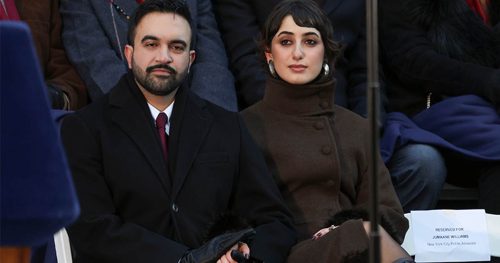
Zohran Mamdani’s claim that his wife’s trip would get NYPD protection collapsed when the department refused the request, touching off blame, old rhetoric, and fresh questions about how City Hall treats its own rules.
Last week the mayor’s office said Rama Duwaji would get an NYPD security detail for a visit to Syria and Lebanon, countries the State Department flags as off-limits. The idea of city-funded protection for a discretionary family trip set off immediate controversy and scrutiny.
The NYPD ultimately declined the assignment, and Mayor Mamdani publicly blamed his staff for the mix-up rather than the department. That finger-pointing has only added fuel to critics who say his administration is chaotic and inconsistent on public safety policy.
The exchange raised practical and political questions at the same time. Officials pointed out the basic fact that the trip was not for official city business and that sending officers to countries with level four travel warnings is not the department’s practice for discretionary travel.
A seemingly red-faced Mayor Zohran Mamdani blamed a “miscommunication” Tuesday after an awkward public clash between City Hall and NYPD officials over whether the department would provide security for his wife Rama Duwaji’s upcoming Middle East trip.
https://x.com/nypost/status/2087255715974991965
The high-profile back-and-forth appeared to end when Hizzoner asserted that Duwaji would not receive a taxpayer-funded police escort on her jaunt to Syria and Lebanon next month — despite his own senior spokesperson claiming she would the day prior.
“There was a miscommunication. She has not yet taken that trip and when she takes that trip it will be without any NYPD detail,” Mamdani told PIX11, when asked about The Post’s Monday report.
Mamdani spokeswoman Dora Pekec had earlier said the NYPD itself had recommended providing a security detail, which widened the gap between City Hall’s initial messaging and the department’s final stance. That reversal left watchdogs and residents asking why the mayor’s office circulated such a claim in the first place.
For days people wondered whether the department had overstepped or if the mayor’s office had simply misread standard protocol. The NYPD made clear it does not send officers on discretionary trips to countries that carry the highest travel advisory level, and that ended the public dispute over logistics.
Mamdani’s past comments about the NYPD now make this episode feel like more than a bureaucratic snafu. “We don’t need an investigation to know that the NYPD is racist, anti-queer, and a major threat to public safety,” Mamdani wrote in 2020 before calling to defund the agency, and critics say that rhetoric undercuts any claim to even-handedness.
Onlookers pointed to an uncomfortable contradiction: the same leaders who have pushed for dramatic cuts and restructuring of police resources also sought police protection for a private trip. That contrast has confirmed for opponents what they call selective enforcement of the mayor’s own values.
The fallout is as much political theater as it is policy failure, and it plays into broader concerns about how power is exercised in City Hall. When a mayor’s office looks disorganized, that confidence gap spreads to law enforcement, local business leaders, and everyday New Yorkers trying to plan around safety and services.
Town residents and political rivals are watching to see whether the mayor will accept responsibility beyond blaming staffers. Accountability is a basic expectation for any administration, and this episode tested that standard in short order.
Whatever the final takeaways, the episode has exposed a tension between ideology and practical governance that won’t disappear on its own. Working in a high-pressure mayoral office has always been tough, but when policy, messaging, and basic logistics collide, the public pays the price.