WNBA drama blew up this week after a provocative take went viral, sparking both predictable outrage and some solid questions about how the league is being run and protected by media elites. The back-and-forth is less about on-court basketball than about identity politics, media sensitivity, and the survival of women’s sports as a distinct category. Expect sharp reactions, odd optics, and a lot of people talking past each other instead of addressing the real issues.
The WNBA has become a culture flashpoint where every joke or jab instantly escalates into national outrage, and that pattern is getting old. Fans and critics on both sides pile on, but the louder voice tends to be the one insisting on ideological purity rather than practical fixes for the league. Meanwhile, the product on the court struggles for stability when headlines and hot takes dominate coverage.
As Fox Sports’ Colin Cowherd said, this league is ‘weird, insular, and paranoid.’ That line landed because it captures how insiders protect narratives instead of confronting simple truths about competition and fairness. When a league’s reputation is more about ideology than fans, it opens itself up to ridicule and real decline.
Outkick’s Clay Travis decided to make a wager this week. He framed it as a stunt and a statement about competitive reality and attention economics.
I want to have a boys high school team versus the WNBA Las Vegas Aces. I’ll put $10 million on the line. The boys are going to win.”
“We’re going to put it on pay per view. We’re going to make a lot of money for charity.”
https://x.com/EricLDaugh/status/2084800450335764813
“Secondly, I am putting in an application to get a WNBA franchise for my home, Nashville. It’s going to be the most inclusive team that has ever existed. Only trans. Only men who identify as women on the team!”
The reaction from some on the left was immediate and furious, with local reporters treating the stunt like a moral crime rather than a pointed jab. That meltdown says more about the fragility of the league’s defenders than about the point being made. When criticism is reflexively labeled hateful, you stop having honest conversations about sport and fairness.
At its core this is about legitimacy and credibility. If the WNBA wants to grow its audience and attract investment, it needs clearer rules and less performative politics, plain and simple. Fans tune in for competition, not moral theatre, and honest debate about the integrity of women’s sports deserves to be had without being shouted down.
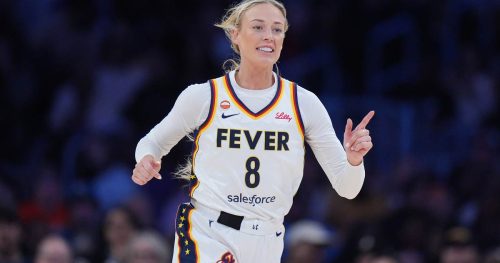
There are real, practical consequences when officials and institutions prioritize optics over competition. Players like Caitlin Clark, who bring attention and viewers, are caught in the crossfire when the narrative shifts away from play and toward identity politics. Those shifts alienate wide swaths of potential fans and make the league a caricature in the eyes of many.
I mean, what is this: a publicity stunt, a legitimate policy debate, or a cultural punchline? The reality is that when every controversy becomes a referendum on identity, the sport itself gets lost. That leaves room for media-driven sideshows and stunts to define the conversation instead of baskets and defense.
It did give Trump a great set, though: political figures and pundits quickly used the story to score points and fire up bases. The messier the optics, the more it becomes fodder for outside agendas, which only makes it harder for the league to chart a focused path forward. Fans end up paying the price when sport is sacrificed for spectacle.
There are no simple answers, but pretending the problem does not exist won’t make it go away. If the WNBA wants respect and sustainable growth, it must prioritize fair competition, transparent policies, and a product that excites viewers beyond ideological circles. Otherwise the league will continue to be defined by controversy instead of excellence on the court.