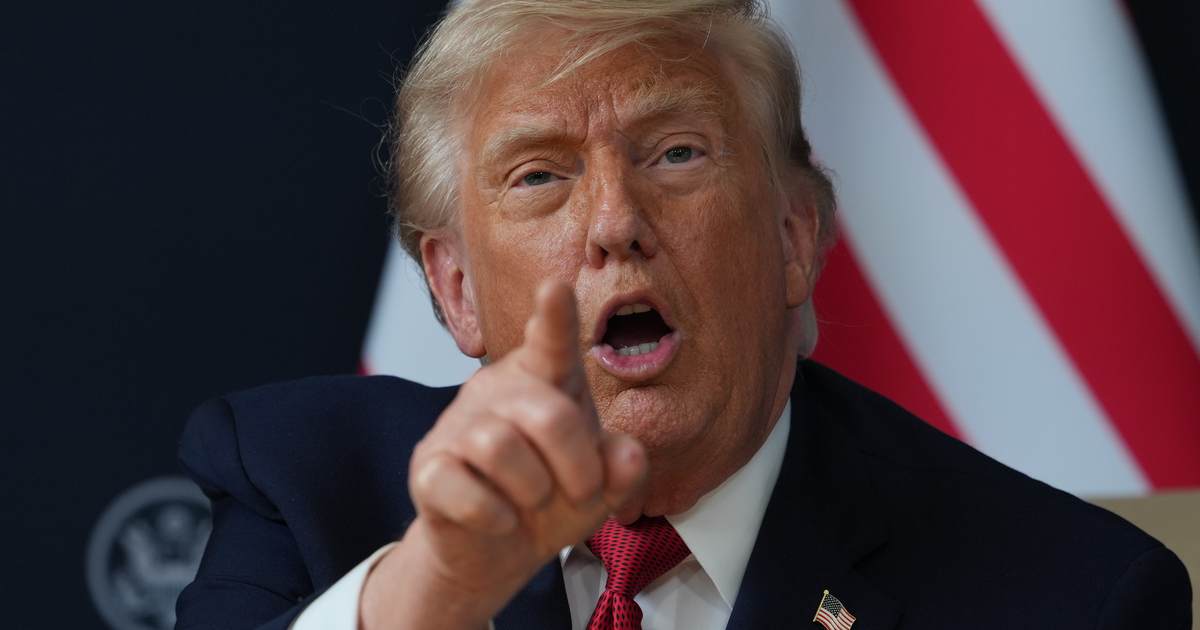
President Donald Trump won a notable procedural victory when a federal judge refused the New York Times’ bid to dismiss his $15 billion defamation case, and the court has asked for an amended complaint to spell out the allegations in more detail.
President Trump’s legal team announced that U.S. District Court Judge Steven Merryday denied the New York Times’ motion to dismiss the $15 billion suit alleging a decade of defamatory reporting about Trump and his business career. The judge’s decision sends the case back for an updated complaint, giving the plaintiff an opportunity to sharpen the record and press the claims into the open. That move keeps the dispute alive and forces the Times to defend a high-profile, politically charged accusation in federal court.
This is not the first time the case has bounced around. Merryday had previously dismissed an earlier version of the complaint in September 2025, calling that filing “improper and impermissible.” Trump’s team filed an updated complaint in October, and according to Trump, the Times repeatedly tried and failed to have the matter thrown out. The judge’s recent order effectively tells both sides to present their best work so the court can evaluate the legal sufficiency of the claims.
https://x.com/EricLDaugh/status/2081862477361377510
Trump made a public statement on Truth Social underscoring the significance of the decision and laying out his next steps. “As we requested, the Highly Respected Judge has called for an updated complaint, which will lay out, in extreme detail, all the ways in which The Times has repeatedly and consistently acted, with actual malice in defaming me, my family, our Great MAGA Movement, and America, itself,” Trump said on Truth Social. “We will continue to hold The Times and their ‘comrades’ in the Mainstream Media accountable for publishing, promoting, and dealing in Fake News.”
The $15 billion figure Trump’s lawyers put forward is striking and intentionally provocative. If a court ultimately awarded that amount, it would top the market valuation of the outlet itself, which the legal filings note sits under $12 billion as of July 2026. That contrast is meant to dramatize the damages alleged, but it also raises questions about how courts assess reputational and commercial harm, especially against established media organizations.
On the legal front, defamation claims brought by public figures face a high bar, centered on the “actual malice” standard established by precedent. That standard requires showing that inaccurate statements were made with knowledge of falsity or reckless disregard for the truth, which is a demanding evidentiary posture. The judge’s invitation to amend the complaint signals that the court wants clearer factual scaffolding before deciding whether the claim can survive further challenge.
For Republicans and conservatives, the case reads as more than a single lawsuit; it is a test of whether prominent news organizations can be held accountable when reporting crosses a line into what critics call political advocacy. Supporters of Trump see the proceeding as a necessary reckoning for media outlets they view as biased and unaccountable. Legal experts watching the case expect vigorous motions practice and extensive discovery if the court allows the updated complaint to proceed.
From the Times’ perspective, defending against a large monetary claim will require mobilizing both legal defense and public messaging. The paper will likely invoke First Amendment protections, argue the reporting was newsworthy and based on sources and documents, and push back against the factual allegations in the amended complaint. The clash between free-press protections and individual reputational rights is exactly the sort of constitutional and civil-law tension these cases are meant to resolve.
Practically speaking, the order to refile gives both sides a clearer roadmap for the next phase, and it brings more attention to the mechanisms courts use to test defamation claims before reaching the merits. The litigation promises extended rounds of pleadings, evidentiary fights, and possibly appeals if dispositive rulings are entered. For now, the story is that a federal judge refused to let the Times duck the case outright and asked for a version of the complaint that lays out specific, detailed allegations the court can evaluate.